Picture a Ramadan evening in 1880s Istanbul. The fast has been broken, the tables cleared, and the crowd heading towards Şehzadebaşı grows by the minute. A Karagöz shadow screen glows outside a coffeehouse, a little further on a meddah storyteller begins his tale with a handkerchief in hand, and theatre troupes call in the passers-by. Anyone searching for a "Ramadan events calendar" today is following a habit that is more than a century and a half old: in Turkey, Ramadan is not only the month of fasting but a season when culture spills into the streets after dark. This guide explains where that season comes from, what it holds today and how to plan the hours after iftar. To find events near you, browse by city and date on takvim.in.
When is Ramadan in 2027, and why does it move every year?
According to the 2027 religious calendar of Turkey's Presidency of Religious Affairs (Diyanet), Ramadan begins on Monday 8 February 2027, which corresponds to 1 Ramadan 1448 in the Hijri calendar. The first pre-dawn meal (sahur) falls on the night of 7 to 8 February. Kadir Gecesi, the Night of Power, is listed for Friday 5 March 2027, the eve of the holiday is Monday 8 March, and Ramazan Bayramı (Eid al-Fitr) runs from 9 to 11 March 2027. This year the month lasts 29 days.
Ramadan never lands on the same date twice because the Hijri calendar follows the phases of the Moon. A lunar year lasts 354 or 355 days, on average about 10.9 days shorter than the solar year, so Ramadan slides earlier every year. A concrete example: in 2026 the first fast was on 19 February; in 2027 it will be on 8 February, eleven days earlier. That shift matters for planning, because in a winter Ramadan iftar comes early and leaves a long evening for whatever follows.
Iftar and sahur times also change from city to city, so a performance announced as "after iftar" will not start at the same hour in Istanbul and in Van. When you add a programme to your diary, check the local prayer timetable (imsakiye) for that city.
What did Ottoman Istanbul do after iftar?
The best-known stage of Ramadan nights was Direklerarası, "between the columns". In 1728–1729 Damat İbrahim Pasha built a double row of facing shops here as an arasta, a market street whose rents funded his madrasa complex, and the colonnade in front of the shops gave the place its name. Today Direklerarası is the roughly 200-metre stretch of Şehzadebaşı Caddesi between 16 Mart Şehitleri and Dede Efendi streets.
From the 1880s it became an entertainment district built around strolling and shows. Gas street lighting was installed from Vezneciler to Şehzadebaşı in 1880, and when the Gedikpaşa Theatre closed in 1884, much of the city's theatre life moved here. During Ramadan especially, people came from every corner of the city to watch Karagöz, meddah storytellers, orta oyunu, kanto songs, operetta, even horse acrobats and circus acts. The boom did not last. In 1911 the columns were pulled down to make way for a tram line, then came the Balkan Wars and a decade of war. By the 1920s Direklerarası was no longer seen as a respectable place for an evening out. A Karagöz text from 1922 laments that the street, which in earlier years had been "as lively as a women's fair", had lost its old crowds.
That line is no accident. A study published in Belleten, the journal of the Turkish Historical Society, looks specifically at how Muslim Ottoman women took part in the entertainment life of Direklerarası between 1860 and 1923. According to the same study, people poured into the street from all over the city during Ramadan, and women were a visible part of that crowd. Ramadan entertainment, in other words, was not just for men in coffeehouses; it was an evening life the whole city shared.
Knowing the three classic forms helps when you read a Ramadan programme today:
| Form | What you see |
|---|---|
| Karagöz | Shadow play: figures (tasvir) cut from camel or ox hide, held on rods in front of a light and cast onto a cotton screen |
| Meddah | One-person theatre: a single storyteller and mimic whose only props are a handkerchief and a stick |
| Orta oyunu | Folk theatre played among the audience with no stage, curtain or set, no written script, several actors and live music |
Why is Karagöz called "the Ramadan play"?
Shadow plays were staged in coffeehouses, gardens and public squares, and at circumcision feasts too, but Ramadan was the high season. Tradition held that a Karagöz master had to know at least 28 stories by heart, so that he could stage a different play every night of the month, which is why the classical repertoire is so often counted at 28 plays. A performance opens with Hacivat appearing on the screen and reciting the "perde gazeli", a mystical poem in classical aruz metre; then comes a comic story full of puns and imitations of regional accents.
Karagöz was inscribed on UNESCO's Representative List of the Intangible Cultural Heritage of Humanity in 2009. Meddah storytelling and the Mevlevi Sema ceremony had joined the same list a year earlier, in 2008. Much of what you might watch on a Ramadan evening, then, is the living form of internationally recognised traditions.
If you want to follow Karagöz to its source, the Karagöz Museum in Bursa is a good place to start. It opened in 1997 and was redesigned into its current form in 2007. Evening shows at museums and cultural centres during Ramadan are usually announced in advance; search takvim.in for "Karagöz" or "gölge oyunu" (shadow play) to see current listings in your city.
What is a mahya, and where can you see one?
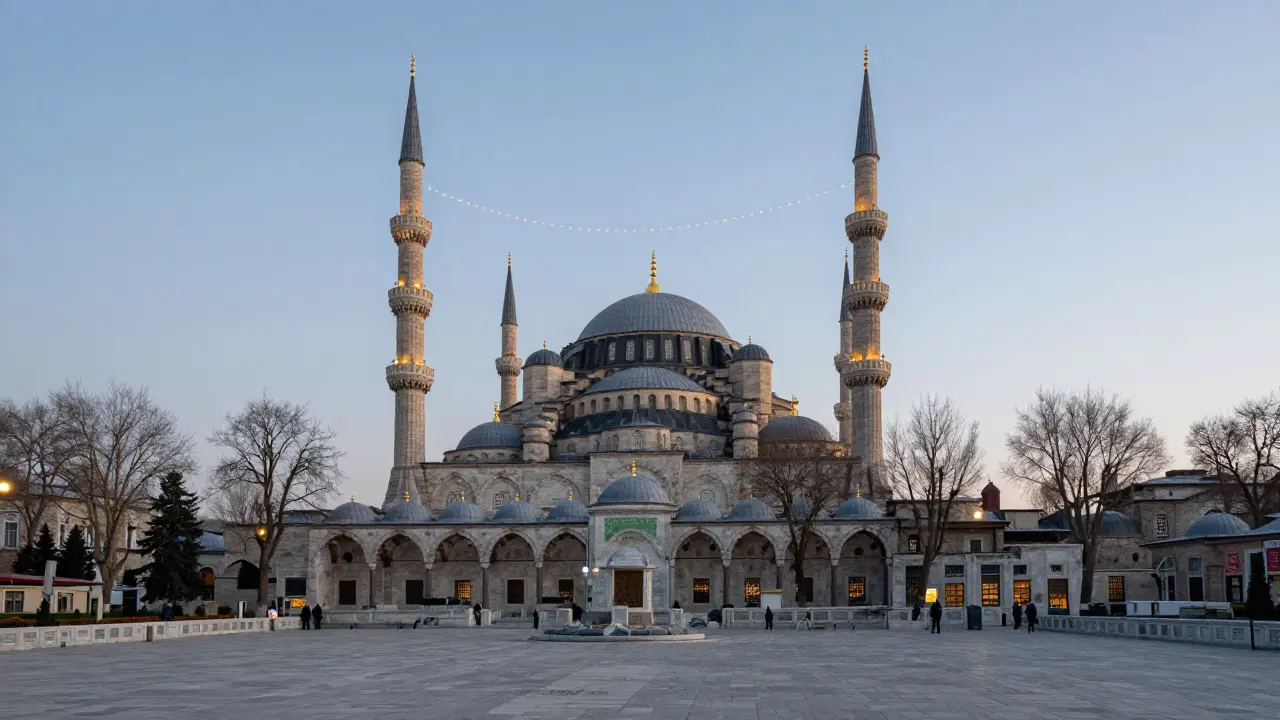
The quietest show of a Ramadan evening is in the sky. A mahya is a message or picture spelled out in lights strung on cables between two minarets. Most sources say the first mahya was hung at the Sultan Ahmed (Blue) Mosque in the reign of Ahmed I, usually dating it to 1617; some accounts credit the calligrapher Hâfız Ahmed Kefevî with hanging it in 1616 or 1617, and there is no full consensus.
Old Istanbul had a rhythm for its mahyas: written messages from the first to the fifteenth night of Ramadan, then pictures of flowers, cannons, ships and mosques in the second half of the month. You can still see mahyas on the great imperial mosques today, though in some years a mosque goes without one, for example during restoration. A mahya is one of the rare Ramadan "events" with no ticket and no timetable: after iftar, climb a hill or walk to the shore and look up at the minarets.
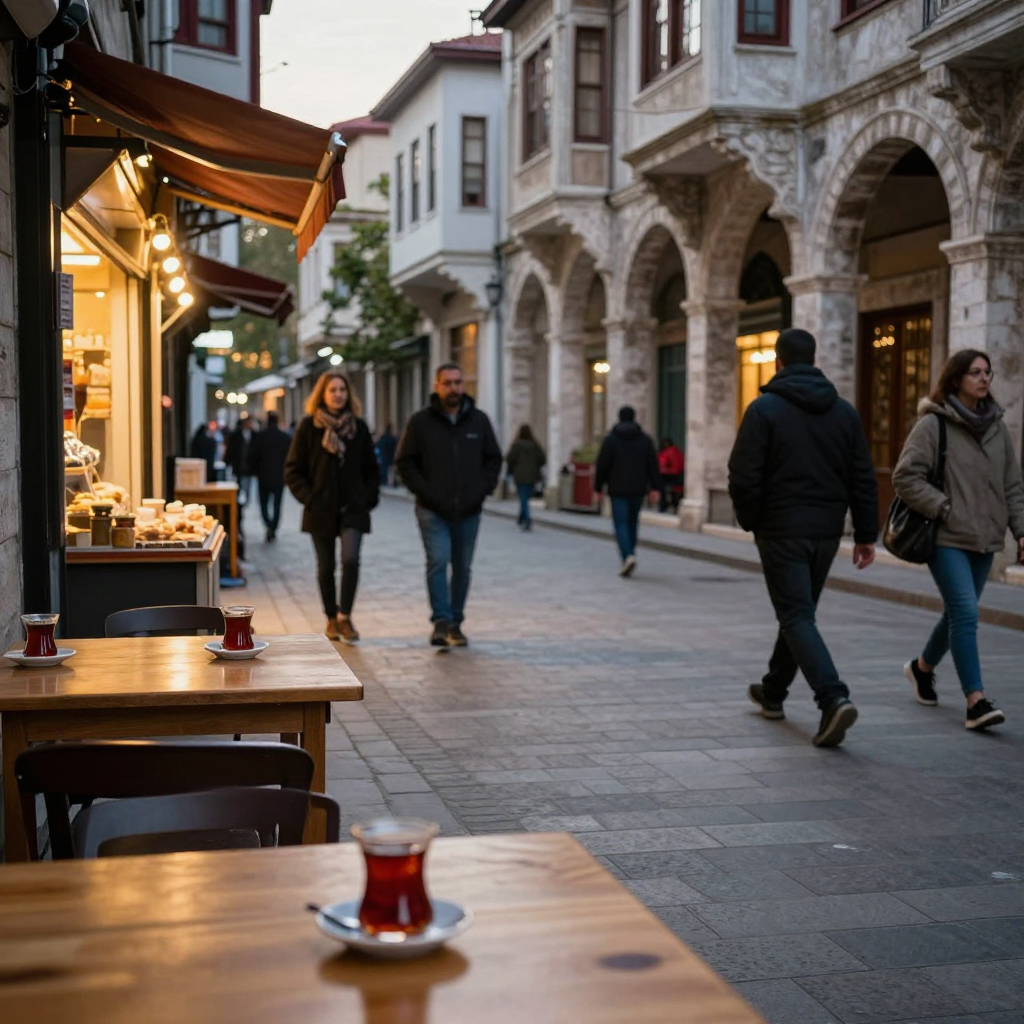
How do you plan a Ramadan evening today?
Ramadan programmes come from municipalities, cultural centres, foundations and museums, and each announces its own schedule separately. A few questions make planning easier:
- What time does it start? If the listing says "after iftar" rather than a time, check your city's iftar time and confirm with the organiser.
- Is it suitable for children? If you are taking children, look for the age recommendation; the same genre can be performed with very different humour by different companies.
- Indoors or outdoors? Ramadan 2027 falls in February and March, so an open-air tent may mean a cold evening.
- Do you need to register? Programmes with limited seating may ask you to sign up in advance; check what the listing says.
A note for anyone hoping to watch a sema: the Galata Mevlevi Lodge Museum in Istanbul has long held sema programmes on Sundays, but days and times can change, so check the museum's current announcements before you go. If you want to understand the ceremony itself and Şeb-i Arûs on 17 December, we cover both in detail in our Şeb-i Arûs article.
Drummers, cannon and the holiday: the street's own programme
Ramadan's cultural calendar is not only about stages. The Ramadan drummer, who walks the neighbourhood at sahur time singing short rhymes called mani, is a tradition that goes back to Ottoman times; before the holiday, drummers go door to door to collect their tips. Today some municipalities issue drummers with ID badges and advise residents not to tip anyone without one, a measure against impostors. The cannon shot announcing iftar is another Ramadan custom, though accounts of when and where it began do not agree.
Kadir Gecesi comes in the last week of the month; Diyanet's calendar lists Friday 5 March for 2027. Then the three-day Ramazan Bayramı begins on 9 March. If you are travelling for the holiday, you can check what is on in your destination on takvim.in beforehand.
Frequently asked questions
When is the Ramadan events calendar announced?
There is no single official calendar; each municipality, cultural centre and museum announces its own programme. Since Ramadan 2027 begins on 8 February, it makes sense to watch for announcements from January onwards.
Do theatres close during Ramadan?
Ramadan is not a holiday period; in 2027 it falls in February and March, in the middle of the theatre season. Check show times on the theatre's own announcements. If you are wondering which play to choose, see our guide to choosing a play.
Can people who are not fasting attend Ramadan events?
Fasting is not a condition for attending cultural programmes; unless a listing says otherwise, shows such as Karagöz, meddah or concerts are open to all audiences.
The columns of Direklerarası came down more than a century ago, but the habit of going out on Ramadan evenings is still alive. Listen to a perde gazeli, look up at the lights between two minarets or simply drink a glass of tea in the crowd; whichever you choose, take a look at your city's programme on takvim.in before 8 February.