On the first night of Hanukkah a menorah carries only two lights: that night's candle and the shamash, the "attendant" used to light the others. By the eighth night there are nine flames. When the sun sets on Friday, 4 December 2026, those first two lights will be lit in homes around the world. Hanukkah is an eight-night festival that turns light into a ritual at the darkest time of the year. If you keep an eye on events through takvim.in, here is the story behind the holiday and its traces in Turkey.
Key points
- Hanukkah begins on 25 Kislev in the Hebrew calendar and lasts eight nights; in 2026 it runs from sunset on 4 December to nightfall on Saturday, 12 December.
- It commemorates the rededication of the Second Temple in Jerusalem in 164 BCE.
- One light is added each night; counting the shamash, 44 lights are kindled in total.
- The first open-air Hanukkah celebration in Turkey took place in Ortaköy Square in 2015.
What is Hanukkah, and what does the name mean?
The name comes from the Hebrew verb hanak, "to dedicate," and it sums up the heart of the festival: the rededication of the Temple in Jerusalem. It starts on 25 Kislev, lasts eight days and nights, and has an odd calendar quirk: it is the only Jewish holiday that begins in one month (Kislev) and ends in another (Tevet). That is why its date moves around the Gregorian calendar. In 2026 the first candle is lit at sunset on Friday, 4 December, the eighth on Friday evening, 11 December, and the festival ends on Saturday night, 12 December.
The name belongs to Jerusalem; the candles belong to the home. Light, children and a shared table define Hanukkah.
Where does the story begin?
The background goes back to 167 BCE, when the Seleucid king Antiochus IV had an altar to Zeus erected in the Temple. The repression that followed sparked the Maccabean Revolt, which ran roughly from 167 to 141 BCE. In 164 BCE the rebels retook Jerusalem and rededicated the Second Temple; Hanukkah remembers that rededication. One of the leaders, Judah Maccabee, later died at the Battle of Elasa.
Why eight days?
The sources do not give a single answer, and that is part of what makes Hanukkah interesting. According to the Talmud, a single day's supply of pure oil burned for eight days, which is why eight candles mark eight nights. 2 Maccabees explains the eight days as a belated celebration of Sukkot, the Feast of Booths. 1 Maccabees describes an eight-day rededication but never mentions oil. The same number carries three different memories. The practical upshot: there is no single "correct story," and every household lighting candles remembers one layer of it, or all of them. The oil story appears in the Talmud, tractate Shabbat 21b. Modern scholars generally regard it as a legend, while Orthodox Judaism generally treats it as historical; neither view changes how the holiday is kept: you light the candles.
How is the menorah lit?
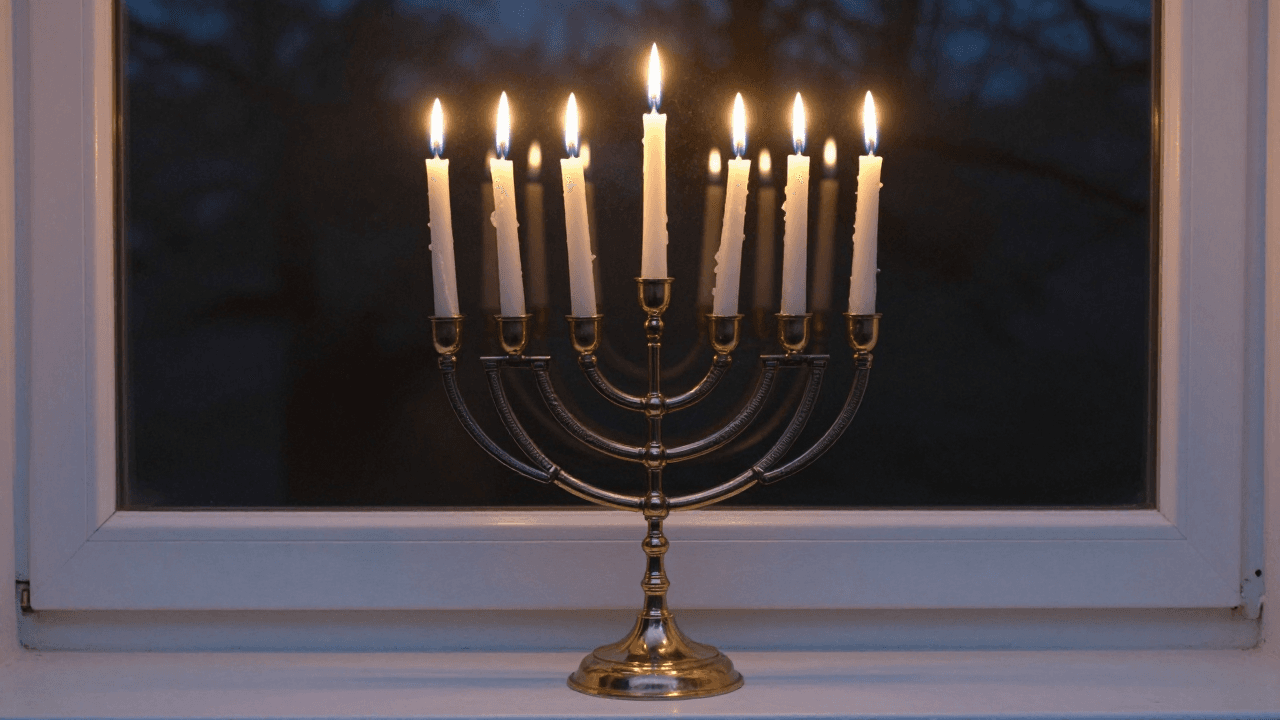
The Hanukkah menorah has nine branches: eight for the eight nights and a ninth for the shamash. One candle is added each night, so the first night has two lights (one candle plus the shamash) and the eighth has nine. By the end, 36 candles and 8 shamash lightings make 44 lights. In modern Hebrew the lamp is called a hanukkiyah.
The order varies between communities. Ashkenazi custom often lights the shamash first, Sephardic custom last. For the descendants of the Sephardic Jews who came from Spain, it is a reminder that the same holiday can be lived with a different step.
Dreidel and gelt: the rules of the game
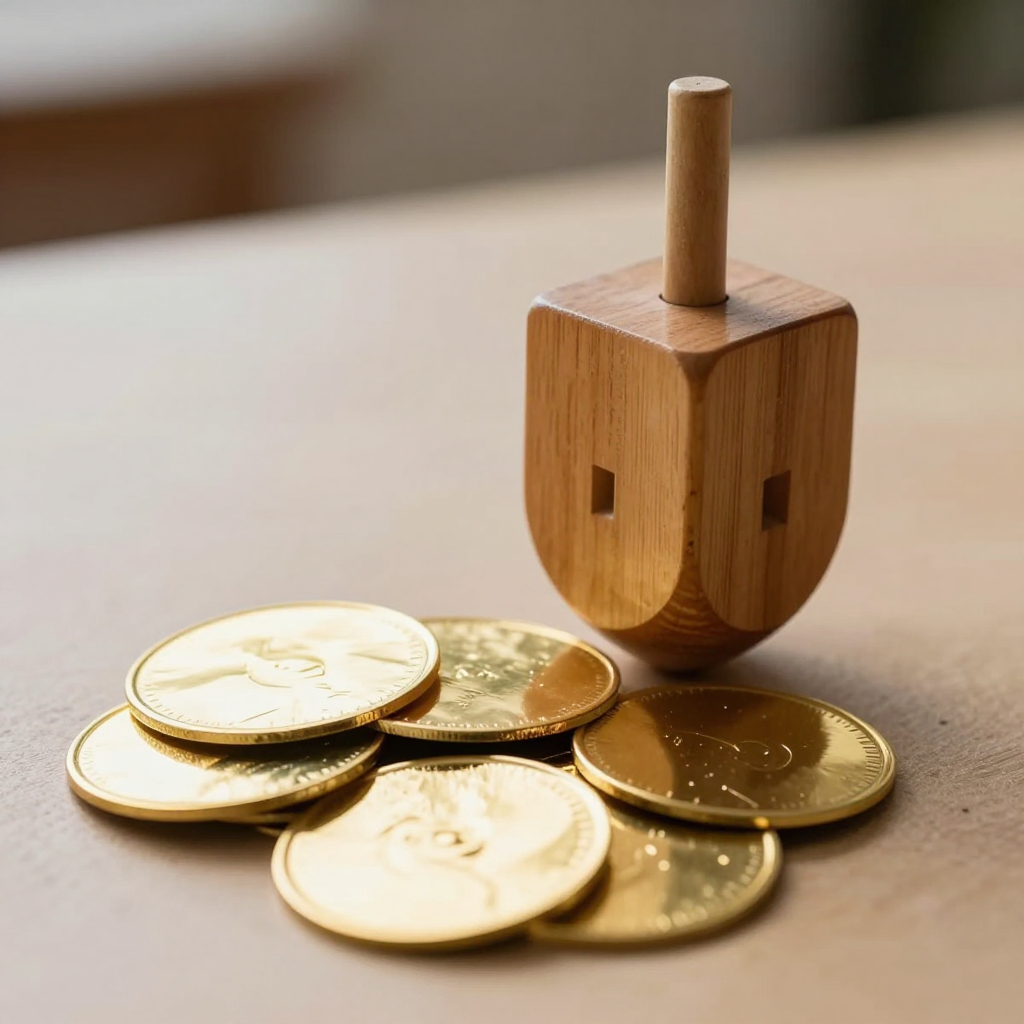
The best-known game piece is the dreidel, a four-sided spinning top. Four Hebrew letters appear on it: nun (נ), gimel (ג), hei (ה) and shin (ש). Folk tradition reads them as the initials of nes gadol haya sham, "a great miracle happened there." Most dreidels made in Israel replace the shin with a pe (פ), so the phrase becomes "a great miracle happened here." Everyone starts by putting one piece in the pot. Nun: nothing happens. Gimel: take the whole pot. Hei: take half. Shin: add a piece. The pieces are usually gelt (chocolate coins), pennies or raisins. The dreidel is thought to descend from the teetotum, a European gambling top called a trendel in German.
What do people eat at Hanukkah?
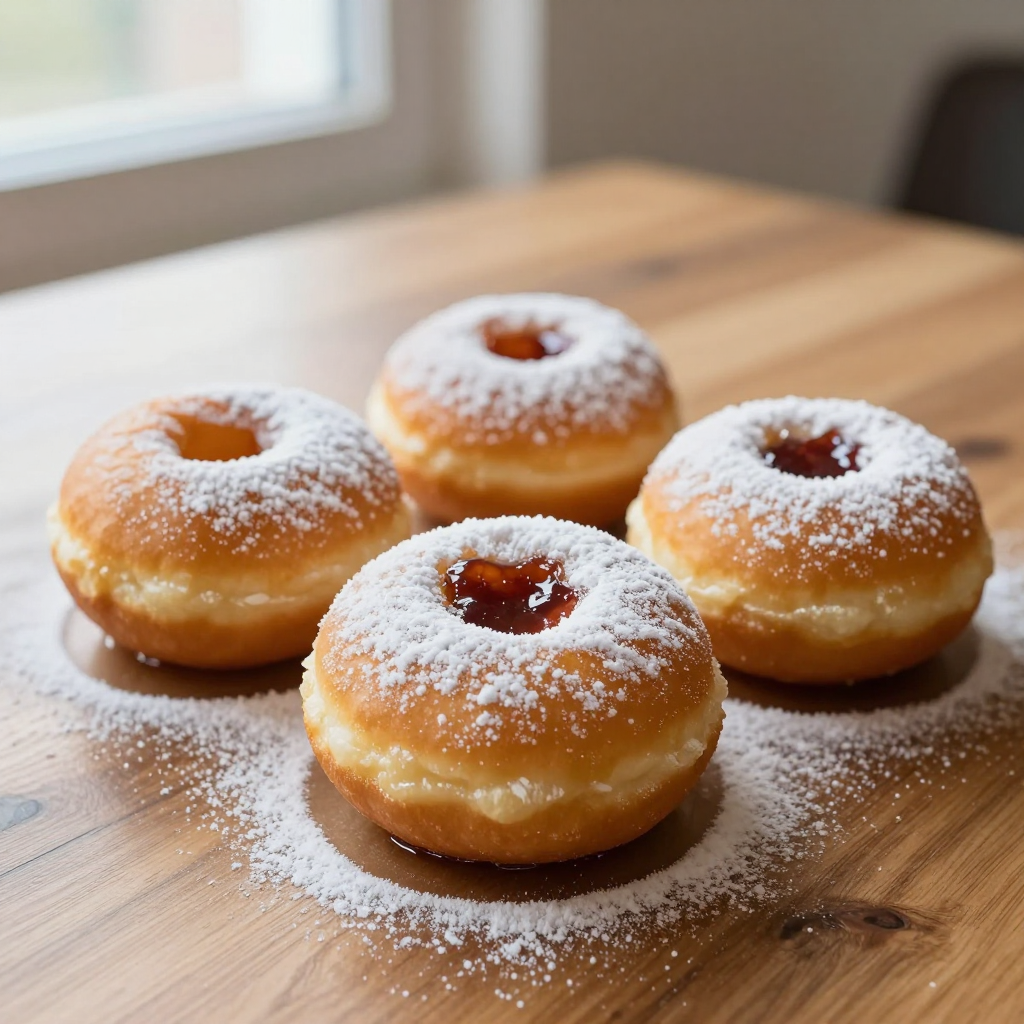
The Hanukkah kitchen revolves around oil, a reminder of the miracle. Ashkenazi families make potato latkes; Sephardic, Polish and Israeli families favour fried, jam-filled sufganiyot (doughnuts). In Israel latkes are not very popular, and sufganiyot have largely replaced them. Giving children gelt is also common.
Hanukkah in Turkey: a long memory
To understand Hanukkah in Turkey you have to start in 1492. Most of the Sephardic Jews expelled from Spain by the Alhambra Decree found refuge in Ottoman lands; Sultan Bayezid II (1481-1512) formally invited them. Today about 14,000 Jews live in Turkey (2025 figure), the vast majority in Istanbul and the rest in İzmir.
For years, Hanukkah here was celebrated inside homes and synagogues. That changed on 13 December 2015, the last night of the festival: a celebration in Istanbul's Ortaköy Square, hosted by the Beşiktaş Municipality, was described as the first Hanukkah held in an open square in Turkey. Community president İzhak İbrahimzadeh called the night a "miracle," and Chief Rabbi İshak Haleva said he would remember it as the most magnificent night of his life. There were nine candles on stage; religious figures and representatives of different groups lit them, and children lit the last. İvo Molinas, editor-in-chief of the newspaper Şalom, said Hanukkah was being celebrated in a square "for the first time in a Muslim country."
A second memory came on 2 December 2021 in Kilis. A group of about 40 people, including Chief Rabbi Haleva, gathered at the synagogue there for Hanukkah prayers after roughly 60 years. Raşel Nahmed, who had left Kilis 55 years earlier, said that all her memories came back to life.
In Istanbul the festival is, in many years, centred on Neve Şalom Synagogue in Galata. The foundation of the building on Büyük Hendek Street was laid in 1949 on the site of a former Jewish primary school, and it was inaugurated on 25 March 1951; it is known as the community's largest house of worship. The synagogue was attacked in 1986, 1992 and 2003: the 1986 gun attack during a Shabbat service killed 22 people, the 1 March 1992 bombing caused no casualties or damage, and a car bomb exploded on 16 November 2003. Every Hanukkah at Neve Şalom therefore carries both joy and remembrance. In past years guests of other faiths have joined ceremonies where the eighth candle was lit for peace.
How can you experience Hanukkah?
Hanukkah is not a closed ceremony; it is built on the idea of sharing light. Programmes are announced by community institutions each year. Because we could not verify any event for this year, we give no dates or times here. The most reliable route is to follow announcements from the Chief Rabbinate of Turkey and Şalom newspaper. You can also follow cultural events in your city on takvim.in.
At home, a simple plan is enough: make sufganiyot or latkes, play dreidel with children, put a candle in the window.
Frequently asked questions
When is Hanukkah in 2026?
It begins at sunset on Friday, 4 December 2026 and ends on Saturday night, 12 December. Because it follows the Hebrew calendar, the date shifts every year.
What are the sources of Hanukkah?
The revolt is told in 1 and 2 Maccabees. Neither is part of the Masoretic Tanakh used in Judaism, while the Catholic and Orthodox churches include them in their canon. The oil miracle appears in the Talmud.
Why does the menorah have nine branches?
Eight branches stand for the eight nights; the ninth holds the shamash used to light the others.
What do people eat at Hanukkah?
Fried food: latkes and sufganiyot. Sufganiyot are common in Sephardic families.
A small light kindled in winter darkness carries the whole story of Hanukkah: eight nights that begin with two lights and end with nine.