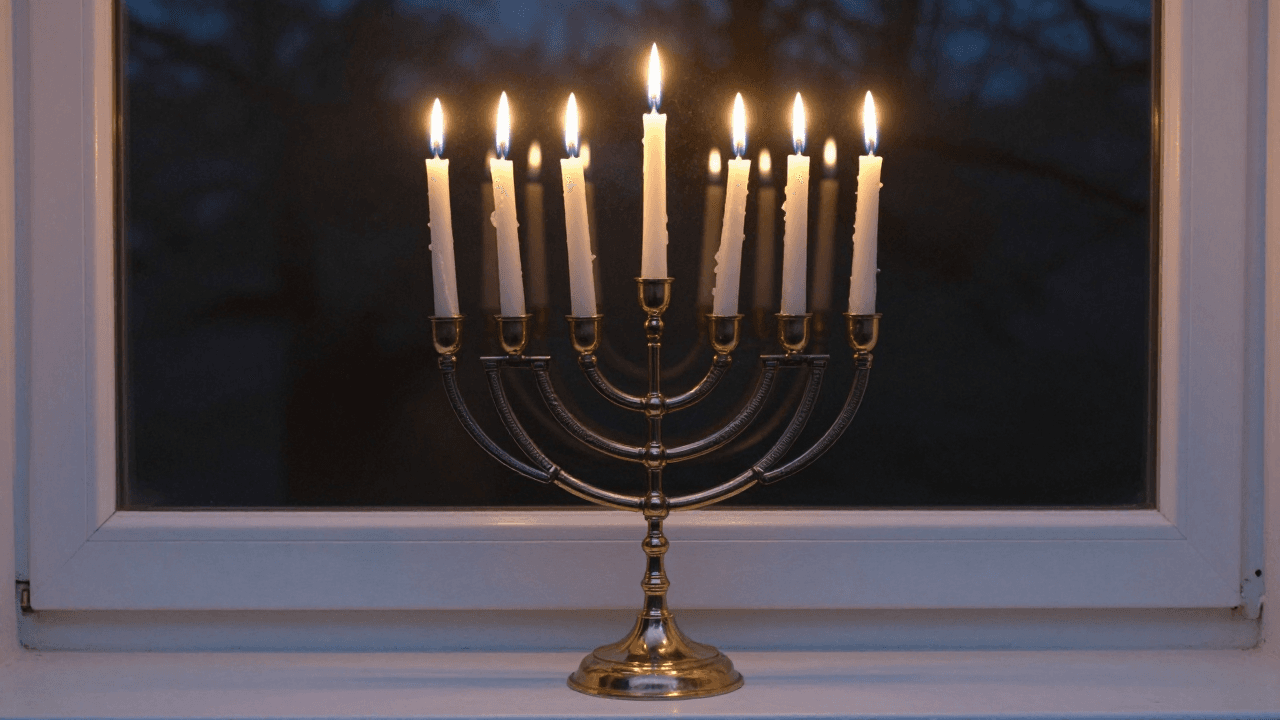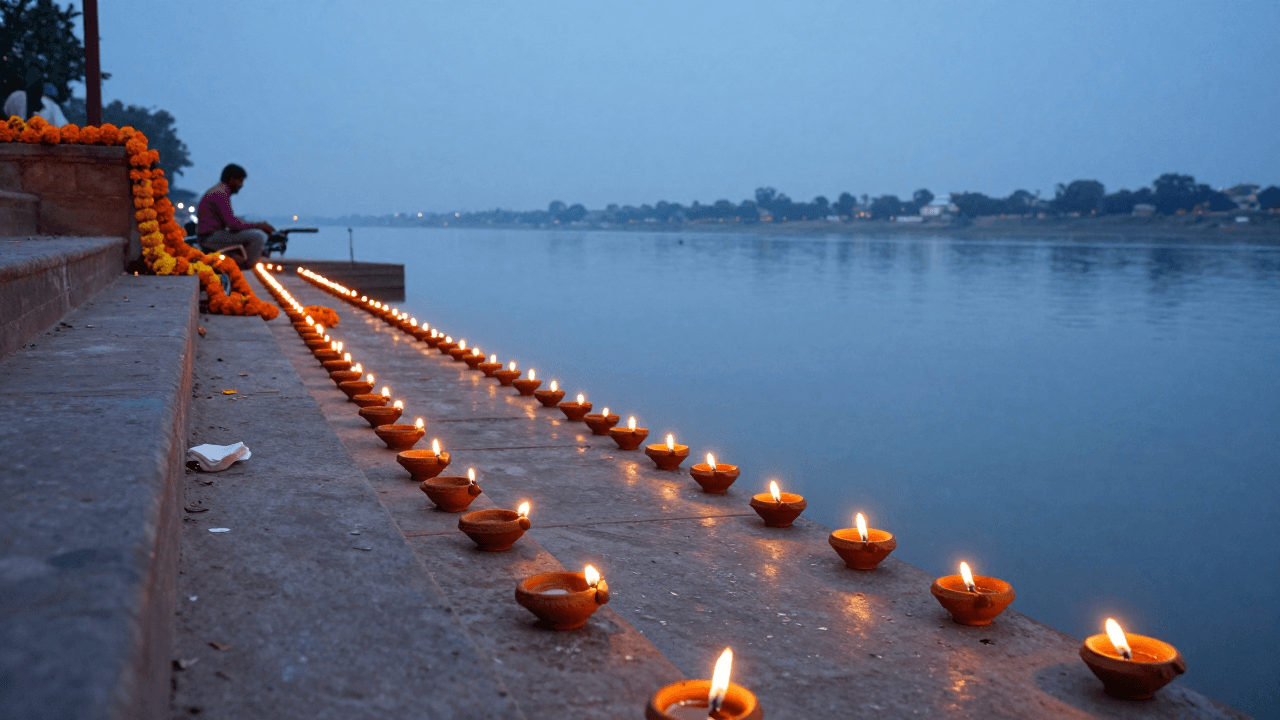
The longest night of the year begins at 11:50 p.m. in Istanbul. This year the winter solstice falls on 21 December 2026 at 20:50 UTC, which is 23:50 Turkish time, ten minutes before the calendar page turns. What happens in the sky is the same for everyone: the Sun reaches its southernmost point and, in the northern hemisphere, days begin to lengthen again. What people do with that fact is another matter. In Iran, families gather around pomegranates and watermelon and ask the poet Hafez for an omen. In China, bowls of glutinous rice balls are served. In ancient Rome, enslaved people once ate at the same table as their masters. This piece, from takvim.in, puts the faces of that one night side by side.
Key points
- The 2026 winter solstice falls on 21 December at 20:50 UTC, i.e. 23:50 in Turkey.
- Iran's Yalda was inscribed on UNESCO's Intangible Cultural Heritage lists in 2022; the listed countries are Iran and Afghanistan.
- China's Dongzhi became an official celebration under the Han dynasty; tangyuan are eaten in the south, dumplings in the north.
- Rome's Saturnalia ran from 17 to 23 December; its direct link to 25 December is disputed.
- In Turkish folk tradition the counterpart is Zemheri: roughly 22 December to 30 January, the "black winter".
What exactly is the solstice?
The solstice is not a day but a moment: when daylight is shortest and night longest in the northern hemisphere. In the Chinese calendar it is defined as the Sun reaching celestial longitude 270 degrees, the twenty-second "solar term" of the year, which in most years lands around 21 December.
The exact time can vary by a few minutes between sources; for 2026 the most common value is 20:50 UTC. Saying "the night of 21 December" is precise enough for any celebration. What matters is that after the solstice the days lengthen, slowly at first, then visibly. For thousands of years people have read that turn as a rebirth, and nearly every culture built a table, a story or a festival around it.
Yalda Night: how Iran spends the longest night
Yalda falls between the last day of the Iranian month of Azar and the first day of Dey, which is 21 December in the Gregorian calendar. Its name comes from an interesting place: yalda is borrowed from Syriac-speaking Christians, where it literally means "birth" and was once the word for Christmas. The night's second name, Chelleh (or Chilla), means "fortieth" and marks the start of the first forty-day stretch of the three-month winter.
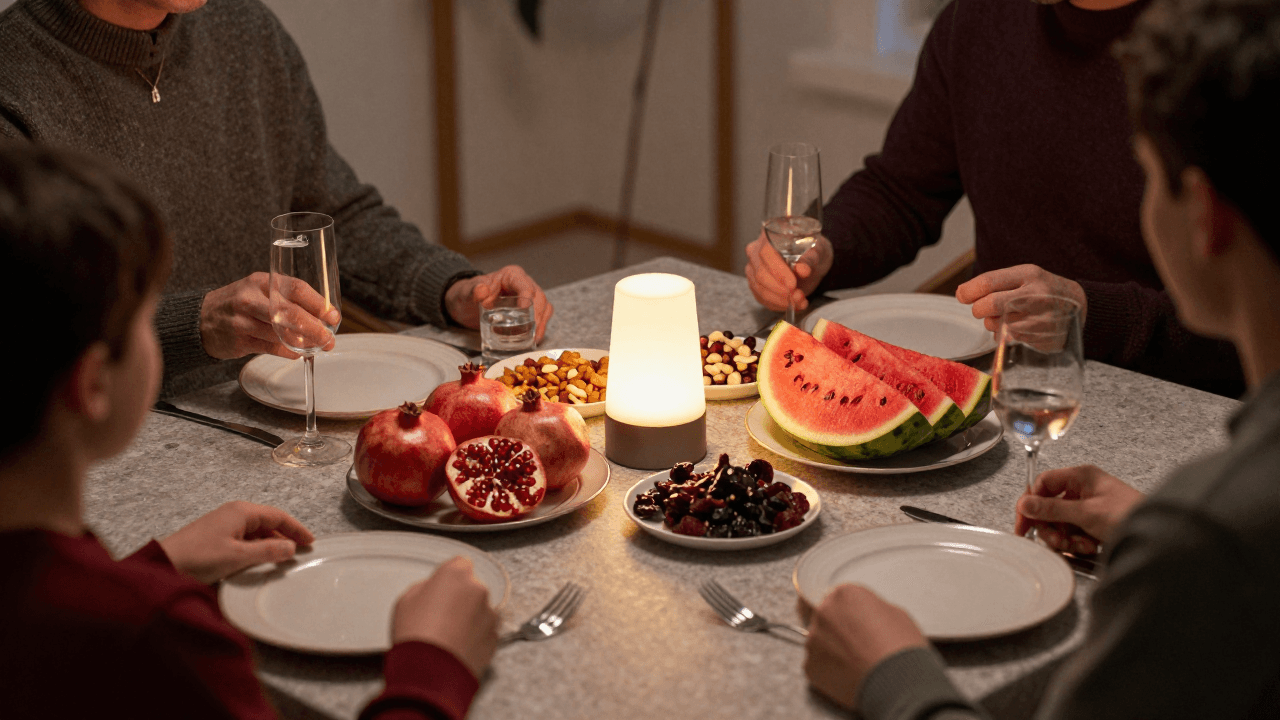
The stars of the table are pomegranates and watermelons, whose red is linked to dawn and the glow of life. Plates of fruit and nuts come out, relatives gather, and readings go past midnight, usually Hafez's Divan and Ferdowsi's Shahnameh. Divination from Hafez (fal-e Hafez) is the favourite game; tradition says you should not consult the Divan more than three times, or the poet may take offence.
Yalda/Chella entered UNESCO's Intangible Cultural Heritage lists in 2022, jointly for Iran and Afghanistan. The night is also observed in neighbouring regions such as Azerbaijan and Tajikistan.
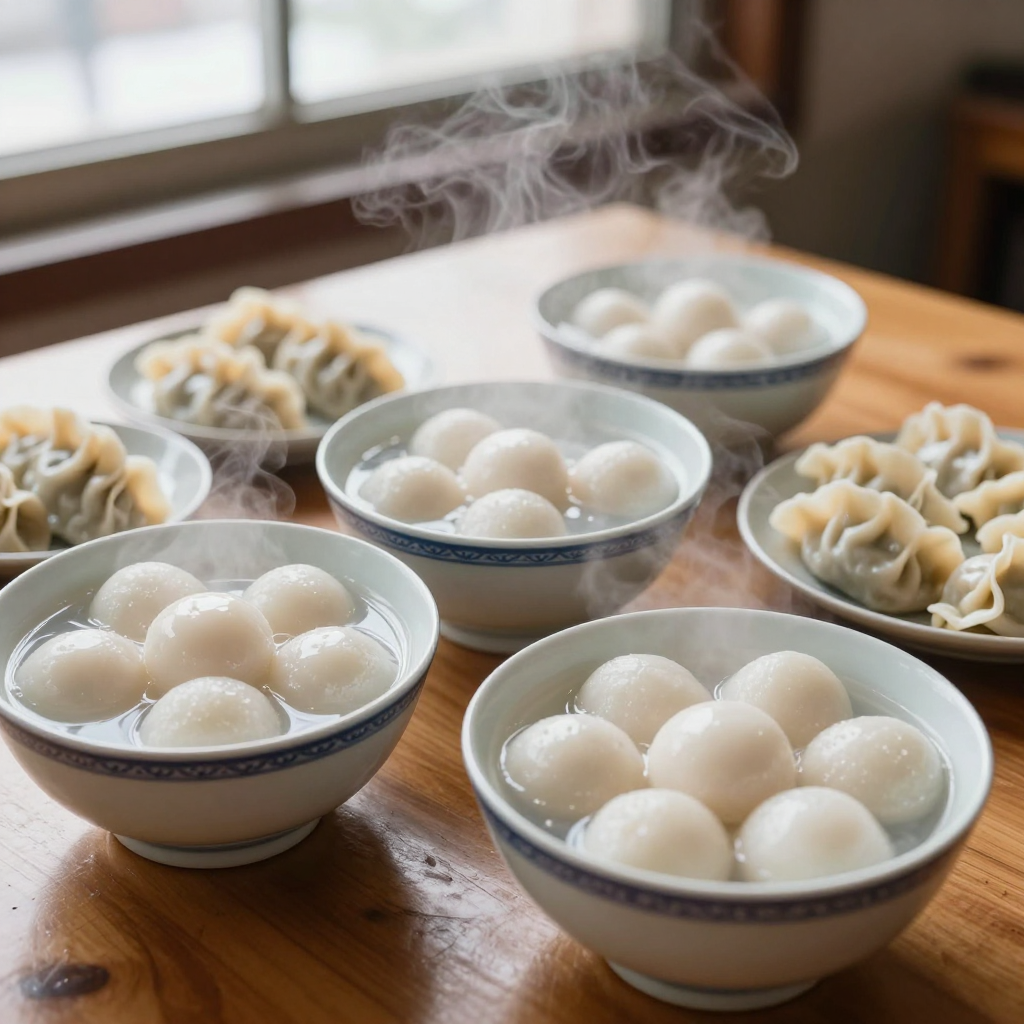
Dongzhi: bowls of something warm after the long night
Dongzhi's roots reach back to the Zhou dynasty, and under the Han dynasty it became an official celebration. Families took a break from work and honoured their ancestors; in ancient times the day was called the "festival of extreme length". The philosophy behind it is the balance of yin and yang: as days lengthen, yang, the positive energy, returns. The idea is symbolised by the I Ching hexagram fu, "returning".
The table depends on the region. In southern China, tangyuan, glutinous rice balls in sweet soup, stand for family reunion. In the north, shuijiao, boiled dumplings, are eaten. A tale of the Han-era physician Zhang Zhongjing handing out lamb dumplings to the poor is linked to solstice dumplings. In Taiwan, mutton hot pot is a popular winter tonic.
The same day is Toji in Japan and Dongji in Korea, where red bean porridge with rice cakes, patjuk, belongs to the solstice table.
Saturnalia and 25 December: did Christmas come from here?
Rome's midwinter festival was Saturnalia, first mentioned by Livy in the 1st century BCE. It began on 17 December, grew into a week-long affair and ended on 23 December. It was a time of feasting and gift-giving, with social roles temporarily reversed and enslaved people eating alongside their masters.
The emperor Aurelian's Dies Natalis Solis Invicti, the "Birthday of the Unconquered Sun", set on 25 December in 274 CE, is a separate festival. The earliest surviving record of 25 December as the birth of Jesus is in the Chronography of 354: "Natus Christus in Betleem Iudeae", "Christ was born in Bethlehem of Judea".
The popular story says Christmas was placed on 25 December to compete with Saturnalia or the Sun cult. The evidence National Geographic reports does not support that link: Saturnalia never reached 25 December, and early Christian writers discussing the date never mention it. Cultural exchange probably happened, but "direct borrowing" is too simple a reading. The honest answer: the solstice is a shared anchor, and causation is contested. Christmas has its own story in our Christmas article (in Turkish).
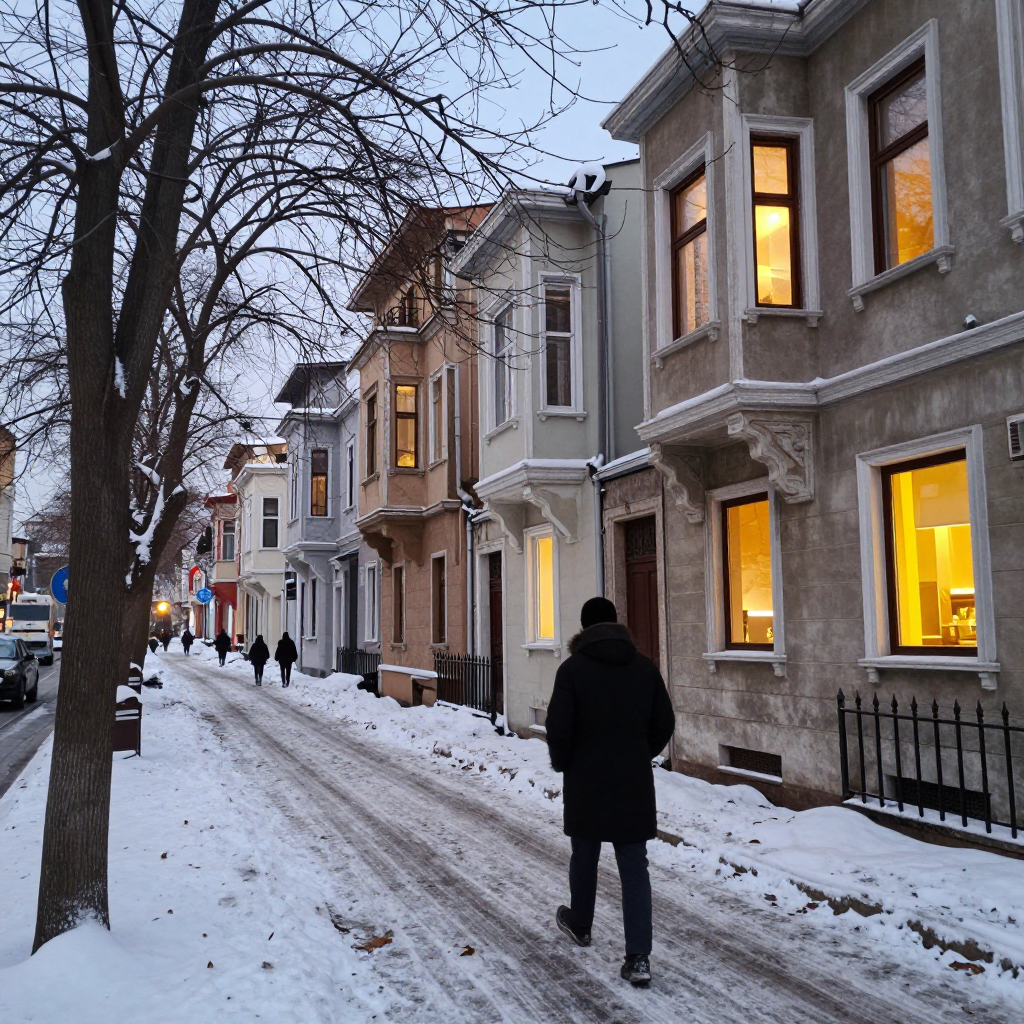
The Turkish counterpart: Zemheri
In the Turkish folk calendar the period around the solstice is called Zemheri. By popular reckoning the roughly forty days from 22 December to 30 January make up Zemheri; in some regions it is counted as 45 days. The Turkish Language Association defines it as "kara kis", deep winter. The word, found in sources from around 1330, is said to derive from zamharir. Because of its forty days it is also called erbain, from the Arabic root for "forty".
Winter splits into three stretches: kasim, zemheri and hamsin. Hamsin follows Zemheri, starting on 31 January. One caveat: the 22 December to 30 January range is a folk convention, not a meteorological definition, and real cold varies from year to year.
That sets up an odd kinship with Yalda's "Chelleh": in Iran too, the first forty-day stretch of winter opens with that night. We have no source saying one tradition came from the other, but two separate places counting a forty-day hard winter in similar ways shows people naming the same season alike.
Why do the dates move by a day?
The three traditions anchor to one astronomical moment but count differently. Yalda is the night between Azar's last day and Dey's first, so it falls on 21 December in the Gregorian calendar, or 20 December in leap years. For Zemheri's start some outlets say 21 December, most say 22. Dongzhi follows the day the Sun is at 270 degrees. So "the night of 21 December" is an honest approximation for all three; the celebration itself does not hang on one minute.
A better question to ask while preparing is: which tradition can I borrow for my own evening? One person will read poetry, another will drink hot soup, another will simply stay up late to start the count of the new day. None of them is the "correct" way.
Q&A: how do I spend this night?
Is there an official solstice celebration in Turkey?
As far as we know, the solstice is not a national holiday in Turkey; its counterpart is Zemheri in the folk calendar. You can check takvim.in for winter-themed concerts, exhibitions or workshops in your city.
How do I set a Yalda table at home?
Pomegranate, watermelon, nuts and dried fruit are the tradition's main ingredients. The heart of the night is sitting together and reading. Pick a poetry book from your shelf and read aloud in turns.
What should I cook for Dongzhi?
Tangyuan in sweet water for the southern tradition, dumplings for the northern one. Both can be made at home with ready rice flour or ready dough.
Closing
One astronomical event turns into a different table in each culture: poetry and pomegranate in Iran, bowls of warm rice balls in China, a week-long feast in Rome, and forty days named "black winter" for us. What they share is knowing that light returns even at the longest night. At 23:50 on 21 December, looking out of a window in Istanbul, that is a good meaning to remember as the count of new days begins.