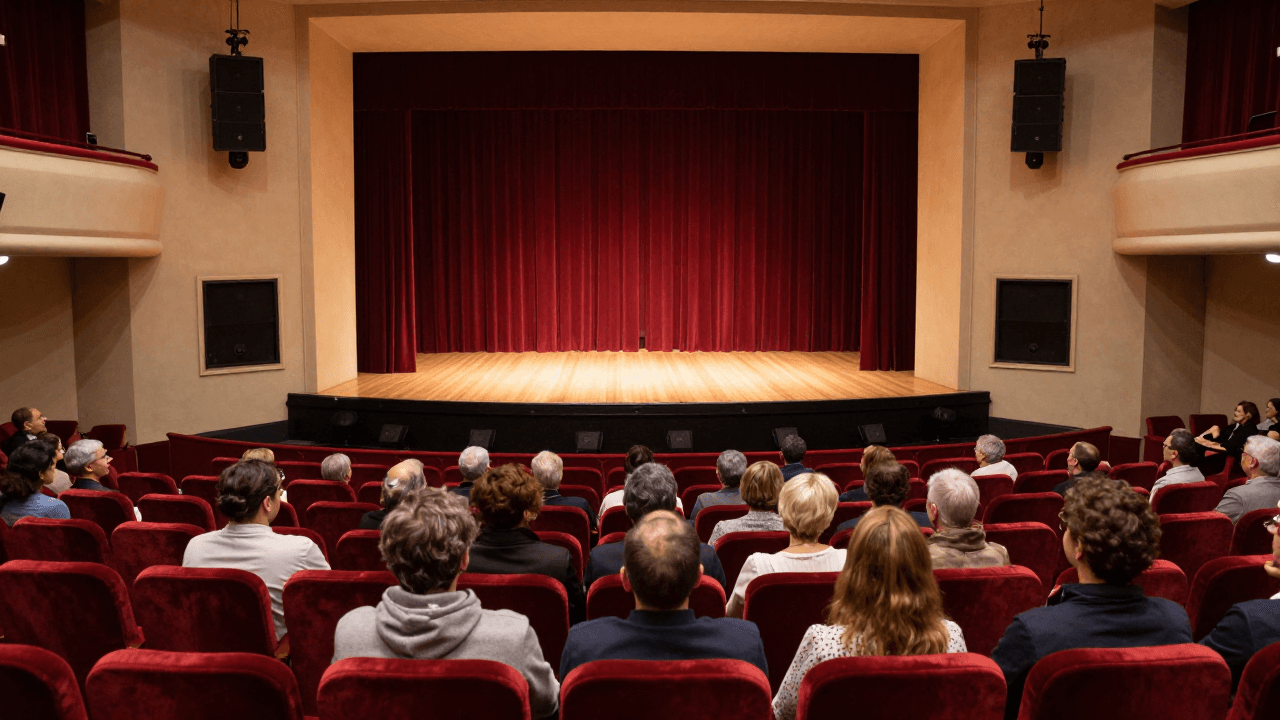
In the short silence before the curtain rises, a theatre holds two kinds of people: those who know what they are about to see, and those who bought a ticket on the strength of one line on a poster. There is nothing wrong with being in the second group, but once you learn to choose between theatre plays deliberately, an evening at the theatre stops being a gamble. This guide is about exactly that: knowing the genres, judging in advance whether a play suits you, and feeling at ease once you are in your seat. You can follow stages and performance dates near you on takvim.in; here we talk about how to read that listing.
Key points
- Knowing the genre is the quickest way to set the right expectations: comedy, drama, musicals, children's plays and one-person shows are very different experiences.
- The playwright, any source novel or film, the running time and the age limit tell you far more than a poster does.
- Turkey has both a deep folk tradition of performance and an institutional theatre history running without a break since 1914.
- If it is your first time, a small venue and a short play make a good start.
Why are plays divided into genres?
Genre is as old as theatre. In ancient Athens, at the Dionysia festivals held in honour of Dionysus, god of wine and fertility, three dramatic forms emerged: tragedy, comedy and the satyr play. Even the word "theatre" goes back to the Greek theatron, literally a "seeing place". From the very start, theatre has been about where the audience sits and what it looks at.
A genre label is a promise. If the poster says "comedy", you expect to laugh; if it says "drama", you expect to watch a character's inner or social conflict. Contemporary theatre blurs these lines all the time: black comedy makes you laugh and squirm at once, and some dramas bring the house down. Still, for a first choice, genre is the most reliable compass.
Which genre suits you?
Comedy
The genre with the widest appeal, but "comedy" is not one thing. Farce runs on exaggerated situations and slamming doors, and stretches logic on purpose. Satire makes you laugh while needling an institution, a habit or a mindset. Situation comedy inflates a misunderstanding that ordinary people cannot escape. If you want to laugh but fear a shallow evening, look at the playwright: a classic comic text that has been staged for generations usually promises solid construction.
Drama and tragedy
Dramas are plays in which characters change around a decision, a loss or a confrontation. Tragedy is the heaviest form: the hero often pays for their own choices. These plays ask for attention; you leave tired but with a full head. When choosing a drama, it helps to check whether it is adapted from a novel or film. If you know the story, watching how the stage interprets it becomes a pleasure of its own.
Musicals
Here song and dance carry the story. Musicals open an easy door even for someone who has never learned the language of the stage: melody, costume and choreography make the plot easy to follow. They tend to be large-cast productions, and some run well past two hours, so check the running time beforehand.
One-person shows
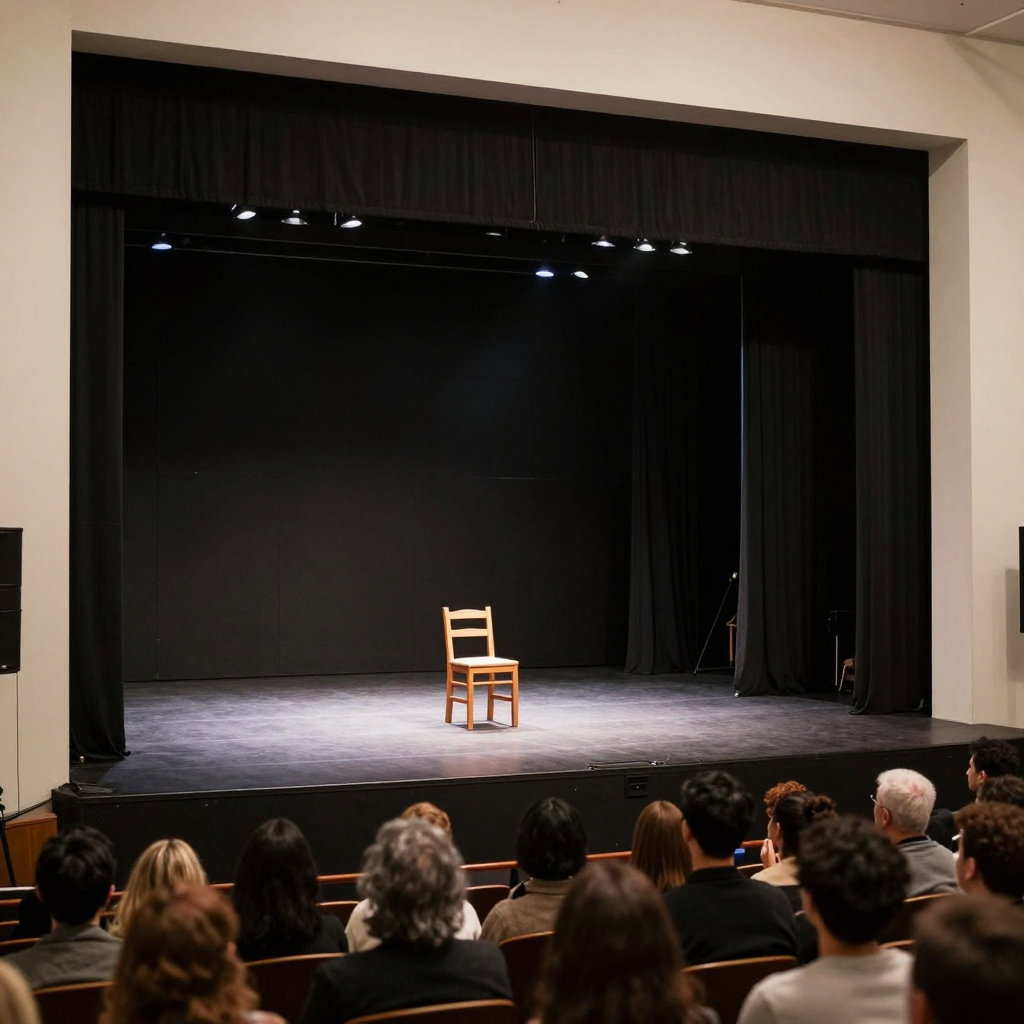
One performer on stage, sometimes with nothing but a chair. One-person shows rest on the actor's strength and create real intimacy in small venues. In Turkey the form has a very old relative: the meddah, the solo public storyteller. Meddahs performed in coffeehouses, markets and caravanserais, bringing voices, accents and characters to life on their own. UNESCO proclaimed the arts of the meddah a Masterpiece of the Oral and Intangible Heritage of Humanity in 2003 and inscribed them on the Representative List in 2008. Watching a one-person show as a modern link in that long storytelling chain adds depth to the evening.
Children's theatre
Children's theatre is not a "shrunken adult play"; it has its own writers, its own running times and its own acting language. Istanbul City Theatres even has stages named as children's theatres, such as Ferih Egemen in Gaziosmanpaşa and Küçük Kemal in Kağıthane. When choosing a play for your child, always check the recommended age range: a play for four-year-olds and one for ten-year-olds are worlds apart.
Where does traditional Turkish theatre stand today?
Stage theatre in the Western sense is relatively recent in Turkey, but the tradition of spectacle is much older. Karagöz is a shadow play in which figures cut from camel or ox hide cast shadows on a screen in front of a light. Built on the sparring of Karagöz and Hacivat, the tradition was inscribed on UNESCO's Representative List of the Intangible Cultural Heritage of Humanity in 2009.
Ortaoyunu is a folk theatre with several actors and live music, played among the audience without a stage, curtain or set. The playing space is called the meydan, the square. Its two main characters are Pişekâr and Kavuklu; as the TDV Encyclopedia of Islam puts it, Pişekâr resembles Hacivat and Kavuklu resembles Karagöz. Next time you watch a comedy built on a know-it-all and a simpleton trading lines, remember these pairs: the joke on stage has very old roots.
Institutional stages: City Theatres and State Theatres
In Turkey, which institution stages a play also tells you something. Istanbul City Theatres traces its roots to Darülbedayi, founded in 1914 in the Ottoman era. The project, initiated by Istanbul's mayor Cemil Topuzlu, began as a school with the help of the French theatre-maker André Antoine; from 1934 the institution was officially called the Istanbul City Theatre.
The State Theatres are a product of the Republic. The founding law was passed on 10 June 1949 and took effect on 16 June, and Muhsin Ertuğrul was appointed general director. The first curtain in Ankara rose on the evening of 1 October 1949 on two stages at once: Cevat Fehmi Başkut's Küçük Şehir (Small Town) at the Küçük Tiyatro and Goethe's Faust at the Büyük Tiyatro. Browsing these institutions' repertoires is an easy way to see which classics and which new texts are on in a given season. Try the small venues of private companies and independent troupes too: knowing both the institutional and the independent scene is the fastest way to find your own taste.
How do you weigh a play before buying a ticket?
The poster is only the shop window. The real information is in the details of the description. What to look for:
| Information | What it tells you |
|---|---|
| Playwright and adaptation | A classic text, a new writer or a novel adaptation? |
| Director | If you liked the same director's earlier work, that is a good sign. |
| Running time and interval | Whether there is a break matters, especially with children. |
| Age limit | Limits set for language, violence or subject should be taken seriously. |
| Venue size | A small hall means intimacy; a large one means spectacle. |
Watch for a few words in the description as well. "Experimental" or "physical theatre" means a piece told more through body and image than dialogue. "Improvised" means a show that will be a little different every night. A play's event page on takvim.in shows date, time and venue at a glance, and is handy for comparing tour dates of the same production in different cities.
A little theatre etiquette for first-timers
Theatre is not cinema: the actors can hear you, and even see you. A few simple habits save the evening for you and for the people on stage.
- Arrive early. Entering after the play has started is awkward for you and for the cast; if you are late, wait for an usher to guide you.
- Switch your phone off completely. Silent mode is not enough; in a dark hall, a screen glows like a stage light.
- Don't take photos or video. Unless the venue clearly allows it, keep the camera in your bag, and ask an usher first even during the curtain call.
- Use the interval. The foyer is a good place to talk about the play, but be back in time for the second act.
- Don't delay the applause, and don't cut it short. The curtain call is the only way to thank the actors for their work.

Frequently asked questions
Which genre should a first-time theatregoer start with?
A short comedy or a musical is usually the most comfortable start. Once you are used to the language of the stage, drama and one-person shows become more rewarding.
Is there a dress code at the theatre?
Unless the play's description or invitation says otherwise, clean and comfortable clothes are enough. For galas and special nights, check the note on the invitation.
Should I take a child to an adult play?
If the play has an age limit, respect it. Even without one, look at the running time and subject; a play written for children is a far better first experience if you want them to love theatre.
In the end the formula for a good night at the theatre is simple: go knowing what you are about to watch, but let the stage surprise you. From the Dionysia to the meddah's coffeehouse, from Darülbedayi to today's small independent venues, theatre has always made the same promise: to tell a room full of people a story that will happen exactly once, that night. When you pick your next play, browse the stages in your city on takvim.in, and this time look beyond the poster.