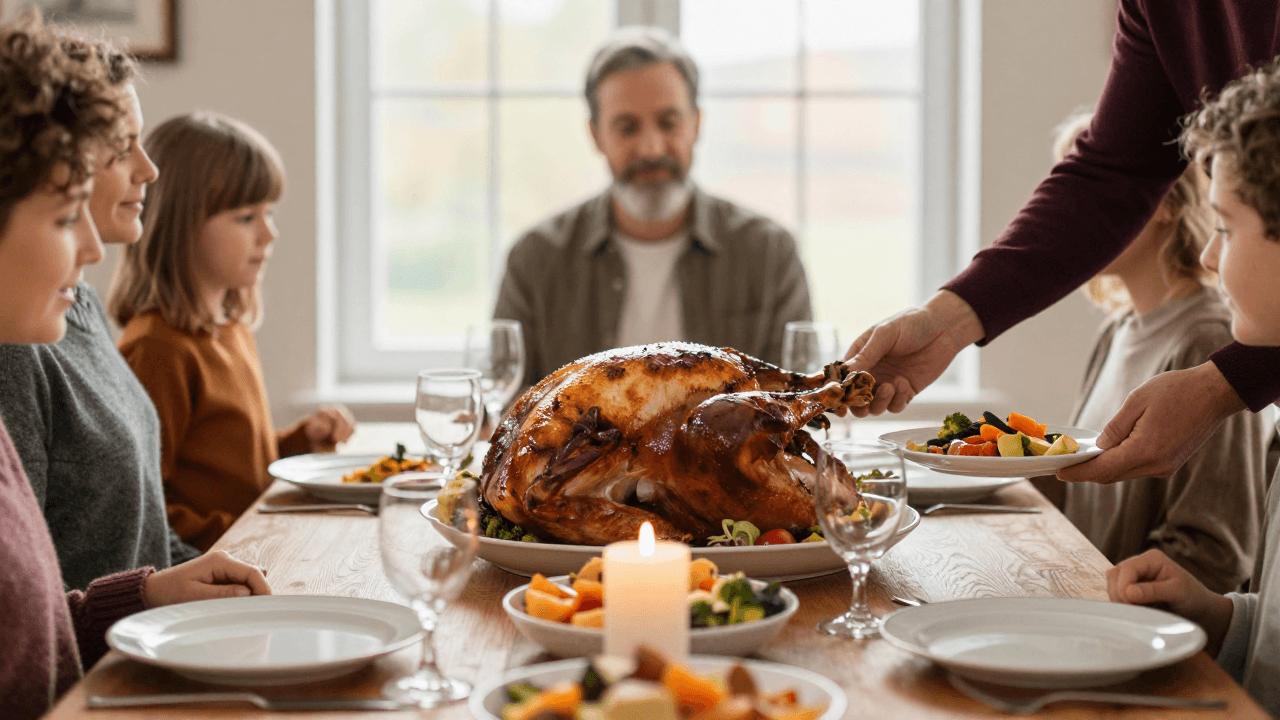
Every American film seems to reach the last week of November the same way: a crowded family table, a huge roast turkey in the middle, and everyone going round saying what they are thankful for. That day is Thanksgiving, and in 2026 it falls on Thursday, 26 November. It is not a public holiday in Türkiye, yet it is so familiar from films and the news that many of us wonder what exactly is being celebrated. At takvim.in we looked at the story through the questions a curious reader would ask: how "first" was the 1621 feast, who made it a national holiday, and why does the bird share its English name with our country?
Key points
- Thanksgiving is held in the US on the fourth Thursday of November; in 2026 that is 26 November.
- The most-cited origin is a three-day harvest feast at Plymouth in 1621, but the national holiday began with Abraham Lincoln's 1863 proclamation.
- The current "fourth Thursday" rule became law in 1941.
- The holiday has a critical side: since 1970, a National Day of Mourning has been held at Plymouth.
- English "turkey" is the bird's name and also our country's name; in Turkish the bird is called hindi.
What exactly does Thanksgiving celebrate?
The short answer: a harvest, and survival. The longer answer admits the holiday has more than one origin. The scene most often retold is the autumn of 1621 at Plymouth Colony. Governor William Bradford organised a three-day celebration after the Pilgrims' first corn harvest and invited the Wampanoag leader Massasoit. According to the Pilgrim chronicler Edward Winslow, Massasoit arrived with "some ninety men."
The numbers matter because they show who was at the table. About half of the 102 people who sailed on the Mayflower did not survive the first winter. Sources note that this was a traditional English harvest feast, while the Wampanoag had their own customs of giving thanks. So even "the first Thanksgiving" is a contested label: giving thanks existed in every community, and 1621 is simply the example that dominates the story.
How did it become a national holiday?
Today's holiday is not a direct continuation of 1621. Colonies and states held scattered days of thanks first. George Washington proclaimed a national day of thanksgiving on 26 November 1789, but it was a one-off call, not an annual tradition.
The real change came from one woman's persistence. The writer and editor Sarah Josepha Hale campaigned for a national Thanksgiving for 36 years, from 1827, through editorials and letters, and is remembered as the "Mother of Thanksgiving." The result came in the middle of the Civil War: with his proclamation of 3 October 1863, Abraham Lincoln set the last Thursday of November as a national day of thanksgiving. Offering a divided nation one shared table also laid the foundation for the holiday's unifying image.
Why the fourth Thursday and not the last?
In 1939, in the Great Depression, President Franklin D. Roosevelt moved the holiday a week earlier to lengthen the shopping season. The move was widely opposed and mocked as "Franksgiving."
Congress finally settled it by law: in October 1941 the "last Thursday in November" was declared a legal holiday, and in December 1941 the text was amended to the "fourth Thursday," so that Novembers with five Thursdays would not shift the date. Roosevelt signed the bill on 26 December 1941. That rule still applies, which is why the date changes each year and falls on 26 November in 2026.
Where did the Macy's parade come from?
The giant balloons marching into New York's Herald Square on Thanksgiving morning are the holiday's most visible scene, but the parade was not born as a thanksgiving celebration. Macy's staged its first parade on 27 November 1924 and at first called it the Christmas Parade; the aim was to open the shopping season. In the early years camels, donkeys, elephants and goats from the Central Park Zoo took part, and because they frightened children, balloons replaced them from 1927. The parade still ends with a float carrying Santa Claus, and today it draws more than 3.5 million spectators along a 2.5-mile route.
So even the holiday's most visible scene is a tradition born inside a commercial calendar.
Is there a counter-voice?
There is, and it is a part of the story you should not skip. Since 1970, protesters have gathered every Thanksgiving at the top of Cole's Hill, overlooking Plymouth Rock, for what they call the National Day of Mourning. For Native peoples, 1621 as a comfortable feast scene does not outweigh what followed. Similar events take place elsewhere in the country.
This double face does not mean ignoring the holiday; it means keeping the question "whose story is being told?" in mind.
How do Wampanoag people tell the story?
Reading only the colonists' account leaves the picture incomplete. In the picture book Keepunumuk, the Mashpee Wampanoag author Danielle Greendeer and her co-creators retell the 1621 harvest feast from an Indigenous point of view; the title is the Wampanoag word for the harvest season. The book's backmatter notes that, because of the disease and warfare the settlers brought, the day is remembered by the Wampanoag as a day of mourning. Speaking at an event on Martha's Vineyard, the Mashpee Wampanoag speaker Ramona Peters said the Wampanoag held thanksgivings long before the Americanised holiday.
These accounts complete the flattened picture of 1621 as "a peaceful meal between two peoples." The feast happened, but not everyone remembers the same thing.
What is the White House turkey "pardon"?
Each year before Thanksgiving the US president "pardons" a turkey. Sources disagree on the origin. The popular story says that in 1863 Lincoln spared a turkey given to the family, meant for Christmas dinner, for the sake of his son Tad; but some sources say it happened at Christmas, not Thanksgiving, and they give Tad's age differently. In 1963 John F. Kennedy is remembered as announcing he would not eat the turkey sent to him. The yearly ceremony as we know it became official in 1989 under George H. W. Bush.
In short, the turkey pardon is one of the sweetest and least documented traditions: the origin is a story, the institution is recent history.
What links English "turkey" to our country?
For a Turkish reader this is the odd corner of the story. English calls the bird "turkey", the name of our country, yet the bird is native to the Americas and not a native species of Türkiye. The word's origin is disputed, but the most common account runs like this: guinea fowl from eastern Africa reached Europe through Ottoman lands and were called "turkey-cock" and "turkey-hen" in English. When Europeans met a similar bird from America they transferred the name. Linguists differ on the detail: some favour Mario Pei's theory of Turkish merchants, others Dan Jurafsky's Mamluk route. Whichever is right, there is no real tie between bird and country, only a misread trade route.
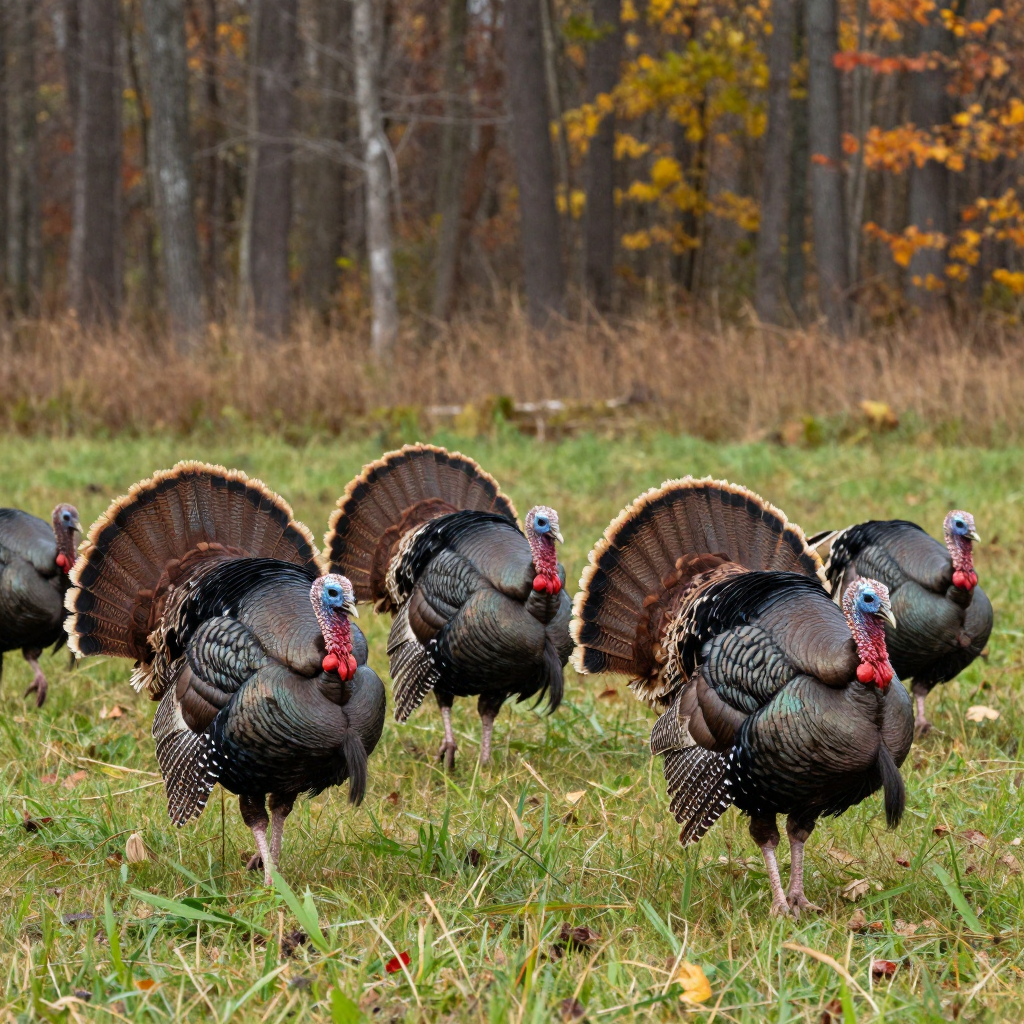
In Türkiye the bird is hindi, "from India." In French it is dinde ("rooster of India") and in Portuguese the "Peru bird." Every language guessed wrongly where the bird came from, each according to its own geography. The turkey on the Thanksgiving table therefore also carries one of history's funniest language mix-ups.
How can you experience Thanksgiving?
There is no Thanksgiving holiday in Türkiye. The easiest way in is to know the story and ask someone who lives the holiday, perhaps an acquaintance in the US. The public scene described in the sources is the New York parade; the rest happens at the family table. Because the rule is "fourth Thursday of November," you can mark the week on your calendar in advance.
If you want to follow the events calendar closely, you can find concerts, festivals and exhibitions in your city on takvim.in. Here we tried to read a national holiday as a story: the three-day feast of 1621, Hale's 36 years of letters, Lincoln's proclamation, Roosevelt's controversial decision and a bird whose name sits beside ours once a year.
Frequently asked questions
What day is Thanksgiving in 2026?
Thursday, 26 November 2026. The rule is the fourth Thursday of November, so the date changes each year.
Is Thanksgiving celebrated only in the US?
The history here is American. Harvest thanksgivings in other countries are separate traditions and outside the scope of this article.
Was the first Thanksgiving really in 1621?
The three-day Plymouth feast of 1621 is widely cited, but the national holiday began with Lincoln's 1863 proclamation, and giving thanks already existed in many communities' own traditions, the Wampanoag included. That is why "first" is contested.
Why is the bird called "turkey"?
The most common account says guinea fowl arriving through Ottoman lands were confused with the American bird. The exact route is something linguists still debate.