At 7:55 on a July morning, hundreds of people in white shirts and red neckerchiefs stand shoulder to shoulder on a narrow, cobbled street in northern Spain, singing a short prayer to a saint. A few minutes later a rocket goes off, six bulls come through, and it is over in about two minutes. That is the encierro of Pamplona, the best-known part of San Fermín, a nine-day festival that is much older, much bigger and much stranger than its most famous minutes. Here is a plain guide from takvim.in to what it is, where it comes from and how to see it without becoming part of the danger.
Key takeaways
- San Fermín is held in Pamplona, capital of Navarre in northern Spain, every year from noon on 6 July to midnight on 14 July. The dates do not move.
- The bull run (the encierro, "the enclosing") starts at 8:00 each morning from 7 to 14 July and covers about 849 metres, usually in two to three minutes.
- The festival grew out of two medieval traditions, a summer trade fair with bullfights and a religious feast for Saint Fermín, merged in 1591.
- Runners must be at least 18, sober and obedient to police; in the last century about fifteen people have died in the run, the most recent in 2009. Injuries are common, so it is a real risk, not a show.
- The festival is far more than the run: a rocket-launch opening, a saint's procession, giant puppets, brass bands, dancing and a candle-lit farewell.
- Bulls run in the morning also appear in the afternoon bullfight, and the whole tradition is contested by animal welfare groups.
Who was San Fermín, and where does the festival come from?
Fermín is the patron saint of Navarre and, according to tradition, the first bishop of Pamplona, a Roman-era convert to Christianity who was martyred in the third century, traditionally dated to 303. Sources say he was beheaded in Amiens, in what is now France, while preaching. Records of his veneration in Pamplona only appear in the 12th century, so the exact early story is thinner than the legend.
The festival as we know it comes from two separate traditions that were once held at different times. One was a commercial fair in summer, with livestock, trade and bullfights, documented from the 14th century. The other was a religious celebration of the saint, held originally on 10 October, when the weather was often poor. In 1591 the church moved the religious observance to 7 July so that it coincided with the fair. The two merged into one long celebration, and the date of 7 July, the day of the saint's procession, is still the centre of the calendar.
The Turkish-language description of the festival that circulated for years says it begins with a speech at eight in the morning. In fact the opening comes at noon on 6 July, and the run at eight is the daily start from the next day on. This is a common mix-up worth avoiding if you plan your trip.
Where does the bull run come from?
The practical explanation is also the most convincing. Fighting bulls, raised on ranches outside the city, had to reach the bullring for the afternoon fights. Herders drove them through the streets from the corrals at the edge of the old town, and young men and butcher's assistants started running ahead of them, first as a dare and then as a habit. Historians place the beginnings in the Middle Ages, with a 16th-century record of local young men defying the authorities by running ahead of the animals.
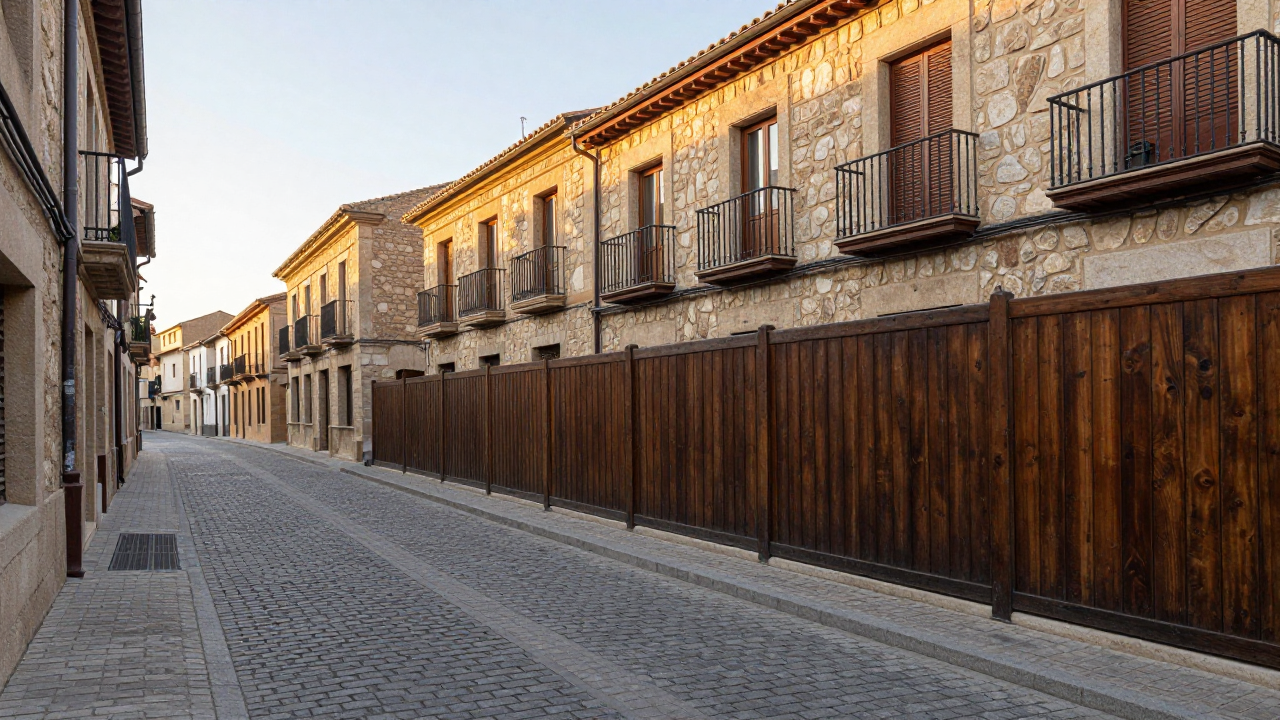
The route is older than the name. The word encierro was first used for the run in 1856, when the Estafeta street replaced an earlier route. The wooden fencing that guides the herd, made of pine with 2,044 planks and 388 posts, follows a design that dates to 1776. Since then the run has turned into a ritual in its own right, with rules that tell you how seriously the city takes it.
What actually happens in a bull run?
The run has a fixed route of 848.6 metres, from the Santo Domingo corrals up through the streets of the old town to the bullring. Along the way it crosses Santo Domingo hill, the Town Hall square, Mercaderes street, the long straight of Estafeta, a stretch called Telefónica, and finally the callejón, the narrow tunnel into the ring. The city hall says it takes about two minutes; other sources average it at around two and a half.
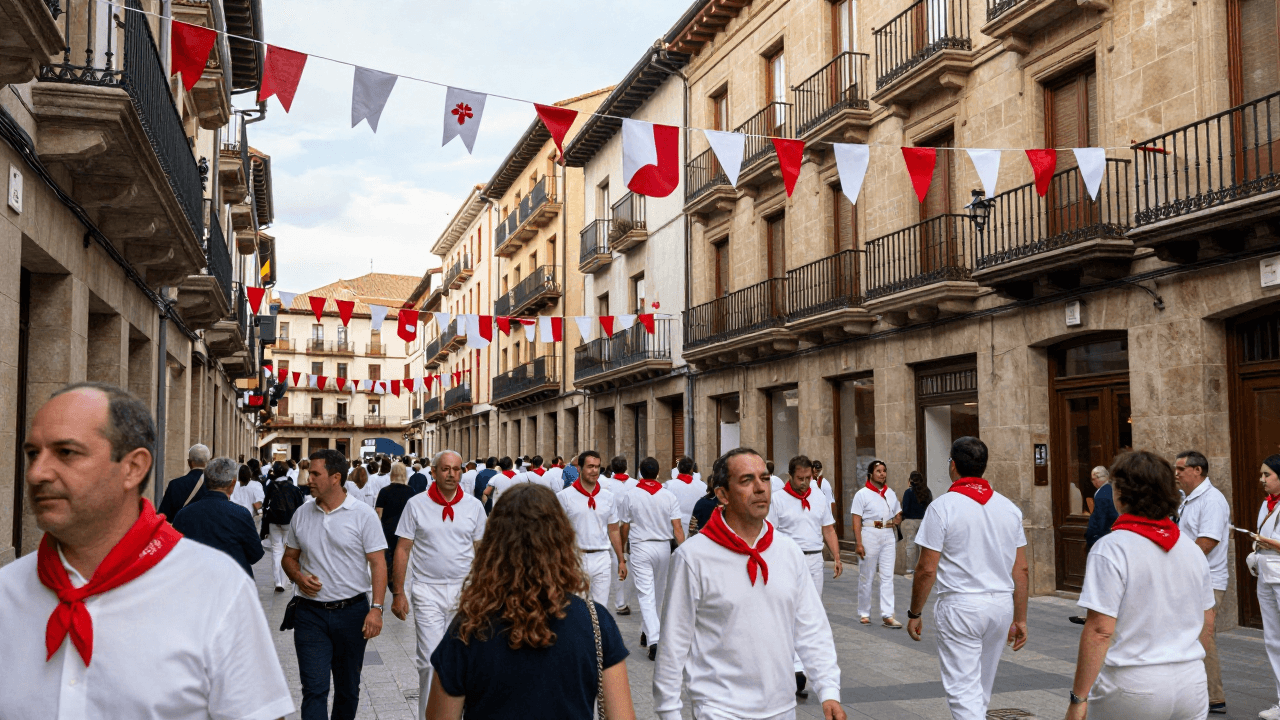
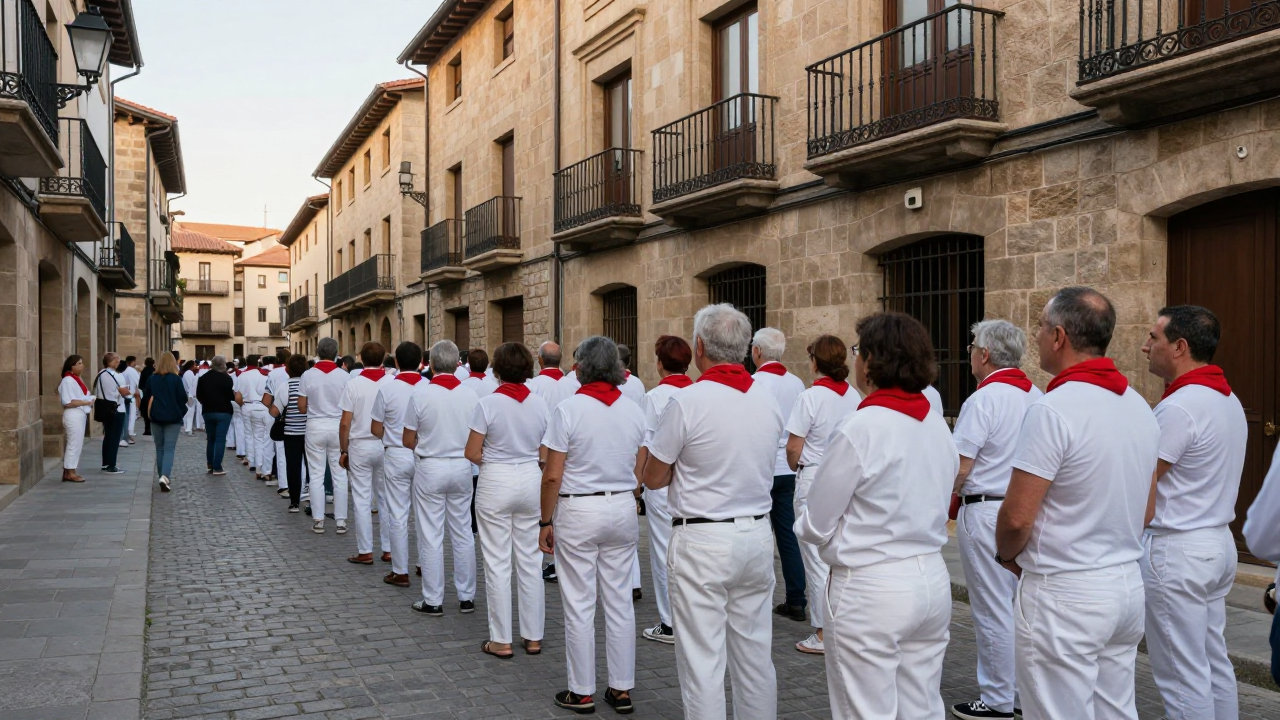
Six fighting bulls run each morning, accompanied by steers (castrated oxen, calm and experienced, whose job is to guide the herd) and herders. The streets are closed to pedestrians 90 minutes before the start. Just before eight the runners sing a short prayer to the saint in front of a small statue, three times in a row, asking for his protection. Then rockets mark the run: one when the gates open, another when all the bulls are out, a third when the herd enters the ring and a fourth when they are in the corrals. Anyone who has watched it on live TV knows these bangs.
The herd travels at around 24 km/h, according to figures often quoted for the run, so nobody outruns them for long. Runners try to stay just ahead of a bull for a few seconds and then step aside. The greatest danger is not usually the horns but falls and pile-ups, especially when the crowd jams at the entrance to the ring.
| Detail | Figure |
|---|---|
| Route length (official, Pamplona city hall) | 848.6 m |
| Start time | 8:00, 7 to 14 July |
| Duration | about 2 to 2.5 minutes |
| Bulls per run | 6, plus steers |
| Minimum age of runners | 18 |
| Streets closed to public | 90 minutes before |
You will find other lengths in guides, some near 825 or 875 metres. Those come from older measurements or different ways of counting the stretch inside the ring. The number above is the one the city itself publishes.
How risky is it, really?
It is dangerous and the city says so. The rules are clear: runners must be over 18, run in the direction of the bulls, must not provoke or touch the animals, and must not be drunk. Breaking the rules brings fines and can get you pulled out by the police. Flash photography is banned during the encierrillo, the early transfer of the bulls to the starting corrals, because it can startle them.
The numbers are sobering. On takvim.in we treat this as a festival to watch with respect. Since 1924, fifteen people have died in the run, the last one in 2009, when a 27-year-old from Alcalá de Henares was killed by a bull named Capuchino. Each year, by commonly cited estimates, some 200 to 300 people are injured, mostly with bruises and contusions. The festival was cancelled in 2020 and 2021 because of Covid-19.
What else is in San Fermín besides the bulls?
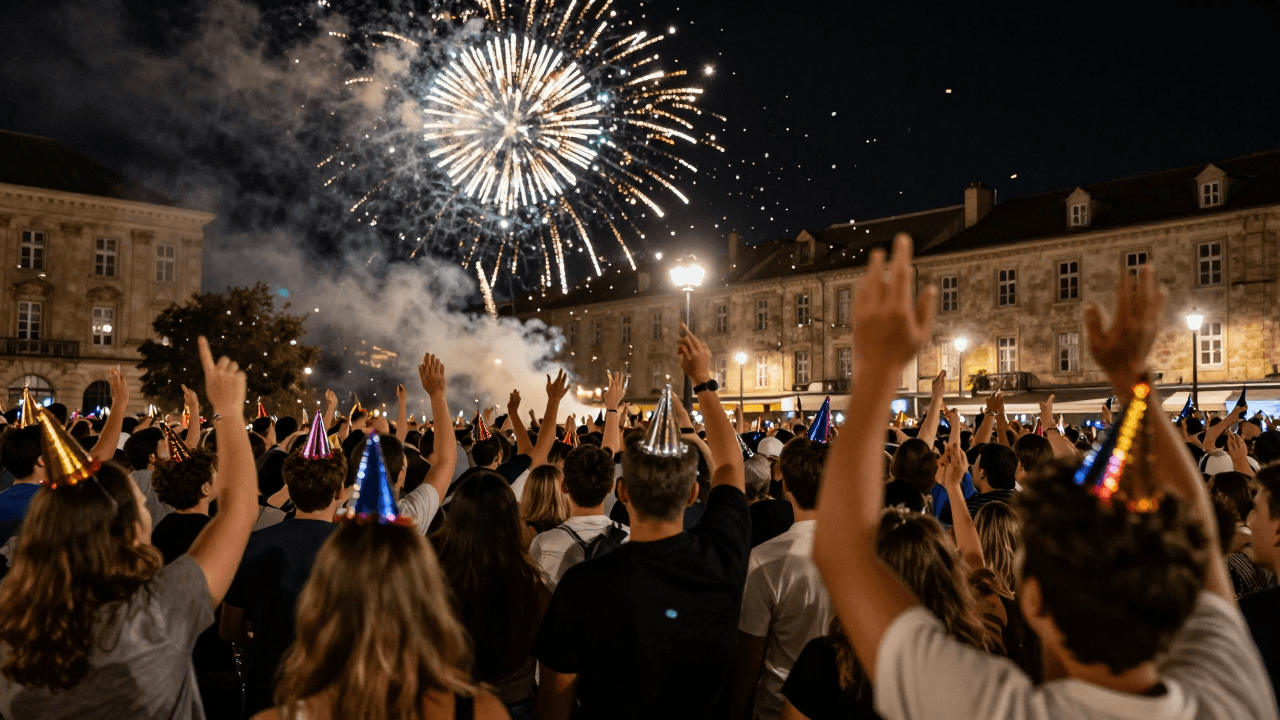
Most of the festival has nothing to do with running. The programme starts with the chupinazo, a rocket fired from the city hall balcony at noon on 6 July while the square below fills with people soaking each other in cheap wine and cava. The classic cry, "Viva San Fermín, Gora San Fermín", is in Spanish and Basque. Once the rocket goes off, the red neckerchief, the pañuelico, goes on. It is meant to be worn until the farewell.
The white clothes and the red scarf are recognisably Pamplona. The white outfit was popularised in the 1930s by a working-class group of friends, La Veleta, who wanted to stand out from other clubs, and the city turned it into an unofficial uniform in the 1960s. The red is linked, in tradition, to the saint's martyrdom.
On 7 July the day belongs to the saint himself. A 15th-century statue of San Fermín is carried through the old town in a procession with dancers, clergy and the cathedral bell. Every morning giant figures parade through the streets, eight giants built in 1860, about four metres tall and joined by 17 other figures, among them the big-heads (cabezudos) and the kilikis. There is music all day, from brass bands to the marching peñas, the local social clubs who organise most of the street life.
The festival ends at midnight on 14 July, when the crowd gathers in the town hall square, lights candles, takes off the red scarves and sings Pobre de mí ("Poor me"): "Poor me, the San Fermín festival is over." The custom goes back to the 1920s.
What made Pamplona famous around the world?
Ernest Hemingway. He first visited in 1923, and his novel The Sun Also Rises (1926) set the festival in front of English-speaking readers. He returned many times until 1959. Before that, San Fermín was known mostly in Spain. After it, it became a stop on the international festival map, and the city has since honoured him with a statue outside the bullring.
Popularity brought change. Today's festival has become a major global tourism event, very different from the traditional local one. Locals still run, and many residents say the best of San Fermín is the part visitors don't see: the family lunches, the dancing in small squares and the neighbourhood peñas.
How do you experience San Fermín without running?
Most visitors do not run, and there are good ways to be part of it.
- Watch, do not run. The safest option is to watch from a spot that is not on the course, or to follow it live on TV. Bar terraces and balconies are often booked long before.
- Wake up early for the encierrillo atmosphere. The streets fill up before dawn, and the singing at 7:55 is worth hearing on its own.
- Spend the day in the old town. Follow the giants, the brass bands and the peñas. The best moments are in the side streets rather than the main squares.
- Wear white and red, but sensibly. Cheap wine ends up on everything, so bring clothes you can throw away.
- Book early. The festival is nine days long and the city is small; rooms and transport fill up well ahead. Some visitors sleep in nearby towns.
- Plan the rest of your year too. Festivals with fixed dates like this one are easy to plan around, and takvim.in lists many others by city and date.
- Consider the ethics. If bullfighting matters to you one way or the other, know that the run is tied to the afternoon fights, where the same bulls are killed, and that there are groups who object to the tradition.
How does it compare with other bull runs?
Bull runs exist across Spain, Portugal, France and Mexico, in many towns. Pamplona's is the most famous; Time magazine has called it the "Super Bowl" of bull runs. Smaller towns run their bulls on open streets, for a single day or a week, and the atmosphere is local. Pamplona is the one that combines a big city fair, a saint's day, a full nine-day programme and international attention, and that is why it has been copied, imitated and criticised for so long.
FAQ
When is San Fermín held, and does the date change?
It is always from noon on 6 July to midnight on 14 July. The bull runs happen on the mornings of 7 to 14 July at 8:00.
How long is the bull run and how long does it last?
The official route is 848.6 metres. The run lasts roughly two minutes, sometimes a little more, depending on how the herd stays together.
Can anyone run with the bulls?
Runners must be at least 18, sober, and follow the instructions of the police and herders. You must not touch or provoke the animals. Streets close 90 minutes before the run, and anyone breaking the rules can be fined.
Is it safe?
No, it is a serious risk. About fifteen people have died in the run since 1924, the last in 2009, and injuries are frequent. Watching from a safe place is the wiser choice for most people.
Conclusion
San Fermín is easy to reduce to two minutes of running and a lot of red and white. It is really a medieval fair, a saint's day, a nine-day street party and a debate about tradition all at once. If you want to keep track of festivals like this one across the year, takvim.in is a good place to find events near you.