Six films, six countries or near-neighbours, one theatre hall in Bursa. In 2022 the Central American Cinema Days put a set of Spanish-language films on a screen in Yıldırım, most of them from a part of the world that rarely reaches Turkish cinemas. It is the kind of cultural programme that is easy to miss and hard to forget, which is exactly why takvim.in keeps a record of it and why it deserves a proper introduction.
Key takeaways
- The Central American Cinema Days (Orta Amerika Sinema Günleri) is a cycle of six Spanish-language films, shown with Turkish subtitles at the Barış Manço Cultural Centre in Bursa in 2022.
- It was organised with the Cervantes Institute, the Embassy of Panama and SICA, the Central American Integration System, which was created in December 1991.
- The films come from Panama, the Dominican Republic, Guatemala, El Salvador and Costa Rica, plus a Panamanian-Argentine co-production, and were released between 2011 and 2020.
- Most of them deal with real history: the 1989 invasion of Panama, Guatemala's armed conflict, the founding of Santo Domingo and Costa Rica's 1948 revolution.
- It is a cycle rather than a yearly festival, so the useful lesson is how to find and follow programmes like it.
What were the Central American Cinema Days?
The cycle was a short film programme in the theatre hall (Tiyatro Salonu) of the Barış Manço Kültür Merkezi, a cultural centre on Mimar Sinan Caddesi in Bursa's Yıldırım district. The organisers were the Cervantes Institute, the Embassy of Panama and SICA. Every film was in Spanish with Turkish subtitles, and the programme carried a +12 age recommendation.
The idea, as the organisers put it, was to bring audiences closer to a cinema that is not yet widely known but has a lot to tell. That is a fair description. Most cinema-goers in Turkey could name a Spanish, Mexican or Argentine director, but very few could name a Salvadoran or a Guatemalan one. A six-film cycle will not fix that, but it gives a curious viewer a fast and varied sample: a war drama, a history documentary, a family tragedy, a portrait of a marriage, a biography and a domestic thriller.
Who is behind it, and what is SICA?
The Cervantes Institute is the Spanish state institution, founded in 1991, that promotes the Spanish language and the cultures of the Spanish-speaking world. Its programmes often work with embassies, which is how a Panamanian diplomatic mission ended up co-hosting a film cycle in Bursa.
SICA is the Sistema de la Integración Centroamericana, the institutional framework for regional integration in Central America. It was set up on 13 December 1991 through the Protocol of Tegucigalpa, which reformed the charter of the older Organisation of Central American States, and it began functioning formally on 1 February 1993. Its founding members were Costa Rica, El Salvador, Guatemala, Honduras, Nicaragua and Panama. Belize joined as a full member in 2000, and the Dominican Republic did so in 2013. Its general secretariat is based in El Salvador.
This explains a detail that puzzles newcomers: the Dominican Republic is in the Caribbean, not on the Central American isthmus, yet it appears in a Central American programme. Through SICA it is a full member, so its cinema belongs in the cycle.
Why does this cinema feel so unfamiliar?
Central American countries are small, and most of them have film industries that produce only a handful of features in a good year. Films often depend on co-production, international festivals and streaming platforms to travel. Several titles in this cycle show exactly that. Salsipuedes is a Panamanian-Argentine co-production. La Palabra de Pablo took roughly ten years to develop, according to reporting on the film, and was described as the first Salvadoran film bought for broadcast by HBO. Septiembre, un llanto en silencio later found an international audience through a streaming deal.
The result is a cinema that is less about spectacle and more about local stories told with limited budgets: a neighbourhood during an invasion, a family fracturing, a couple on holiday. That intimacy is what a cycle like this can offer better than a multiplex.
What are the six films about?
| Film | Country | Year | Kind of story |
|---|---|---|---|
| Causa Justa | Panama | 2019 | War drama set during the 1989 US invasion |
| Santo Domingo, Primera de América | Dominican Republic | 2020 | Documentary on the city's founding |
| Septiembre, un llanto en silencio | Guatemala | 2017 | Family drama in the armed conflict |
| Salsipuedes | Panama and Argentina | 2011 | Drama about a marriage on a camping trip |
| Primera Dama de la Revolución | Costa Rica | 2016 | Biography of Henrietta Boggs |
| La Palabra de Pablo | El Salvador | 2018 | Family drama loosely inspired by Othello |
Causa Justa (Operation Just Cause) was directed by Luis Franco Brantley and Luis Pacheco, and its title is the name the United States gave to its December 1989 invasion of Panama. Rather than following one hero, the film weaves several interconnected stories that unfold as the invasion begins in the early hours, during Christmas preparations: a Panamanian officer who feels betrayed by his superiors, a young man trying to stop his friends from going out to fight, a fisherman trying to bury his compadre, an imprisoned American businessman accused of being a CIA agent, and a woman unable to escape her past. Panama submitted it as its entry for the international feature category of the 93rd Academy Awards.
Santo Domingo, Primera de América (2020, 80 minutes) was directed by José Enrique Pintor and co-written with the broadcaster Huchi Lora. It is a documentary about the origins of the city of Santo Domingo and, through it, of the European presence in the Americas. It does not tell only the triumphant version: it dwells on the drama and tragedy that the settlement meant for the indigenous population and on the cry of Fray Antón de Montesinos, a Dominican friar whose sermon is remembered as one of the first public protests in the New World on behalf of human rights.
Septiembre, un llanto en silencio was written and directed by Kenneth Müller and premiered in Guatemala on 28 September 2017. It follows a father and his deaf daughter, Theresa, over years marked by Guatemala's internal armed conflict of the 1980s. The story was inspired by the experience of Müller's own brother, who lost his hearing after a guerrilla bombing. Be aware that the film's political framing has drawn criticism from some Guatemalan commentators, so it is best watched as one perspective on a contested history rather than as a settled account.
Salsipuedes (2011, 66 minutes) is the earliest and shortest film in the set. Mariano Luque, born in Córdoba, Argentina, in 1986, directed it. A couple, Carmen and Rafa, spend a short camping holiday in hilly country, and small gestures gradually reveal a silenced violence in which he holds the power. The arrival of Carmen's mother and sister turns the holiday into a strained performance of normal family life. It is a quiet film in which what is not said matters most.
Primera Dama de la Revolución (in English, First Lady of the Revolution) is a documentary by the American filmmaker Andrea Kalin, released in 2016. It tells the life of Henrietta Boggs, a young woman from Alabama who visited relatives in Costa Rica, met the farmer José Figueres Ferrer, married him in 1941 and was Costa Rica's first lady from 1948 to 1949.
La Palabra de Pablo (2018) was directed by Arturo Menéndez. It is set in an upper-middle-class Salvadoran family and is loosely inspired by Shakespeare's Othello. Pablo Matamoros manipulates his father Oscar, a mentally unstable lawyer facing corruption charges, into believing that Oscar's new partner is unfaithful, out of jealousy over the new relationship. It premiered on 27 September 2018.
Why is Santo Domingo called the first city of the Americas?
The documentary's title is a claim, and it rests on history. Santo Domingo, on the south coast of the island of Hispaniola, was founded in 1496 by Bartholomew Columbus, the brother of Christopher Columbus, and it became the first permanent European city in the New World. Its Colonial City was inscribed on the UNESCO World Heritage List in 1990. A visitor walking its old stone streets is walking through the earliest chapter of colonial history in the Americas.
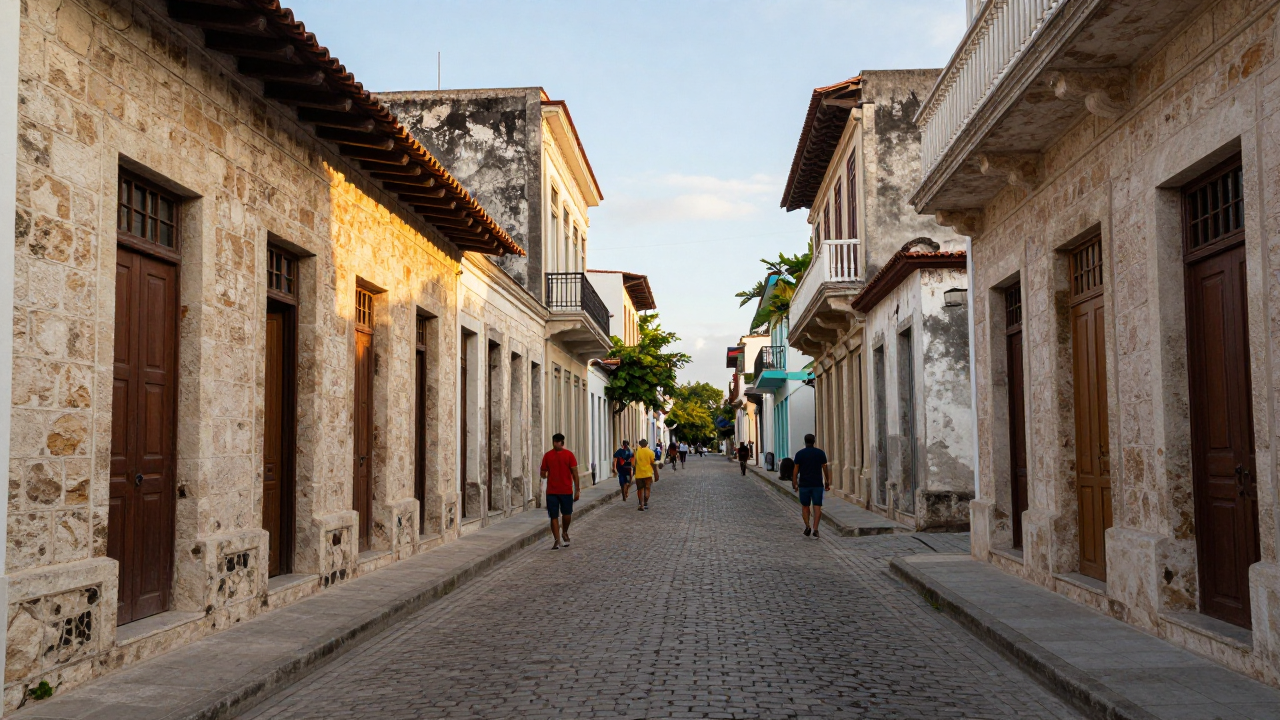
That history is not only a source of pride. It is also where the story of the indigenous Taíno population, of forced labour and of early protest begins, and that is why the documentary spends time on Montesinos and his sermon in the early sixteenth century rather than only on the founding date.
How does history shape these stories?
Four of the six films are anchored in real events. Causa Justa returns to December 1989 in Panama. Septiembre looks at Guatemala's conflict, which ran for decades before the peace accords of 1996. Primera Dama de la Revolución sits next to the Costa Rican civil war of 1948, after which Figueres abolished the national army, a decision Costa Rica has kept ever since. Santo Domingo goes back more than five centuries.
The other two, Salsipuedes and La Palabra de Pablo, turn the lens inward, on private life. Together they show that Central American cinema does not only look at politics: it also looks at jealousy, silence and control inside homes.
How can you experience a cycle like this?
The Bursa cycle was a one-off programme, so there is no fixed annual date to plan around, and the honest advice is to look for similar events. Embassies and cultural institutes regularly run short cycles with free or low-cost screenings, and they tend to be announced only a few weeks ahead, which is the kind of listing takvim.in is built to surface. Some of these six films have travelled beyond festivals, so a streaming search for the titles may also help.
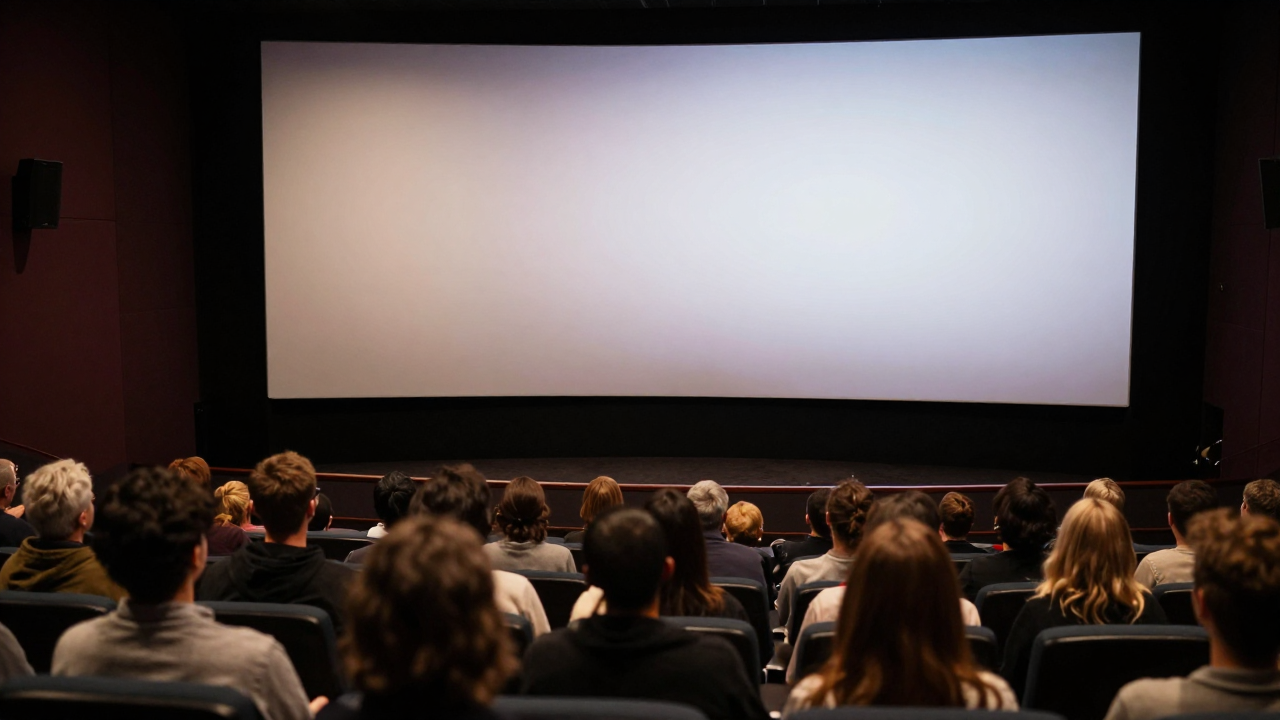
A few habits make a cycle like this more rewarding. Read a paragraph about the historical background before a film such as Causa Justa or Septiembre, since both assume you know roughly what happened. Stay for a discussion if one is offered. And watch two films from different countries back to back, because the contrast in tone is the real lesson.
FAQ
Is this an annual festival?
The only edition we know of was held in 2022 in Bursa, so it is best treated as a single cycle rather than a yearly festival.
Which countries are represented?
Panama, the Dominican Republic, Guatemala, El Salvador and Costa Rica, plus a Panamanian-Argentine co-production. The organisers describe them as films from SICA countries.
Do I need to speak Spanish?
No. In Bursa the films were shown in Spanish with Turkish subtitles.
Is the Dominican Republic really part of Central America?
Geographically it is in the Caribbean, but it has been a full member of SICA since 2013, which is why it was included.
Closing thoughts
A small cycle of six films can do what a textbook chapter often cannot: make a region feel specific, human and unfinished. If this one made you curious, follow the cultural centres, embassies and institutes in your own city, and check takvim.in for screenings and film events near you.