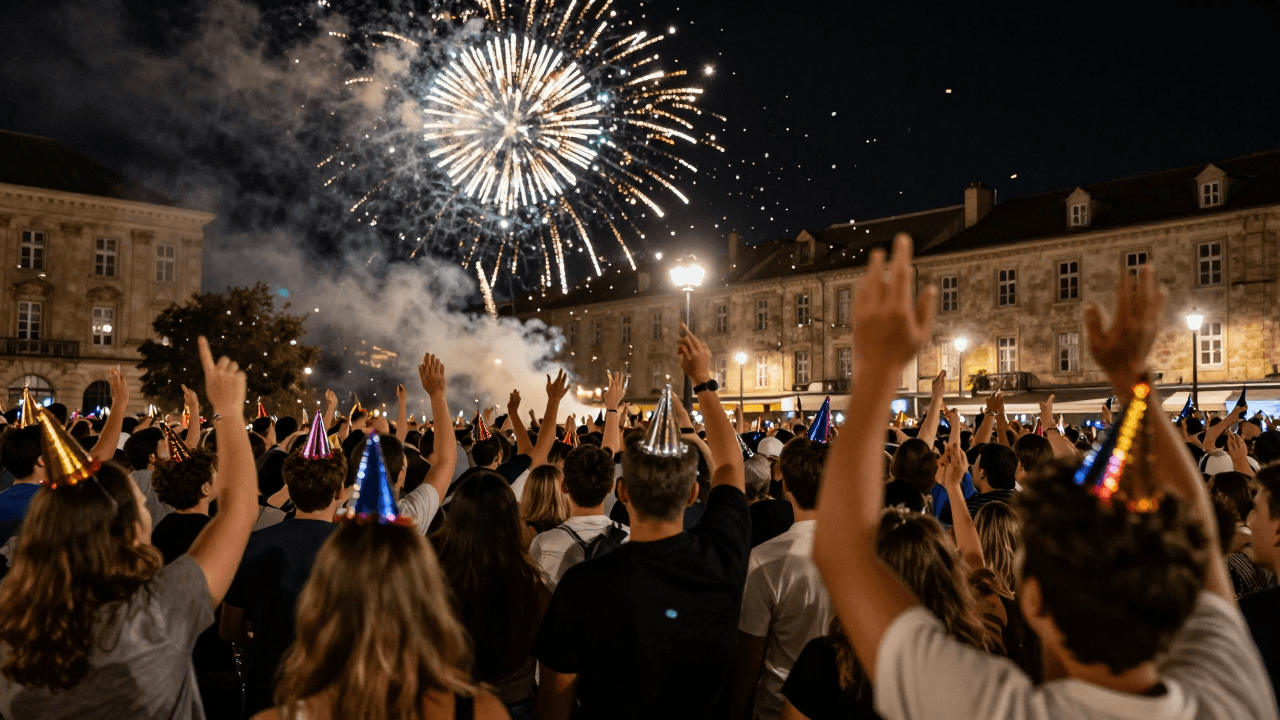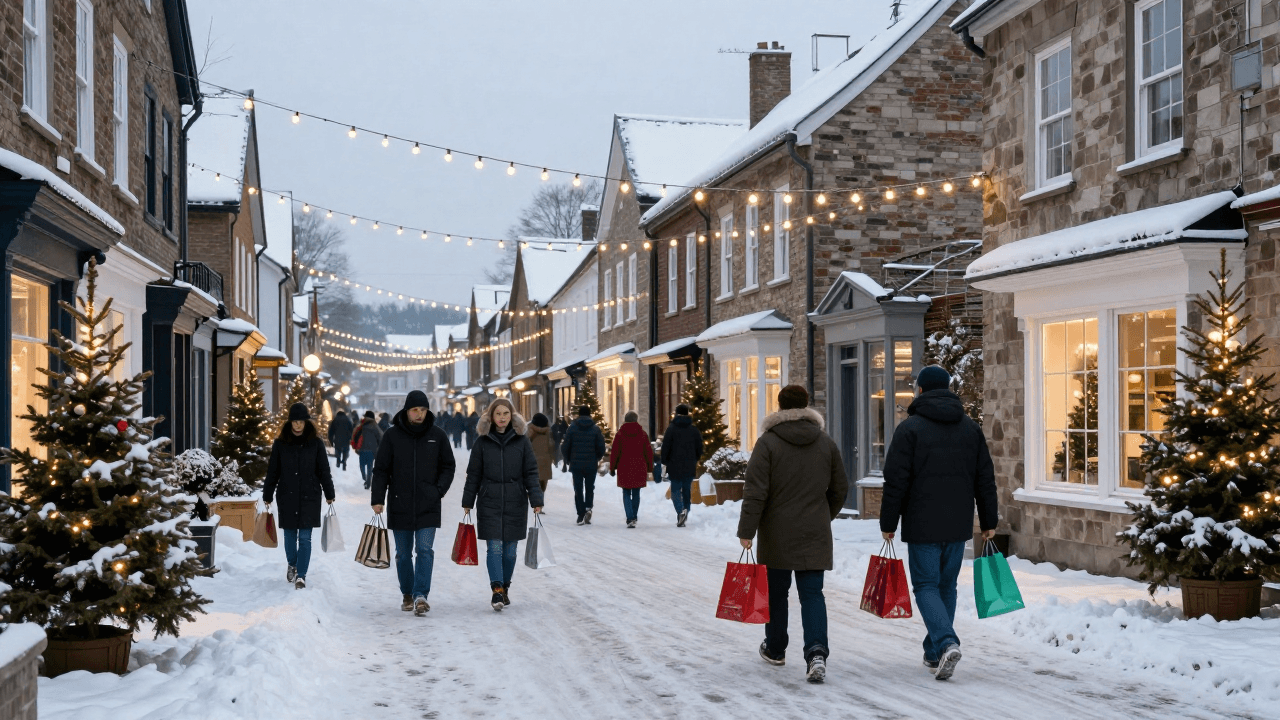
On the evening of 24 December, the lights come on in Istanbul's Fener district for a midnight liturgy, while thousands of kilometres away a Christmas market in Saxony smells of roasted almonds and mulled wine, and in Addis Ababa people will not celebrate for another two weeks. Christmas is one holiday with many calendars, many tables and many accents. At takvim.in we see how this season fills the city agenda every year, so here is a clear guide to what Christmas is, where its date comes from and how it is actually lived.
Key takeaways
- Christmas marks the birth of Jesus in Christian belief; the Western churches keep it on 25 December, while many Orthodox churches that follow the Julian calendar keep it on 7 January (Gregorian date).
- The Armenian Apostolic Church celebrates the Nativity together with Epiphany on 6 January.
- The earliest known record of 25 December as the feast of Christ's birth comes from a Roman document, the Chronograph of 354; the Bible gives no date.
- The tree, Saint Nicholas, carols and Christmas markets each have their own separate histories that merged over centuries.
- In Turkey Christmas is not a public holiday, but Christian communities in Istanbul mark it in their churches, and the city's Kadikoy stages also hosted Christmas-themed shows in 2022.
What is Christmas, exactly?
Christmas is the Christian feast of the Nativity, the birth of Jesus of Nazareth. The word comes from the Old English "Christes maesse", Christ's Mass. In churches it is a liturgical season, not a single day: Advent, the four-week run-up, leads to the feast, and in Western tradition the Twelve Days of Christmas run from 25 December to 5 January, ending on the eve of Epiphany on 6 January.
Around this religious core has grown a second, widely shared cultural holiday: gift-giving, family meals, decorated homes, seasonal music and public lights. Many people who are not Christian, or not religious at all, take part in that second layer. It helps to keep both in mind, because most misunderstandings about Christmas come from mixing the two.
Why 25 December? Where does the date come from?
The Gospels do not say when Jesus was born, and early Christians were in no hurry to fix a birthday. The oldest surviving evidence that Rome kept 25 December as the feast of Christ's birth is the Chronograph of 354, an illustrated almanac compiled for a Roman Christian in the year 354. Its calendar lists "the birth of Christ in Bethlehem of Judea" on the eighth day before the kalends of January, which is 25 December.
Why that day? Historians offer two main explanations, and they are debated rather than settled.
- The Sun theory. Since the reign of Emperor Aurelian (from 274), Rome honoured the "Unconquered Sun" (Sol Invictus) around 25 December, close to the winter solstice. Some scholars think Christians chose the date to give the season a new meaning.
- The calculation theory. Some early writers believed Jesus was conceived on 25 March, the date later linked to the Annunciation, and nine months later is 25 December.
Both ideas may have reinforced each other. What is certain is that by the fourth century the feast was established in Rome and spread from there.
Why do some churches celebrate on 6 or 7 January?
The difference is a matter of calendars, not of belief. In 1582 Pope Gregory XIII introduced the Gregorian calendar to correct the drift of the older Julian calendar. Catholic and Protestant countries adopted it earlier; many Orthodox churches kept the Julian calendar for church feasts. Between 1900 and 2100 the Julian calendar runs 13 days behind, so a Christmas on "25 December" in the Julian calendar falls on 7 January in the civil calendar.
| Tradition | Date (Gregorian calendar) | Note |
|---|---|---|
| Catholic, Protestant, Greek Orthodox (Ecumenical Patriarchate) | 25 December | The Ecumenical Patriarchate in Istanbul is in this group |
| Russian, Serbian, Ethiopian Orthodox, Coptic | 7 January | Julian calendar keepers |
| Armenian Apostolic Church | 6 January | Nativity and Epiphany kept together |
Russia, for example, treats 7 January as a public holiday, and Ethiopia's Orthodox Christians celebrate Genna on the same day.
Where do the tree, Santa Claus and carols come from?
The tree. Decorated evergreen trees in homes come from German-speaking lands, with roots in the 16th century. The custom reached wider Britain and beyond in the 19th century, helped by an 1848 illustration of Queen Victoria's family around a tree, published in the Illustrated London News.
Saint Nicholas. The figure behind Santa Claus is Nicholas, a fourth-century bishop of Myra, in today's Demre in Antalya province, on Turkey's Mediterranean coast. His feast day is 6 December. The name "Santa Claus" comes from the Dutch "Sinterklaas", and the red-coated modern image took shape in 19th- and 20th-century North America. This is a good reminder that the man usually imagined at the North Pole began in Anatolia.
Carols. The word carol originally meant a song with dance. Sacred Christmas songs grew through medieval and later hymn traditions. One of the most famous, "Silent Night", was first performed on 24 December 1818 in Oberndorf near Salzburg, Austria, with words by Joseph Mohr and music by Franz Xaver Gruber.
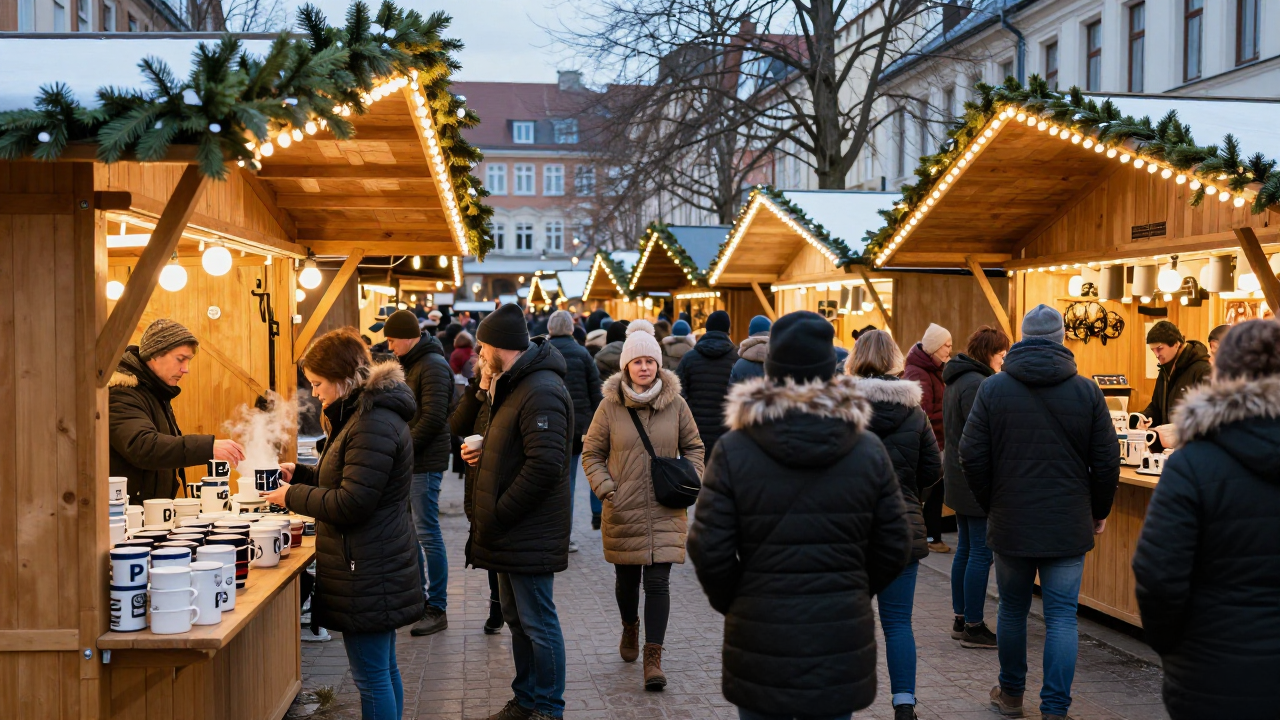
Christmas markets. German-speaking Europe made the winter market a tradition. Dresden's Striezelmarkt is first mentioned in 1434, when it was a one-day market for the Christmas meal after the Advent fast. Today markets of every size open in Advent across Central Europe.
How is Christmas celebrated around the world?
The details vary widely, which is part of the charm.
- Germany and Austria: Advent wreaths, market evenings, and the main family celebration on the evening of 24 December.
- Mexico: Las Posadas, a series of nine evening processions from 16 to 24 December that re-enact the search for shelter.
- Philippines: Simbang Gabi, nine dawn masses beginning on 16 December, preceded by a Christmas season that starts in early autumn in popular culture.
- Ethiopia: Genna on 7 January, with an early-morning church service and white traditional clothing worn by many worshippers.
- Sweden: St Lucia on 13 December, with processions of candle-crowned singers, opens the season.
- Russia and Serbia: Orthodox Christmas on 7 January, after a fasting period that, for many, is strict.
How is Christmas observed in Turkey and Istanbul?
Turkey is a secular state with a Muslim-majority population, and Christmas is not an official holiday. The public holiday is New Year's Day on 1 January, and Turkish shops and homes have long used New Year trees and a Santa-like figure in that setting. Turkish readers therefore often know "Noel Baba" (Father Christmas) as a New Year character.
For Christian communities, though, the season is religious. Istanbul is home to the Ecumenical Patriarchate of Constantinople in the Fener (Phanar) district, which holds services on 25 December, in line with its calendar. The Armenian Patriarchate, with its main church in Kumkapi, marks the Nativity and Epiphany on 6 January. Other communities, including Catholic, Protestant and Syriac Christians, hold their own services on their own dates. Services in these churches are first of all worship for the congregation, so visitors should ask before attending, dress modestly and avoid photography during prayer.
The city's cultural stages have also reflected the season. In 2022, Kadikoy's cultural centres hosted a children's play about a Christmas adventure with Santa's lost sleigh, and the Yeldegirmeni Sanat venue held a Christmas evening of jazz arrangements of seasonal songs led by pianist Nilufer Verdi, described at the time as one of Turkey's first female jazz pianists. These are past editions, but they show how a religious feast becomes a shared cultural evening in Istanbul.

How to experience Christmas respectfully
Start by deciding which Christmas you want to see. A midnight liturgy, a market, a carol concert and a children's show are four different experiences with four different etiquettes. Check dates, because the same city can have Christmas on 25 December, 6 January and 7 January. Read local listings and church notices rather than guessing, and remember that a service is not a performance.
If you are invited to a Christian friend's table, bring a small gift or something sweet, and ask what the family eats. Traditions differ hugely: fish on Christmas Eve in some households, roast meat in others, and meat-free tables in fasting Orthodox homes.
FAQ
Is Christmas on 25 December for everyone?
No. Catholics, Protestants and many Orthodox churches keep 25 December. Churches that follow the Julian calendar celebrate on 7 January, and the Armenian Apostolic Church on 6 January.
Was Jesus actually born on 25 December?
The Bible does not give a date. The earliest known record of 25 December as the feast of Christ's birth is in a Roman calendar from 354. The date is a tradition of the church, not a documented birthday.
Is Christmas a holiday in Turkey?
No, it is not an official public holiday. Christian communities observe it in their churches, and 1 January is the public holiday people associate with New Year decorations.
Was Santa Claus really from Turkey?
The saint behind the legend, Nicholas, was bishop of Myra, today's Demre. The modern Santa Claus image developed later, mainly in Europe and North America.
Conclusion
Christmas is a religious feast, a calendar puzzle and a shared cultural season all at once, and it looks different in Fener, Dresden, Manila and Addis Ababa. Knowing the difference between 25 December, 6 January and 7 January is the first step to understanding what you are looking at. When the season comes around, takvim.in is a good place to find concerts, children's shows and cultural evenings near you.