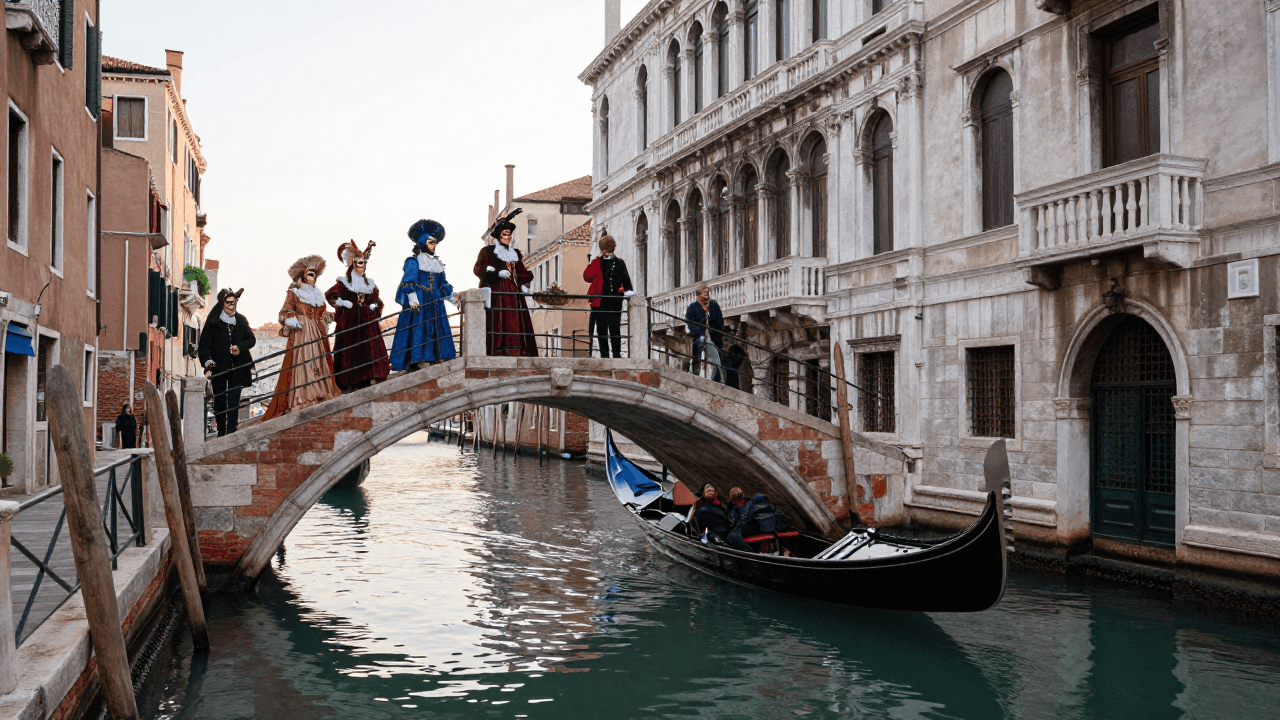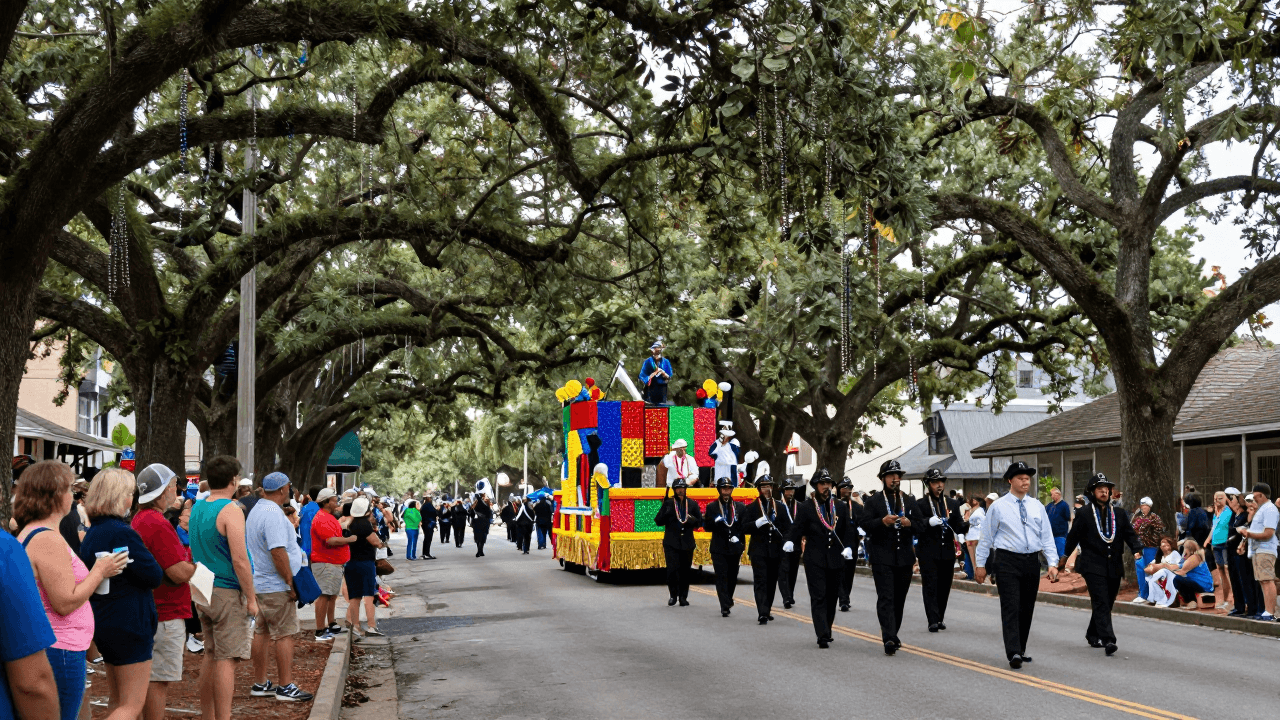
Picture a city where a marching band can stop traffic at ten in the morning, strangers shout "throw me something, mister!" from a curb, and a tray-sized cake with a plastic baby hidden inside decides who hosts the next party. That is New Orleans in carnival season, and it is a very different animal from the Rio or Venice versions most people know. If you are looking for festivals to plan a year around, takvim.in is a good place to start, and Mardi Gras is one of the occasions that rewards planning months ahead.
Key takeaways
- Mardi Gras is French for "Fat Tuesday": the last day before Ash Wednesday, when the Christian season of Lent begins. Because it is tied to Easter, its date moves every year.
- The party is not one day. Carnival season starts on 6 January and builds through weeks of parades to a climax on Fat Tuesday itself.
- The parades are run by private social clubs called krewes (pronounced "crew"), and the oldest of them, the Mistick Krewe of Comus, rolled its first parade in 1857.
- Purple, green and gold, the colours of Mardi Gras, were set by the Rex organization in 1872 and stand for justice, power and faith.
- Most of the fun happens along family parade routes and in neighbourhoods, not on Bourbon Street; the biggest parades have been kept out of the French Quarter since 1971.
- Plan around the date: it was Tuesday 17 February in 2026 and is Tuesday 9 February in 2027.
What is Mardi Gras, exactly?
"Mardi gras" is simply French for "fat Tuesday". It names the final day of the pre-Lenten party, the day before Ash Wednesday. Ash Wednesday is the day Catholics and many other Christians begin Lent, the 40-day period of fasting and restraint that leads up to Easter. The idea behind fat Tuesday is straightforward: eat, drink and celebrate before the lean weeks begin. The same day is known as Shrove Tuesday or Pancake Day in Britain and as Terca-feira Gorda in Brazil.
Two names get mixed up all the time. Mardi Gras is the single day. Carnival is the whole season, which traditionally opens on 6 January, the Feast of the Epiphany (also called Twelfth Night or Three Kings Day), and runs until midnight on Fat Tuesday. In New Orleans people use "Mardi Gras" for both, and you will hear "Mardi Gras season" all through January and February.
Where does Mardi Gras come from?
The roots are European: pre-Lenten feasting was a fixture of medieval Catholic Europe, and French colonists carried it across the Atlantic. The first recorded Louisiana celebration dates to early March 1699, when the explorer Pierre Le Moyne d'Iberville and his men camped on the Mississippi River south of today's city and named the spot Pointe du Mardi Gras. New Orleans itself was only founded in 1718, and sources disagree on precisely when it began marking the day; a 1730 account already mentions music, dancing and masking.
The organised parade tradition is more recent. The Mistick Krewe of Comus was founded in 1856 by a group of 21 businessmen who met in a French Quarter club room to plan a formal procession, and the city's first parade of that kind followed in 1857. Louisiana made Mardi Gras a legal state holiday in 1875, and it remains one to this day in the parishes (Louisiana's counties) that observe it.
What are krewes, and why do they run the show?
A krewe is a private social club that organises a parade, a ball, or both. The old-fashioned spelling comes from the 1850s "Mistick Krewe", a secret-society style of club. Members pay dues, ride the floats in masks and costumes, and the whole thing is financed largely by them rather than by the city.
In 1872 a new club called Rex, "king of carnival", staged a daytime parade and stayed. Rex laid down the colours that define the holiday: purple, green and gold. After a colour-themed parade in 1892, the group declared that they symbolise justice, power and faith. Rex still parades on Mardi Gras morning, and its king is widely treated as the ceremonial ruler of the day.
The other giant of the day is the Zulu Social Aid and Pleasure Club, founded in 1909 by Black New Orleanians at a time when most white krewes excluded them. Zulu is known for its costumes and for its hand-decorated coconuts, among the most prized throws in the city. In 1992 the City Council passed an ordinance against racial discrimination in krewe membership, which changed how many older krewes operate.
Which krewes and eras shaped the modern parade?
The parade landscape has been changed several times by newcomers. The table below lists some of the milestones that are well documented.
| Krewe | Year | Why it matters |
|---|---|---|
| Mistick Krewe of Comus | 1857 | The first krewe to stage a formal Mardi Gras parade |
| Rex | 1872 | Introduced the daytime parade and the purple, green and gold colours |
| Zulu | 1909 | Black-founded krewe famous for its coconut throws |
| Iris | 1959 | Recorded as the first women-only krewe |
| Bacchus | 1969 | Started the "superkrewe" movement of huge, celebrity-led parades |
| Endymion | 1974 | An early superkrewe following Bacchus |
| Orpheus | 1993 | Completed the big three of superkrewes |
| Muses | 2001 | Women's krewe known for hand-decorated shoes as throws |
| Nyx | 2012 | Women's krewe that premiered its floats this year |
Note the pattern: the story of Mardi Gras is a story of who gets to take part. In 1971 the largest parades were banned from the narrow streets of the French Quarter, since floats simply could not fit. That decision is a big reason the parade routes and the Bourbon Street party feel like two separate worlds today.
What actually happens during Mardi Gras?
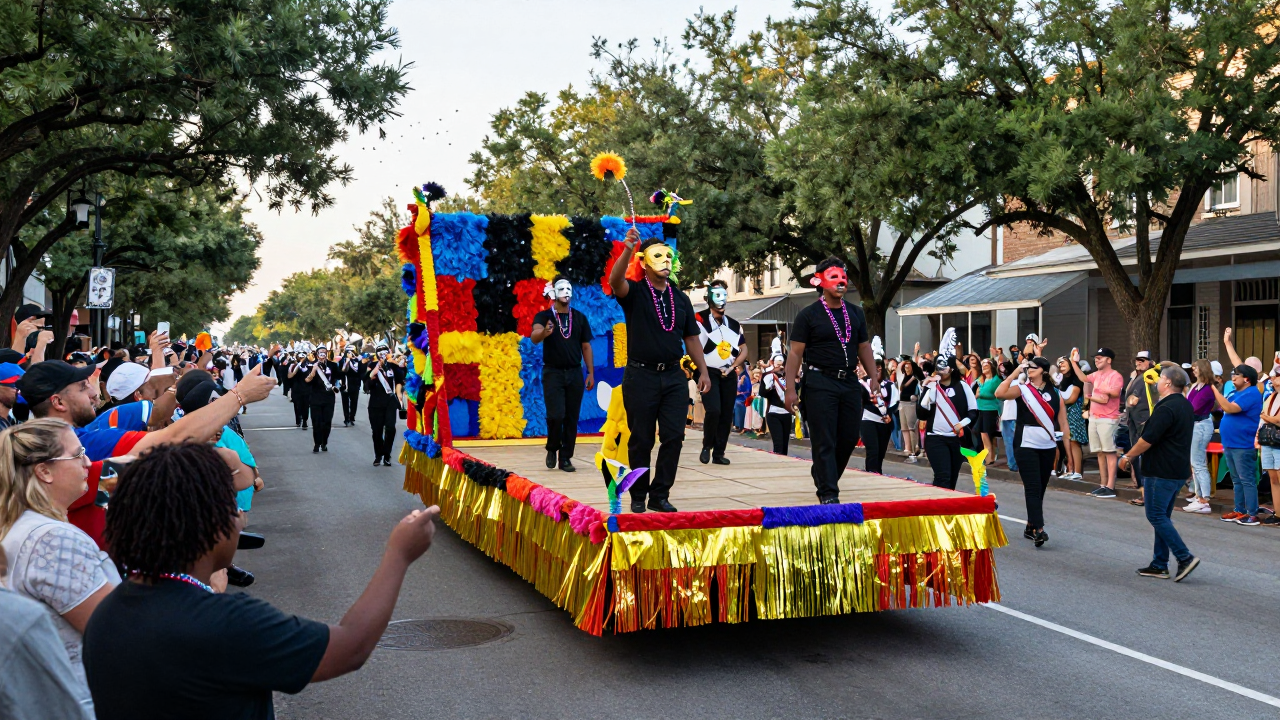
The season has a rhythm. Through January and February, parades roll on most weekends, then nearly every evening in the final stretch. Parades run for a long time, typically for at least five miles along routes such as St. Charles Avenue, and a large one can take hours to pass a single spot. The best-known fixtures are these:
- Parades. Floats with masked riders, marching bands, dance troupes and horse-mounted riders move along set routes. Crowds line the route hours ahead and bring ladders, chairs and picnic tables.
- Throws. Riders toss beads, plastic cups and stuffed toys into the crowd; the crowd shouts for them. Special throws like Zulu coconuts, Muses shoes and Rex doubloons (aluminium coins) are collected for years.
- King cake. A ring-shaped cake with sugary icing in purple, green and gold, with a small plastic baby hidden inside. Whoever finds the baby is expected to buy the next cake or host the next party, which is why king cakes circulate through offices and homes all season.
- Balls. Many krewes hold invitation-only masked balls, a tradition older than the street parades.
- Mardi Gras Indians. Black neighbourhood groups who sew elaborate feathered suits by hand, a process that takes a full year, and appear on Mardi Gras day.
- Fat Tuesday itself. Costumes, brass bands and street parties fill the city from early morning; at midnight the city's police famously clear Bourbon Street and Ash Wednesday begins.
Is Mardi Gras all about Bourbon Street?
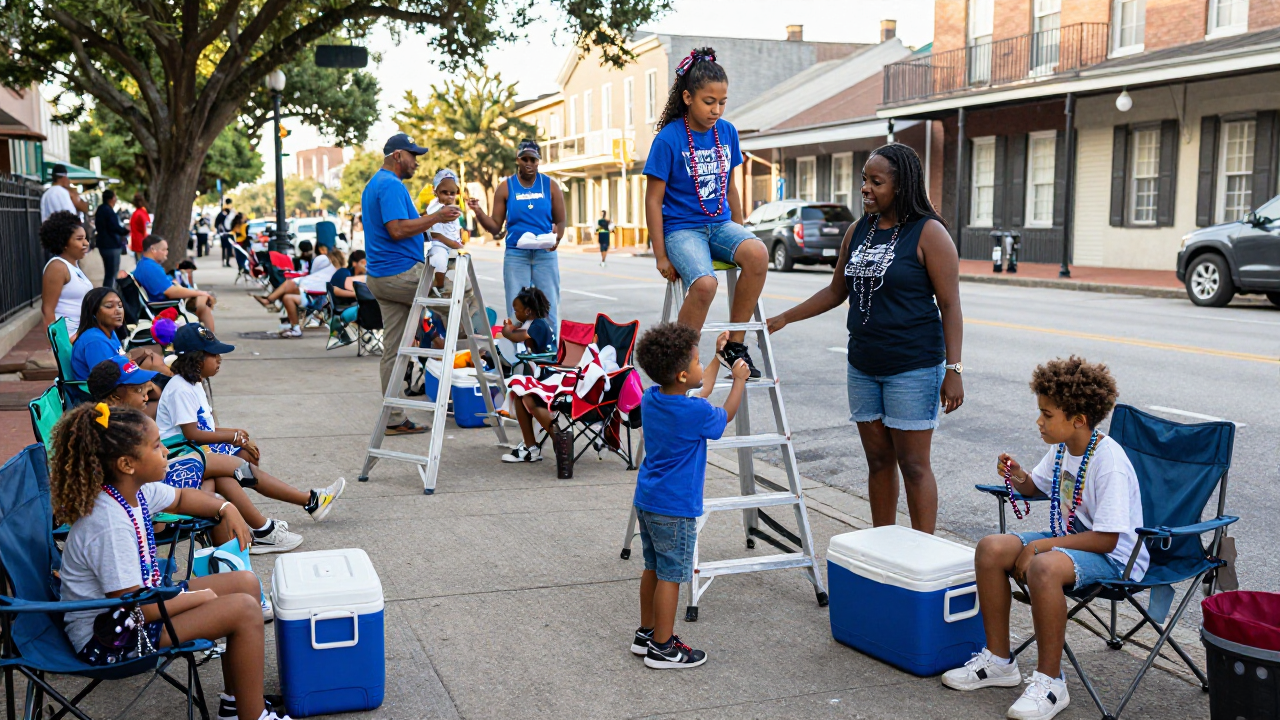
Not really. Bourbon Street is loud, crowded, and it is the version of New Orleans most tourists imagine, and it earned a reputation for late-night excess. But the part of Mardi Gras that locals talk about is out along the parade routes and in the neighbourhoods: families set up on St. Charles Avenue with ladders and coolers, kids catch beads, and marching bands make the sidewalk shake.
If you only visit Bourbon Street you will miss the actual tradition. On the parade routes, throws are simply tossed to whoever shouts and reaches. Anyone who prefers a calmer day will find plenty of family-oriented spots away from the French Quarter.
How many people come, and when should you go?
A 2020 study estimated that Mardi Gras brings around 1.4 million visitors to New Orleans, which explains why hotels fill up months in advance. The date matters, so here is the arithmetic: Mardi Gras falls 47 days before Easter Sunday. Easter can land anywhere between 22 March and 25 April, so Fat Tuesday lands between 3 February and 9 March.
| Year | Fat Tuesday | Ash Wednesday |
|---|---|---|
| 2026 | 17 February | 18 February |
| 2027 | 9 February | 10 February |
For 2027, Easter is on 28 March, which is why the season is a bit shorter: roughly five weeks between 6 January and 9 February. The last weekend before Fat Tuesday is the busiest.
How do you experience it well?
- Pick one weekend and one route. You cannot see everything. The final weekend has the largest parades and the largest crowds; the weekend before is calmer.
- Book early. With visitors in the millions, lodging is the first thing to go. Book as soon as the date is set.
- Go where the families are. Uptown along St. Charles Avenue is the classic spot; the French Quarter is best for evening strolling.
- Dress in colour. Costume is part of the tradition. Purple, green and gold everywhere, and masks are welcome on Fat Tuesday.
- Bring patience. Wait for the parade, wait for the crowd to clear, and try a slice of king cake while you wait.
FAQ
Is Mardi Gras the same as Carnival?
Almost. Carnival is the season that starts on 6 January; Mardi Gras is its last day. In New Orleans people use the term for the whole season, so "Mardi Gras" can mean either.
Why does the date change every year?
Because it is calculated backwards from Easter, which follows the lunar calendar. Mardi Gras falls 47 days before Easter Sunday, on the Tuesday before Ash Wednesday, so it can land anywhere between early February and early March.
Is Mardi Gras suitable for children?
The parades along St. Charles Avenue and in neighbourhoods are very family-oriented, and many locals bring small children. Bourbon Street at night is another matter. Choose your spot, and go early in the day.
Who created the purple, green and gold colours?
The Rex organization set them for its first parade in 1872, and in 1892 declared that they mean justice, power and faith.
Where to go next
Mardi Gras is one of the world's great street traditions, and one of its most misunderstood. Once you understand krewes, colours and the calendar, it makes a lot more sense than the postcard version. When you are ready to plan, browse takvim.in for carnivals, festivals and events near you and around the world, and check the dates before you book.