Imagine walking into a hall in Istanbul's Kadıköy district on a September evening and watching a punk bassist, a pop-art master and a Weimar-era screen star brought back to life through dance. That is how the Istanbul Fringe Festival opened on 16 September 2023. But what does "fringe" actually mean, and what kind of festival is Istanbul's version? Starting from the 2023 opening night recorded in the takvim.in archive, this guide explains where the fringe idea comes from, how the Istanbul festival works and how to experience it.
Key takeaways
- Fringe means "edge." The idea was born in 1947, when eight theatre companies turned up uninvited to the Edinburgh International Festival.
- The idea for the Istanbul Fringe Festival came up among a group of friends in 2017. The first edition took place in 2019.
- The festival runs for about a week each September and brings theatre, dance and performance to venues across the city.
- The 5th edition ran 16-23 September 2023 across 14 venues, with 15 international and 5 Turkish shows.
- The opening night on 16 September 2023 took place at Alan Kadıköy with two pieces by the British company Thick & Tight.
- Beyond the shows, the programme includes workshops, talks and social events.
What is a fringe festival?
"Fringe" means edge or margin. A fringe festival puts the spotlight on performing arts that come from the edge rather than the centre: young companies, experimental forms, ideas that push at limits. A conventional festival is programmed by a committee around established names. A fringe festival goes looking for new voices, first-time companies and unusual formats.
That is why fringe festivals tend to feature small rooms, short pieces and a close relationship with the audience. In one evening you can see two or three very different works, and each rarely runs longer than an hour. The Istanbul festival describes its own mission in the same spirit: to bring innovative, original works by emerging artists from around the world and from Turkey to Istanbul's arts audience.
Where did the fringe idea come from?
The story goes back to 1947. After the Second World War, the first Edinburgh International Festival was created to revive European cultural life. Eight theatre companies that had not been invited went to Edinburgh anyway and staged their own shows on the "fringe" of the official programme. Both the event and its name come from those uninvited guests.
In 1958 the Festival Fringe Society was set up. Its best-known principle was that it would not vet the programme: anyone with a story to tell and a venue willing to host it could take part. Today the Edinburgh Festival Fringe is described as the world's largest performing arts festival.
The idea then travelled. According to World Fringe, the Adelaide Fringe began in 1960, and between the 1970s and 1990s similar festivals appeared across Europe, North America, Australia and New Zealand. World Fringe itself was founded in 2007 to connect these festivals, and the network says it now spans more than 300 of them. Istanbul Fringe Festival is a member of World Fringe and of the International Fringe Festival Association.
One caveat: no two fringe festivals are identical. World Fringe stresses that each reflects its local culture. Istanbul uses an open call for applications and a programme framework of its own, so the festival has adapted the model to local conditions rather than copying Edinburgh.
How did the Istanbul Fringe Festival start?
According to the festival's own website, the idea emerged in 2017 among friends who had followed and experienced fringe festivals in other countries and cities. After an intense period of communication with World Fringe, the team began working towards the first edition in 2019. That first call for applications drew more than 150 submissions from artists around the world.
The road since then has not been a straight line. In 2020 the pandemic pushed the festival fully online. In 2021 it ran as a hybrid: of 25 shows, 16 were online and 9 were staged live. That year it also received the EFFE Label Creativity Award, recognised for its resilience during the pandemic. In 2023 a partnership with the Aerowaves dance network began.
The editions at a glance
The table below draws on the festival's own "previous years" page. Audience numbers are given as estimates or expectations for several years, so we list only dates, show counts and venue counts.
| Edition | Year | Dates | Shows | Venues |
|---|---|---|---|---|
| 1st | 2019 | 18-22 September | 20 | 18 |
| 2nd | 2020 (online) | 21-27 September | 15 | - |
| 3rd | 2021 (hybrid) | 17-26 September | 25 (16 online, 9 live) | 6 |
| 4th | 2022 | 17-24 September | 20 | 16 |
| 5th | 2023 | 16-23 September | 20 | 14 |
| 6th | 2024 | 13-21 September | 20 | 14 |
| 7th | 2025 | 19-27 September | 23 | 18 |
What stands out is the stable calendar: the festival starts in the second half of September every year. The exact days shift, though, so check the current dates on the official site.
What was in the 2023 edition?
The fifth edition ran from 16 to 23 September 2023 across 14 different arts venues in Istanbul. The line-up combined 15 international and 5 Turkish productions, spanning theatre, dance and performance art, along with movement-based workshops.
Highlighted titles included:
- Birth Preparation Course (Ori Lenkinski, Israel): an intergalactic birthing class run by beings from the future, with audience participation. Dance and performance.
- Yokmuş Gibi (Ufuk Fakıoğlu, Turkey): a dance and performance piece about concealment and visibility.
- Hansel & Gretel Alteration (VIDAVE, Italy): a take on the Grimm fairy tale through the idea of the "liquid family" and relations between generations.
- On Wednesdays We Wear Pink (Alexandros Stavropoulos, Greece): five performers explore how femininity is represented through pop culture and kitsch.
- Herkes Yolunda (Echoes Sahne, Turkey): a play following a woman who sets out on a journey for the first time.
- The Princess & The Showgirl (Thick & Tight Theatre, United Kingdom): an imagined meeting between Marilyn Monroe and Princess Diana.
This is not the full programme, only six titles the festival highlighted. Even so, Israeli, Italian, Greek, Turkish and British work sitting side by side sums up the geographic range well.
How did the opening night go?
The festival opened on Saturday 16 September 2023 at 20:30 at Alan Kadıköy with two pieces, both by the London-based company Thick & Tight Theatre.
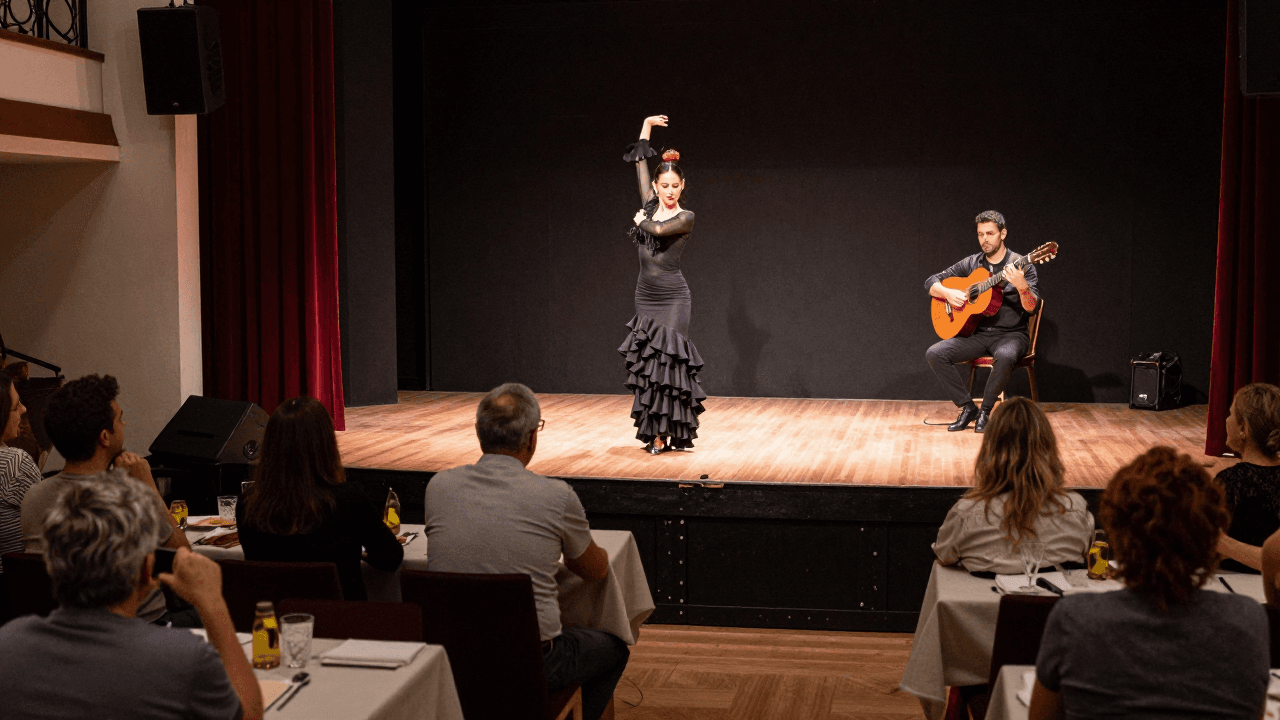
A Night With Thick & Tight (30 minutes) was made of three solo portraits of famous and infamous figures brought back "for one last dance." Connor Scott played Sex Pistols bassist Sid Vicious, Harry Alexander played pop-art icon Andy Warhol, and Edd Arnold played Marlene Dietrich. The solos were drawn from choreography made for three of Britain's best-known performers, and combined refined dance technique with lip-sync and cabaret.
The Princess & The Showgirl (35 minutes) staged an imaginary meeting between Marilyn Monroe and Princess Diana. It set the two lives side by side, from sad childhoods and huge fame to press attention, very public romances and mysterious deaths, through personal and collective memory. The evening was recommended for ages 8 and up.
Thick & Tight is a queer dance theatre company founded in 2012 by Daniel Hay-Gordon and Eleanor Perry. Its work blends dance, mime, theatre, parody and drag, and the company sees dance theatre as a political art form able to challenge social stigma. The fringe spirit shows in the programming choice too: instead of one grand production, the festival opened with two short, bold and playful pieces.
What kind of venue is Alan Kadıköy?
Alan Kadıköy is a culture and arts centre run by Kadıköy Municipality. It sits on Muhittin Üstündağ Avenue in the Acıbadem neighbourhood and opened on 14 December 2021. The building has roughly 8,200 square metres of enclosed space.
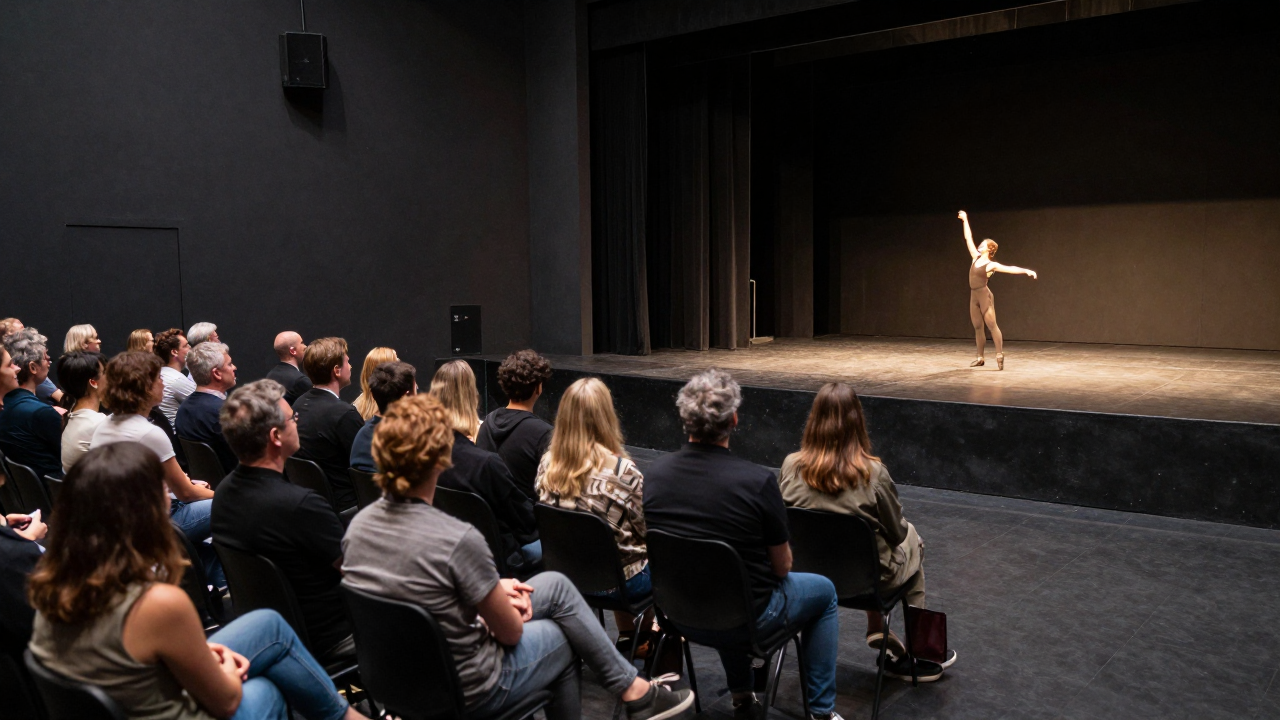 Its most notable feature is flexibility. The theatre hall can be arranged as a classic stage, central stage, square stage, arena or forum, and holds about 400 spectators. There is also a 650-square-metre exhibition hall. Layouts in which the audience surrounds the performers suit the close-up character of fringe work.
How can you experience a fringe festival?
 A few practical suggestions, all drawn from how the festival is built:
- Read the programme in advance. Shows are short and venues are spread out. If you want two pieces in one evening, allow for travel time between venues.
- Take a chance on a name you do not know. Discovery is the point of a fringe. A 30-minute piece by an unfamiliar company can stay with you longer than a familiar play.
- Do not worry too much about language. Dance and performance rely less on words, and much of the 2023 programme was dance, performance and movement.
- Look at the workshops. The 2023 programme included movement-based workshops, a good way to go a step beyond being a spectator.
- Check ticket and time details at the source. Prices and sales channels change every year.
FAQ
When does the Istanbul Fringe Festival take place?
It is held every September and lasts about a week, sometimes a little more. It ran 16-23 September in 2023, 13-21 September in 2024 and 19-27 September in 2025. The exact dates are announced each year.
How is a fringe festival different from an ordinary theatre festival?
A fringe aims to showcase edge and emerging voices. In Edinburgh this is defined by an open-access principle with no vetting. Istanbul follows its own format, taking applications through an open call and focusing on emerging artists. The result is a short, experimental, international programme.
When was the first edition?
The first Istanbul Fringe Festival ran on 18-22 September 2019, while the festival's own account traces the idea back to 2017. That is why the 2023 edition counts as the fifth.
Does the festival only take place in Kadıköy?
No. In 2023 the programme was spread across 14 venues. Alan Kadıköy hosted the opening that year, but the festival takes place in many parts of the city.
Conclusion
The Istanbul Fringe Festival is an Istanbul extension of the road opened in 1947 by eight uninvited companies. The 2023 opening showed what that spirit looks like in a single evening: two short, bold shows from another country. To see what else is on in your city and on your calendar, browse upcoming events on takvim.in.