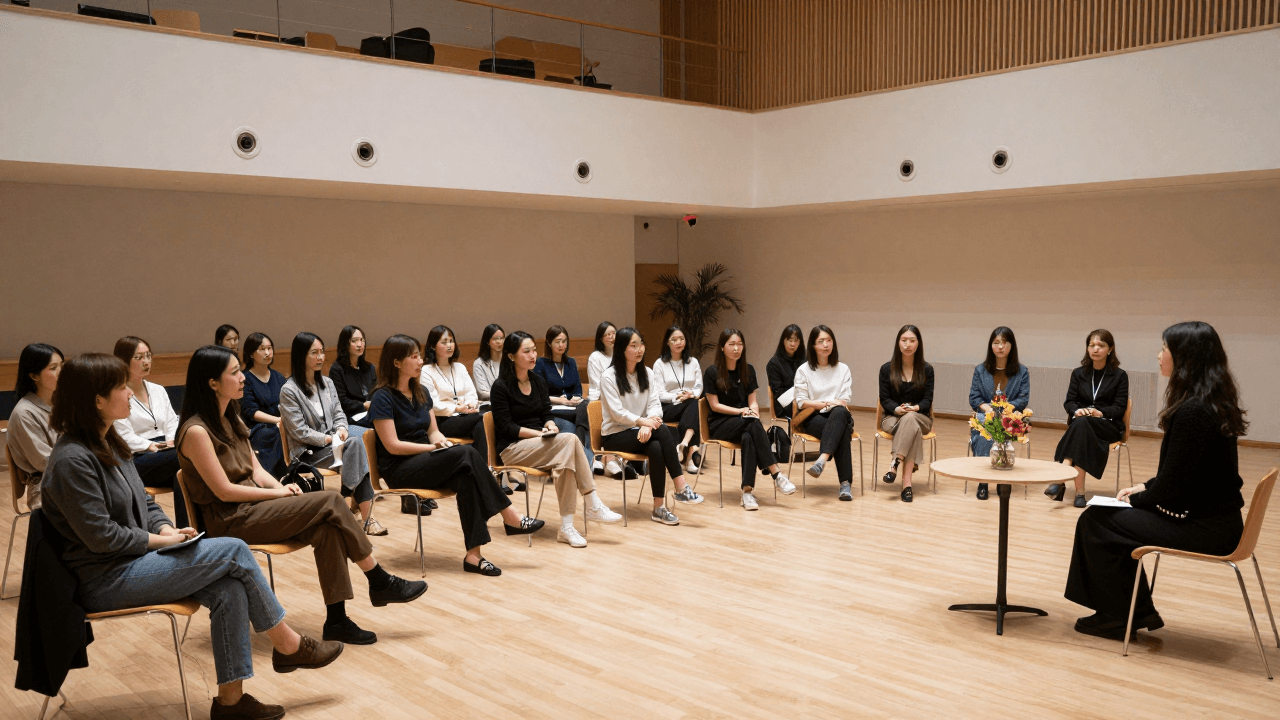
Imagine a conference hall in Istanbul where poems in a dozen languages follow one another, some read by poets in the national dress of their countries, and where an open lectern means anyone in the audience can walk up and read a poem of their own. That is the working format of FeminİSTANBUL, the International Women's Poetry Festival, which has been held in and around Istanbul since 2016. This guide on takvim.in explains what the festival is, who started it, what happens at it and how to follow it.
Key takeaways
- FeminİSTANBUL was founded in 2016 by Hilal Karahan, Emel Koşar and Dilruba Nuray Erenler, and describes itself as the first international women's poetry festival of its kind in Turkey.
- The subject is always women, women's problems and the position of women in society, but poets of every gender and background take part.
- Each year has a theme or manifesto (for example "The Borders of Salt" in 2017 and "Poetry Beats Violence" in 2019) and, since 2018, a printed international anthology.
- Editions have moved between venues in Kadıköy and Kartal, and readings are generally free to attend.
- The programme mixes readings, an open mic, music, honorary awards and, in some years, a documentary or poetry theatre.
What is the FeminİSTANBUL Women's Poetry Festival?
FeminİSTANBUL is a poetry festival organised around women: their lives, the obstacles they face and the many different situations that womanhood covers. The organisers are careful to say that it is not a narrowly ideological event. According to the festival's own English-language page and press coverage, women, men and LGBTQ+ poets of every language, religion and nationality are welcome, as long as the poems deal with the festival's central subject.
The name plays on the city: the capital letter İ in the middle of "FeminİSTANBUL" makes the word "Istanbul" stand out inside "feminine" and "feminist". The festival is presented as being affiliated with international poetry organisations connected with UNESCO, notably the World Festival of Poetry. Hilal Karahan, a physician by profession who also writes poetry, leads the festival and edits its anthology. Ayça Erdura joined the coordinating committee in 2019 and has moderated the programme.
Where does it come from and how has it developed?
The festival began in 2016. The founding trio, Hilal Karahan, Emel Koşar and Dilruba Nuray Erenler, wanted a platform where women's poetry from Turkey and elsewhere could be heard side by side. The festival's own history lists a theme for each early year:
- 2016: the relationship between "mother tongue" and "woman's language".
- 2017: "The Borders of Salt", which drew attention to refugees crossing the Mediterranean and the Middle East. Poems about refugees were read.
- 2018: "Diversity Together" (Birlikte Çeşitlilik). Press coverage of the third edition, held on 1 to 3 November 2018, named guest poets from countries including India, Peru, Italy, Spain, Romania, Bulgaria, England, Serbia, Bosnia and Herzegovina, Albania, Germany and Hungary, as well as Turkey.
- 2019: "Poetry Beats Violence".
Each year the festival also gives an honorary award. The recipients listed on the festival's page include the poet and writer Ayten Mutlu (2016), the Palestinian poet Fatima Nazzal (2017), the writer and politician Zeynep Altıok Akatlı (2018) and Canan Kaftancıoğlu (2019).
From 2018 onward the organisers have compiled an annual anthology, the International FeminİSTANBUL Women's Poetry Anthology, edited by Hilal Karahan, with poems translated from languages as far apart as those of India and Colombia. Press reports on later editions give a sense of the scale: the 2023 anthology was reported to feature 106 poets, and the 2024-2025 volume 94 poets across 208 pages, with eight translators credited.
When and where is it held?
The date is not fixed, which is why you should check listings each year. What the record shows is a clear drift from spring to autumn, and from Kadıköy towards Kartal:
| Edition (as reported) | When | Where |
|---|---|---|
| 3rd | 1-3 November 2018 | Istanbul |
| 4th | 2019 | Kozyatağı Kültür Merkezi, Kadıköy |
| 2021 edition | 1-3 October 2021 | Kartal, opening at Hasan Ali Yücel Cultural Centre |
| 2022 | Year of the Kozyatağı programme | Kozyatağı Kültür Merkezi (conference hall), Kadıköy |
| 7th | 5-8 October 2023 | Kozyatağı and Kartal venues |
| 8th | 21-23 November 2025 | Kartal Soğanlık Cultural Centre and Yeditepe University |
A caution about numbering: the sources do not always agree on which edition is which, especially around 2021 and 2022, so treat the ordinal numbers as the organisers' own wording rather than an official count. The Kozyatağı Kültür Merkezi, on Buket Sokak in Kadıköy, hosted at least the 2019 and 2022 programmes in its conference hall (Konferans Salonu). Kartal Municipality is named as a supporting organiser of several later editions.
What actually happens at the festival?
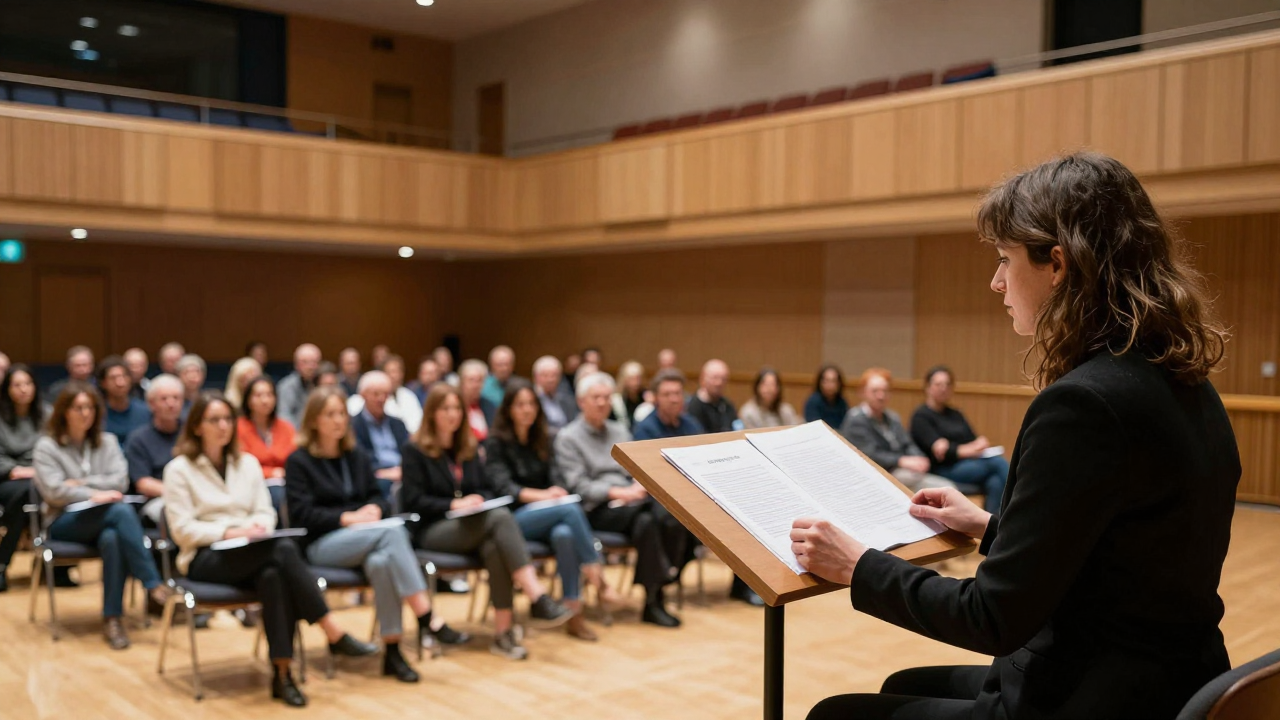
The core is the reading. Poets from Turkey and abroad read poems about women, often in their own language with a Turkish or English rendering. Press descriptions of the 2018 and 2021 editions mention poets performing in the national dress of their countries, so a single evening can look and sound very varied.
Around the readings the organisers have added other forms:
- Music. The 2019 programme, at Kozyatağı, included a Latin guitar recital by Mehmet Ünlü and a tango concert on accordion by Dr. Tezernur Gücükoğlu.
- Open lectern. The 2022 programme at Kozyatağı announced an open podium, so guests could read their own poems.
- Film. The same 2022 programme announced the first screening of a documentary directed by Canan Çelik.
- Theatre, panels and jazz. Later editions have included poetry theatre, panels such as one on women's movements in Turkish and Iranian poetry (2025) and a jazz concert.
- Honorary award ceremony and, in some years, city tours or a public reading in a town square.
What was the 2022 edition at Kozyatağı about?
The text for the 2022 programme spoke of welcoming guests to the festival's fifth year and used the phrase "at the dawn of a global humanity". It said that after the pandemic years, when people had realised how connected they were, the poets were together again, "producing with different feelings and developing ideas, and trying to understand one another". A second programme text for the same period tied the event to 8 March, International Women's Day, describing it as a focal point of the women's rights movement and a day when many poets would read.
At the time, Covid-19 rules were still in force in Turkish venues, and the audience was asked to wear masks, arrive at least 15 minutes early and avoid filming. Those measures have since lapsed, but they explain why the event's practical notes looked the way they did. Admission was free.
Why does a women's poetry festival matter?
Poetry is one of the oldest ways of saying things that are hard to say in reports and speeches. In a country where debates about women's safety and rights are constant, a festival that lets women speak in verse, and puts them next to poets from other countries, creates a different kind of conversation. The yearly themes show this: language, refugees, diversity, violence, and in 2025 a manifesto that asked whether one can still speak of civilisation after the Gaza massacre, echoing Theodor Adorno's post-war remark about poetry.
The other point is access. Readings are generally free, they take place in public cultural centres rather than in closed literary circles, and the open podium invites amateurs. The anthology also gives poets a permanent record: translations, which many readers would not otherwise find, sit alongside poems from Turkey.
How can you experience it?
- Check dates early. Editions have been held in March, October and November. Look up the current year's announcement, and watch venue pages of Kartal and Kadıköy cultural centres.
- Arrive on time. Past programmes asked guests to come at least 15 minutes ahead, switch off phones and avoid filming inside the hall.
- Bring a poem. Some programmes have an open lectern. If you write, a short poem on the theme is welcome.
- Look for the anthology. The yearly volume is the best way to read the poets after the festival ends.
- Plan the trip. Kozyatağı and Kartal are on the Asian side of Istanbul, so ferries and the Marmaray line are the practical way to get there from the European side.
FAQ
Is FeminİSTANBUL only for women?
No. The festival's organisers say that women, men and LGBTQ+ poets from all languages and nations take part. What unites the programme is the subject of the poems: women and their conditions.
Is admission free?
The programmes we know about, including the 2022 event at Kozyatağı and the 2025 edition in Kartal, were described as free and open to the public. Check the current announcement, because arrangements can change.
Who runs the festival?
It was founded in 2016 by Hilal Karahan, Emel Koşar and Dilruba Nuray Erenler. Ayça Erdura joined the coordinating group in 2019. Hilal Karahan edits the yearly anthology.
Do I need to speak Turkish?
Not necessarily. Guest poets come from many countries and often read in their own languages. The Turkish-language programme notes are the main source of information, but the festival also keeps an English-language page.
Where to go next
Poetry festivals like this one are easy to miss because they are announced late and held in cultural centres. To see what is on near you, from readings to concerts, browse takvim.in and keep an eye out for the next FeminİSTANBUL announcement. Even if you never take the lectern, an evening of women's poems in many languages is a different way to spend an autumn night in Istanbul.
Sources used for this guide include the festival's English-language page (eng.feministanbul.net), the press coverage of the 2018, 2021 and 2023 editions and of the 2025 edition, and the programme texts for the Kozyatağı events of 2019 and 2022.