Every October, pink ribbons appear on lapels, hospital lobbies, bridges and shop windows, and a message travels with them that is almost boringly practical: know your breasts, and go to your screening appointment. Behind that message sits a stack of overlapping observances, and one of them is Breast Health Day on 15 October. This guide sorts out who marks which date, what the numbers actually say, and what Turkey's public screening programme offers. If you would rather attend a talk, a walk or a health seminar than read about one, takvim.in is where such events in your city turn up.
Key takeaways
- 15 October is Breast Health Day, an awareness day created by Europa Donna, the European Breast Cancer Coalition; the whole month of October is Breast Cancer Awareness Month.
- The month began in the United States in 1985 as a week-long campaign whose core message was "get a mammogram".
- The World Health Organization's Global Breast Cancer Initiative aims to cut breast cancer deaths by 2.5% a year, which would avert about 2.5 million deaths by 2040.
- In Turkey, the Ministry of Health's national programme invites women aged 40 to 69 for a mammogram every two years, free of charge, through family health centres and cancer early-detection centres (KETEM).
- The ministry puts the number of women diagnosed in Turkey at roughly 27,000 a year, and says early-stage detection can bring survival to around 90%.
- Awareness days are not a substitute for a doctor: this post relays what health authorities say, and your own clinician is the one who can tell you what applies to you.
What is World Breast Health Day, and is it the same as Breast Cancer Awareness Month?
They overlap, but they are not the same thing. Breast Cancer Awareness Month is the umbrella: it covers all of October, and it is observed in dozens of countries, Turkey included, where the Ministry of Health runs it as "Meme Kanseri Farkındalık Ayı", 1 to 31 October.
Breast Health Day is a single date, 15 October, and its best-documented organiser is Europa Donna, The European Breast Cancer Coalition, a non-profit alliance of patient-led groups founded in 1994. Europa Donna uses the day to say that women should take time for their health and go get screened, and it points out that access to screening is uneven across Europe: some countries run well-established programmes while others struggle to set them up. Because "World Breast Health Day" is a popular label rather than a single official United Nations day, you will see it attached to 15 October in many calendars, and other groups run their own campaigns around the same date. If a date matters for planning, check the organiser of the specific event.
| Observance | When | Who is behind it | Main message |
|---|---|---|---|
| Breast Cancer Awareness Month | 1 to 31 October | Started in the US in 1985; now observed widely | Awareness and early detection |
| Breast Health Day | 15 October | Europa Donna (European coalition) | Take time for your health, go get screened |
| Meme Kanseri Farkındalık Ayı (Turkey) | 1 to 31 October | Turkish Ministry of Health | Early diagnosis, free screening |
Where does the October tradition come from?
The story starts in 1985, when the American Cancer Society and the pharmaceutical division of Imperial Chemical Industries, a company later absorbed into AstraZeneca, organised a week-long event in the United States. The message was blunt and singular: get a mammogram. Betty Ford, the former First Lady who had been treated for breast cancer herself, was among the public figures who helped draw attention. Over the following years the week turned into a month and the campaign spread to other countries, which adopted October so that the message would line up worldwide.
The pink ribbon came a little later, in the early 1990s. It has a complicated history: Charlotte Haley hand-made and distributed peach-coloured ribbons in 1991 to press for more funding for cancer prevention. When a magazine and a cosmetics company asked to brand her idea, she declined, and they went ahead with a pink version that became the symbol most people now recognise. It is a useful reminder that awareness campaigns are shaped by commercial interests as well as by patients, which is why many people look at what a "pink" campaign actually funds or teaches.
What do the numbers say?
Breast cancer is the cancer women are most often diagnosed with, both worldwide and in Turkey. The World Health Organization and its cancer agency, IARC, estimate that roughly 2.3 million women are diagnosed each year. Around 99% of cases occur in women, while 0.5 to 1% occur in men, so awareness material aimed at everyone is fair, though most of it is addressed to women.
Two figures from the WHO explain why the topic is so unequal. The risk of being diagnosed during a lifetime is about 1 in 12 for women in countries with a very high human development index, and about 1 in 27 in countries with a low one. Yet the outcome is the opposite: in high-income countries, age-standardised breast cancer mortality fell by about 40% between the 1980s and 2020, largely thanks to earlier detection and better treatment. In other words, the places with more diagnoses often save more lives, because their systems find the disease sooner and treat it consistently.
For Turkey, the Ministry of Health's awareness-month text gives around 27,000 new diagnoses among women each year and a lifetime risk of about 1 in 18. It also states that when the disease is caught at an early stage, survival rates reach about 90%. These are ministry figures, and they are reported here as such.
What is the WHO trying to change?
In 2021 the WHO launched the Global Breast Cancer Initiative with a target that sounds modest and is not: reduce global breast cancer mortality by 2.5% a year between 2020 and 2040, which would prevent about 2.5 million deaths over that period. It rests on three pillars: health promotion for early detection, timely diagnosis, and comprehensive management of the disease. The point of the three-part structure is that a screening campaign alone achieves little if a woman with an abnormal result cannot get a biopsy and treatment promptly. Awareness, diagnosis and care have to be connected.
How does Turkey's screening programme work?
Turkey's national breast cancer screening is organised by the Ministry of Health's General Directorate of Public Health. The target group is women aged 40 to 69, and the method is mammography (an X-ray examination of the breast) repeated every two years. Women in that age band are invited through Family Health Centres (ASM), and the service is also available through Community Health Centres (TSM), Healthy Life Centres (SHM) and mobile cancer screening vehicles. The most visible brand is KETEM, short for Kanser Erken Teşhis, Tarama ve Eğitim Merkezleri, meaning Cancer Early Diagnosis, Screening and Training Centres. The ministry states that screenings under the programme are free of charge.
The ministry's awareness text also lists a schedule by age group: monthly breast self-examination from age 20, a clinical breast examination by a health professional every two years between 20 and 39, and annual clinical examination plus mammography every two years between 40 and 69. If you are outside these ages, or have a family history, the sensible step is to ask a doctor rather than to rely on a general guideline.
What do health authorities say about risk factors and symptoms?
The Turkish ministry lists the most common risk factors as tobacco and alcohol use, obesity, a sedentary lifestyle, having no pregnancies or a late first pregnancy, not breastfeeding, long-term hormone therapy, early first period and late menopause, dense breast tissue, chest radiotherapy and inherited BRCA1 or BRCA2 gene mutations. It names a painless, slowly growing lump as the classic symptom. The WHO adds a humbling note: a large majority of women who develop breast cancer have no modifiable risk factor beyond being a woman and getting older, so a healthy lifestyle helps but does not guarantee anything. Screening exists precisely because so much of the risk cannot be dodged.
Nothing here replaces medical advice. If you notice a change in your breast, or you are unsure whether you are due for a mammogram, contact your family doctor or a KETEM. Do not wait for October.
What actually happens during the awareness month?
There is no single ritual, and that is the point. In Turkey and elsewhere, hospitals hold talks, municipalities and civil groups organise walks and information stands, landmarks are lit in pink, and health centres publicise their screening days. A typical format is a public seminar where a physician explains symptoms, risk factors and prevention and answers questions. In 2019, for instance, a health seminar was held at the Caddebostan Cultural Centre in Istanbul's Kadikoy district, hosted in cooperation with a local hospital, with a doctor speaking on breast cancer symptoms, risk factors and preventive measures. It is a good example of the genre: short, informational and aimed at ordinary people rather than specialists.
How can you take part without turning it into a slogan?
Start with the practical things that health authorities themselves emphasise. Find out whether you fall into the 40 to 69 age band and whether your local family health centre has invited you. Ask a relative or friend whether she is up to date, since many women postpone screening precisely because nobody around them mentions it. Attend a public information session if one is nearby, and ask questions you would not ask in a rush at a clinic.
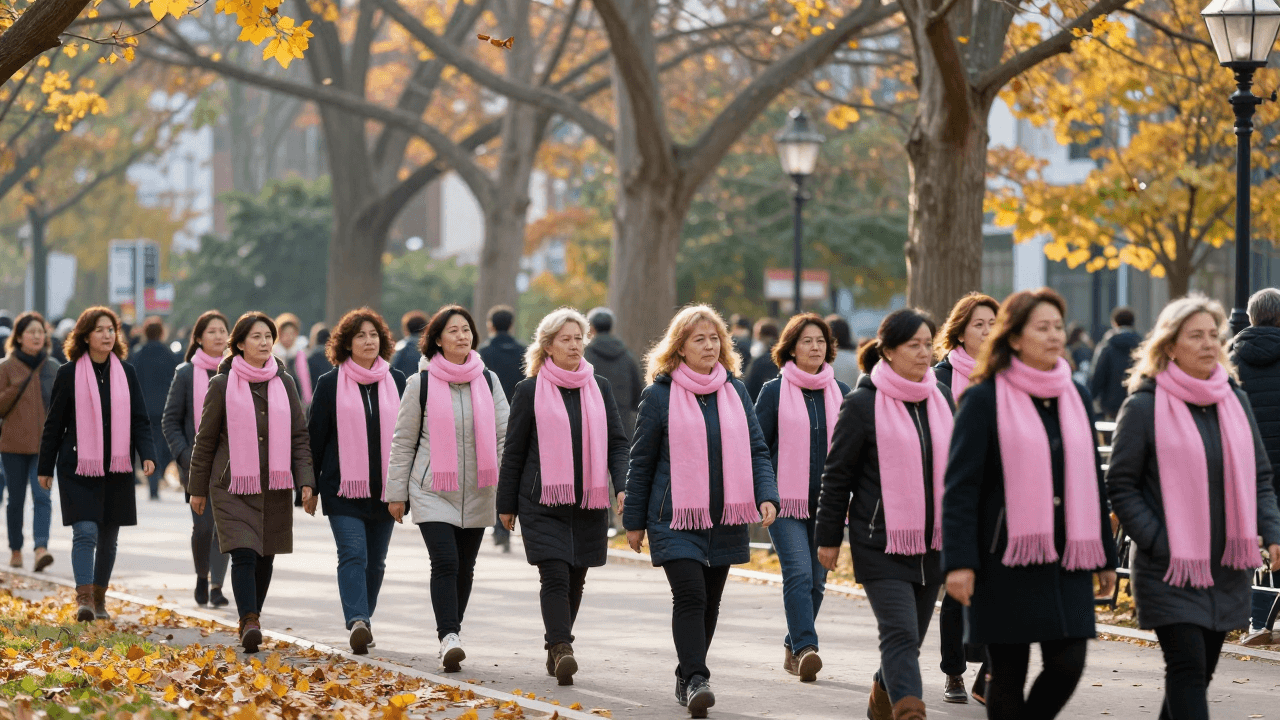
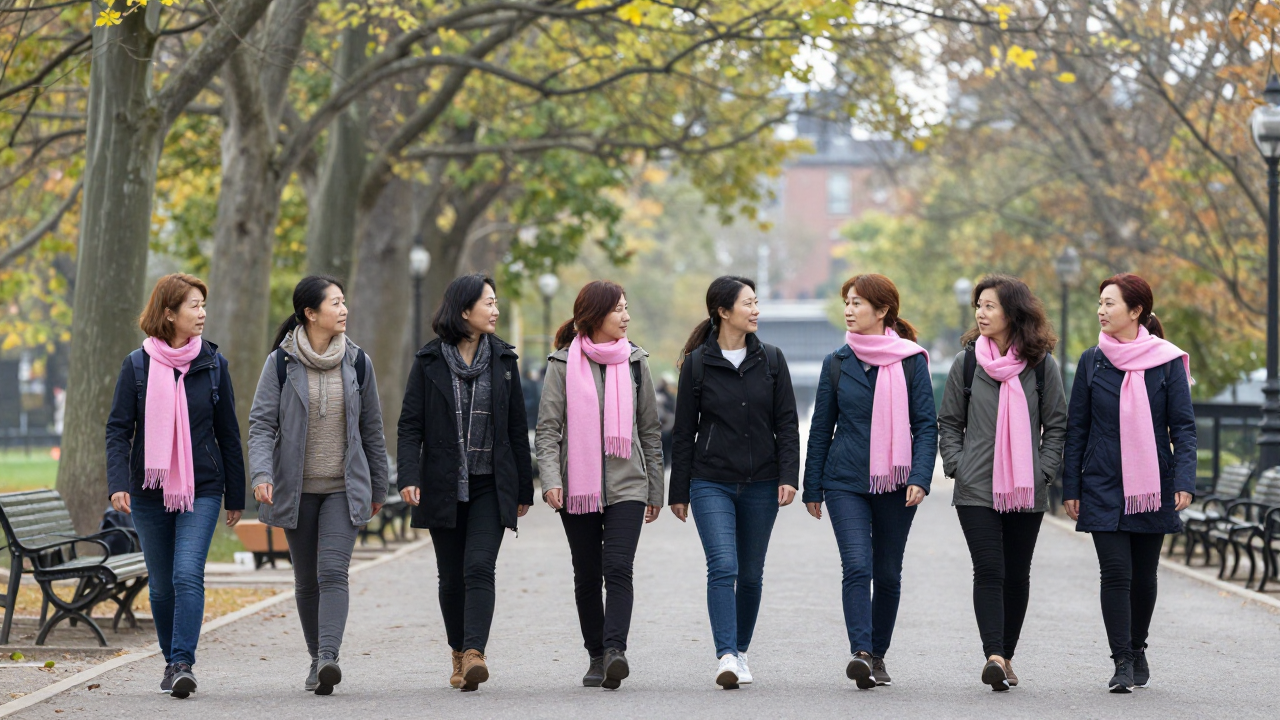
If you prefer to support the cause with your feet or your time, look for community walks, volunteering with patient associations and information days in October. Treat pink merchandise with a bit of scepticism and check where the money goes. And be considerate of people living with the disease: many prefer being asked what helps rather than being showered with slogans.

FAQ
Is World Breast Health Day an official United Nations day?
No. The date most often given, 15 October, is Breast Health Day as organised by Europa Donna, a European coalition. It is widely quoted in calendars under the name World Breast Health Day, but it is an advocacy observance rather than a UN-designated day. The broader Breast Cancer Awareness Month covers the whole of October.
At what age should a woman have a mammogram in Turkey?
Under the Ministry of Health's national programme, women aged 40 to 69 are invited to have a mammogram every two years, and it is provided free of charge through the programme's centres. For anything outside that pattern, such as a younger woman with a family history, ask a doctor.
Are men affected by breast cancer too?
Yes, though rarely. According to the WHO, around 0.5 to 1% of breast cancers occur in men, and about 99% occur in women. Any man who notices a lump or another change should see a doctor.
Does a healthy lifestyle guarantee I will not get breast cancer?
No. Not smoking, limiting alcohol, staying active and keeping a healthy weight are recommended by health authorities and can lower some risks, but the WHO notes that most women who develop breast cancer have no modifiable risk factor other than sex and age. That is why screening remains the key tool.
Conclusion
Breast Health Day on 15 October and the awareness month around it are, at their best, a nudge to do something small and concrete: check your eligibility, book the appointment, tell someone else to do the same. To find talks, walks and health events near you throughout October and the rest of the year, browse takvim.in.