Every September, while much of the film world is busy with red carpets, a cultural centre in Istanbul's Yeldeğirmeni neighbourhood does something quieter. It screens dozens of short films, every one of them directed by a woman, and in recent editions it has let anyone walk in without a ticket. That is Directed By Women Turkey, the country's first international festival for women short-film directors. Here is where it comes from, how it works and how to catch it, and takvim.in is a good place to check when the next dates are announced.
Key takeaways
- Directed By Women Turkey is the Turkish edition of a worldwide September viewing party for films made by women; it describes itself as Turkey's first international festival for women short-film directors.
- The global Directed By Women idea started in 2015 as one film lover's personal viewing challenge and grew into an international September celebration.
- Editions are held in Istanbul's Kadıköy district, centred on the Yeldeğirmeni Sanat art centre, and usually run over three or four days in mid-September.
- The programme mixes competition screenings (National, International, Documentary and Youth View categories) with workshops and talks.
- By 2024 the festival received 188 applications from 39 countries and screened 61 films.
- Screenings in the recent editions we could confirm (2022 and 2024) were free of charge.
What is Directed By Women Turkey?
Directed By Women Turkey (in Turkish, Uluslararası Kadın Kısa Film Yönetmenleri Festivali, the International Women Short Film Directors Festival) is a competitive short-film festival in Istanbul. Only films directed by women are eligible. Short films, in festival practice, are films of modest length that can be shown back to back in a single evening block, which is exactly what makes them a good format for a festival: an audience can see six or ten different voices in one sitting.
The festival's stated aims are to support women's creative processes in cinema, to encourage more production, and to increase cultural and artistic exchange among women directors from different countries. It is organised with the support of Kadıköy Municipality, and in the 2022 and 2024 editions the organiser was named as the Women Filmmakers Association (Sinemacı Kadınlar Derneği), with additional backing from the Cinema General Directorate in 2024.
The first edition took place on 13 to 15 September 2019 at Yeldeğirmeni Sanat. It presented 30 finalist films from women of different languages, religions and cultures, with best film awards for both national and international entries and a four-person jury. Since then the format has settled into four competition categories: National, International, Documentary and Youth View (Genç Bakış in Turkish), with a best film award in each.
Where does the Directed By Women idea come from?
The Istanbul festival is a local branch of a much larger idea. According to a 2015 report by the Boston public radio station WBUR, the project began when Barbara Ann O'Leary, a social media specialist at Indiana University Cinema in Bloomington, set herself a personal challenge: to watch as many films directed by women as by men in a year. To keep up with roughly one film a day she began compiling lists and researching directors. The lists grew into an open-source database of more than 7,000 titles that anyone could add to.
From that grew a "worldwide film viewing party". The first one ran from 1 to 15 September 2015, and its organisers use the hashtag #WomanDirectorAwarenessMonth for September. The important design choice is that it is not one festival with one programme. O'Leary described it in that report as celebratory and appreciative, with an open format where people can do whatever they want. So a film society, a cinema, a library or a group of friends can host an event under the same banner. In 2015 the WBUR piece already mentioned screenings around Boston and New England, a film society in Delaware and a group in Barcelona organising multi-day panels. The project's own website counted its tenth annual edition in 2024.
Directed By Women Turkey took that open banner and turned it into a juried festival. The 2019 announcement said the event was the Turkish organisation of a party that had, for four years, been held in September in the United States, Spain and other countries, and that Istanbul would run at the same time as the American and European events.
When and where is the festival held?
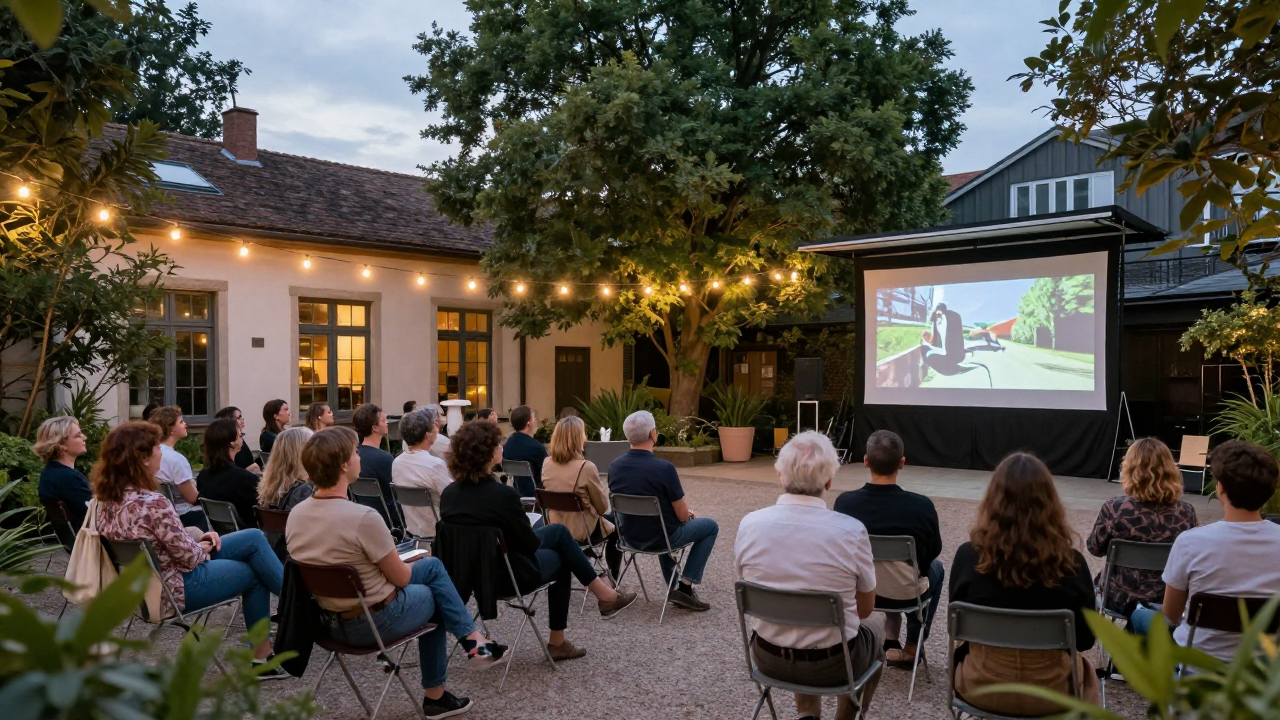
The dates float slightly, but the rhythm is steady: mid-September, almost always a Thursday-to-Sunday or Friday-to-Sunday stretch, in Kadıköy on the Asian side of Istanbul. Yeldeğirmeni is a former working-class quarter next to Kadıköy's centre that has become known for its street art and small cultural venues, and Yeldeğirmeni Sanat is the municipality's art centre on Rasimpaşa's İskele Sokak. The programme uses its garden ("Bahçe") for evening screenings and a smaller hall ("Alt Salon") for workshops and shorter blocks.
Here are the editions whose details we could confirm from published announcements:
| Edition | Dates | What stood out |
|---|---|---|
| 1st, 2019 | 13-15 September | 30 finalist films; documentary, fiction and animation; four-person jury |
| 3rd, 2021 | 16-19 September | More than 40 films in four categories; Danish short-film selection with the Danish Cultural Institute |
| 4th, 2022 | 15-18 September | More than 50 films plus three special screenings; free entry; workshops at Sinematek |
| 6th, 2024 | 13-15 September | 188 women directors from 39 countries applied; 61 films screened; second venue at Barış Manço Kültür Merkezi |
The growth is visible in the numbers: from 30 finalists in 2019 to 61 screened films in 2024. The 2nd and 5th editions are not in the table only because we did not find details we could verify.
What actually happens during the festival days?
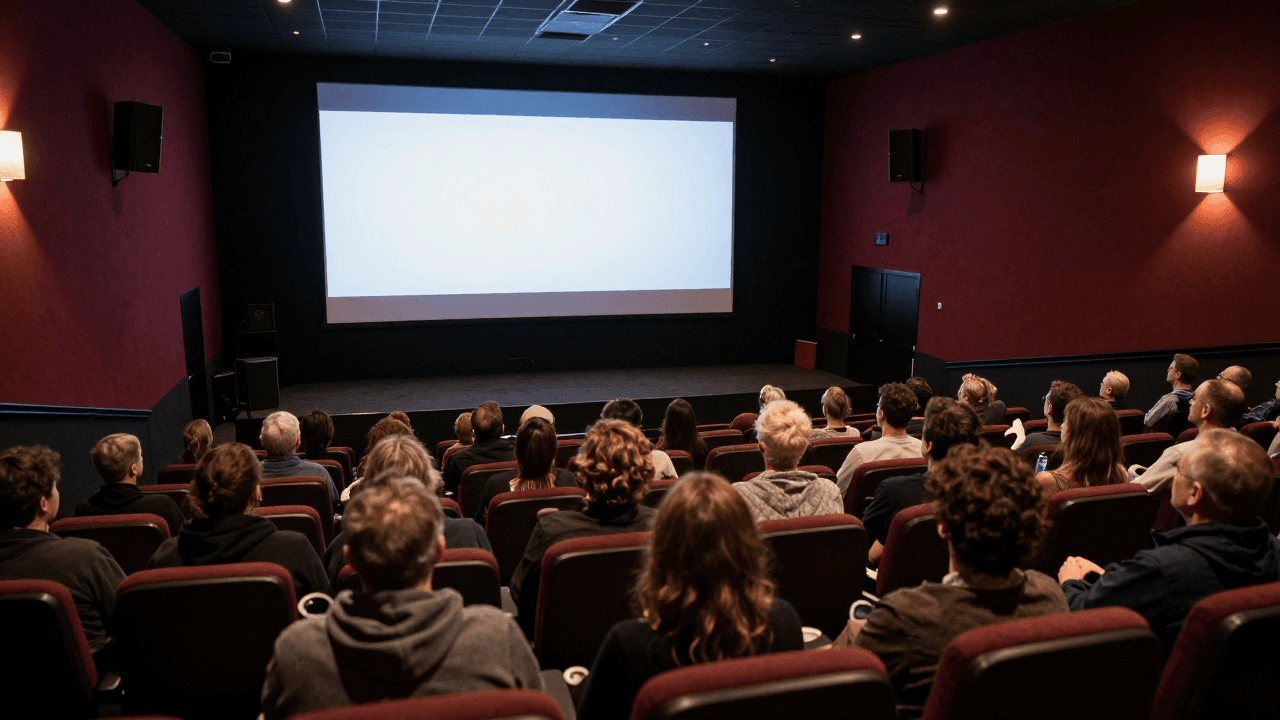
A typical festival day is built in three layers. In the afternoon come workshops and talks. In the evening come the finalist blocks, each grouped by category, with each block lasting roughly an hour and a half, and on the final day there is an awards ceremony.
The 2021 programme shows the range well. Afternoon workshops that year included one on festival strategies for short films, covering everything from the synopsis stage to distribution, and an English-language "How To Pitch" session led by the Danish writer and director Tanne Sommer, in which participants had to bring an idea and practise pitching it. There was a conversation titled "Hem Cadı Hem Tanrıça: Anlatılar ve Anlatan Kadınlar" ("Both witch and goddess: stories and the women who tell them") and another on being a woman actor and creating women characters. Evening blocks screened international finalists from countries as far apart as Ireland, Iran, Peru, Australia and Puerto Rico, alongside Turkish films.
The 2022 edition added three special screenings, including a work by the director Ceylan Özgün Özçelik, and sector conversations on women's working conditions in film and television. In 2024 the festival ran a "1 Country - 5 Stories" section with five women filmmakers from Kosovo, in collaboration with DOKUFEST, the film festival in Prizren, and workshops on stop-motion animation and cinema therapy. A distribution prize was offered in addition to the category awards, by the company LANDS of Cinema.
Why short films, and why women directors?
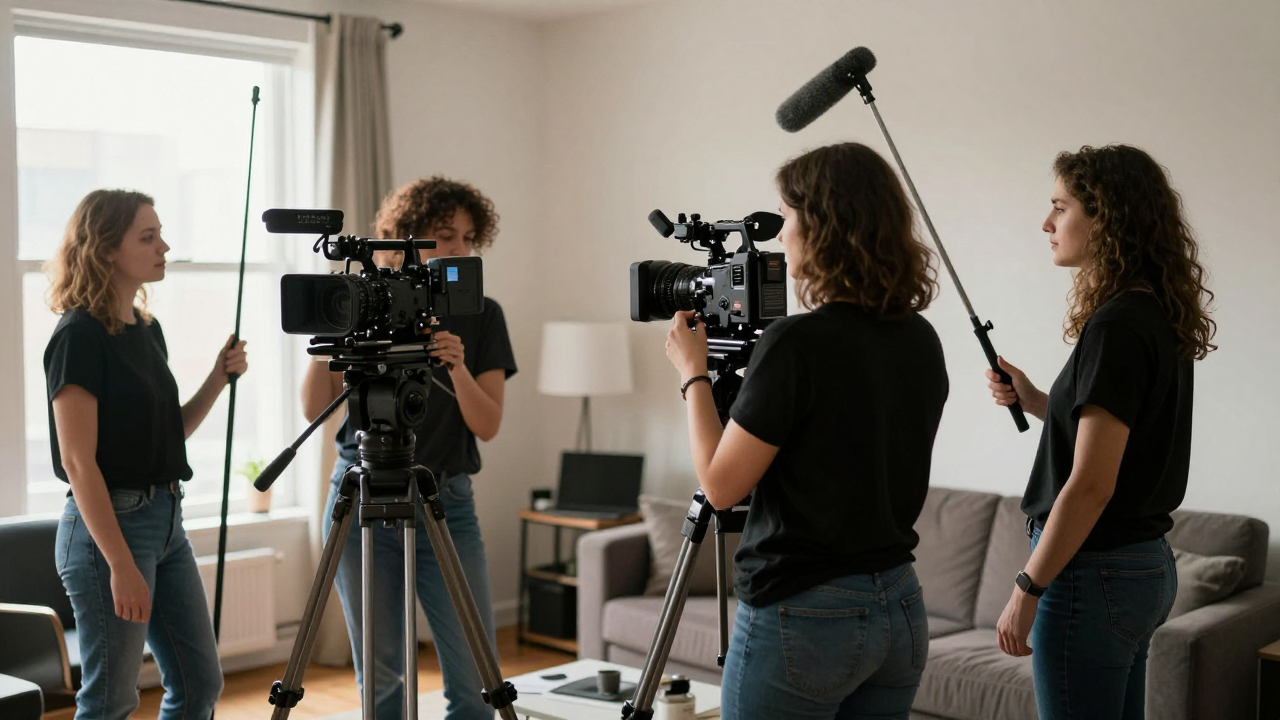
Short films are where most directors begin. They are cheaper to make, they let a filmmaker try a voice or a genre, and they are what festivals use to spot new talent. But short films also struggle to find audiences outside festivals, and a specialised festival can give them a proper screen. The 2019 announcement explicitly listed defending the independence and running time of the short film as one of its goals.
The women-directors part has a longer history. Alice Guy-Blaché (1873 to 1968) directed her first film, La Fée aux Choux, in 1896 and, according to Wikipedia, is generally considered the first filmmaker to systematically develop narrative cinema; she later co-founded the Solax Company in New York in 1910 and is described as the first woman to own her own studio. Yet film history has often told the story without her. Kathryn Bigelow became the first woman to win the Academy Award for Best Director only in 2010, for The Hurt Locker, and the Palme d'Or at Cannes went to a woman for the first time in 1993, to Jane Campion for The Piano. Festivals like Directed By Women exist because a programme built around women's work is still a simple, practical way of making sure those films get seen.
What makes the Istanbul edition distinctive?
Three things stand out. First, scale and setting: it is a neighbourhood festival. Screening in a garden and a small hall, with directors, jurors and audience mixing between blocks, produces a different atmosphere from a multiplex festival. Second, its mix of national and international work. Turkish directors, including young ones in the Youth View category, screen next to films from dozens of countries, so an Istanbul audience sees local work in a global context. Third, its emphasis on the craft of the industry: pitching, festival strategy and distribution are treated as topics in their own right, which is useful to people who make films and not only to people who watch them.
How can you experience it?
Check the dates in early summer; the organisers have pointed readers to their social media accounts for details. Evening blocks in the garden are best in good weather, so keep an eye on the forecast. Choose by block rather than by single film: a block of five or six shorts is designed to be seen together, and the surprises are usually the ones you did not plan for. If you speak English, the workshops in English are open to a wider audience. Kadıköy is easy to reach by ferry from the European side, and the neighbourhood is walkable, so making an evening of it with dinner nearby is simple.
FAQ
Is Directed By Women Turkey a competition or a viewing party?
It is both. The global Directed By Women movement is an open viewing party with no fixed programme, while the Istanbul edition is a juried festival with National, International, Documentary and Youth View awards.
Do I need a ticket?
Announcements for the 2022 and 2024 editions stated that screenings and activities were free of charge. Entry rules can change, so confirm on the festival's official channels before you go.
Do the films have Turkish or English subtitles?
The published programmes include both Turkish and international films, and the workshops have included English-language sessions. We could not verify subtitle policy for each screening, so check the programme.
When is the festival held?
The confirmed editions all took place in mid-September, between the 13th and 19th. The exact days vary by year.
Conclusion
Directed By Women Turkey is small enough to feel like a gathering and international enough to feel like a window. If a few hours of short films by women sounds like your kind of evening, find out what else is happening in Istanbul this month on takvim.in, and keep an eye out for the festival's announcement before September.