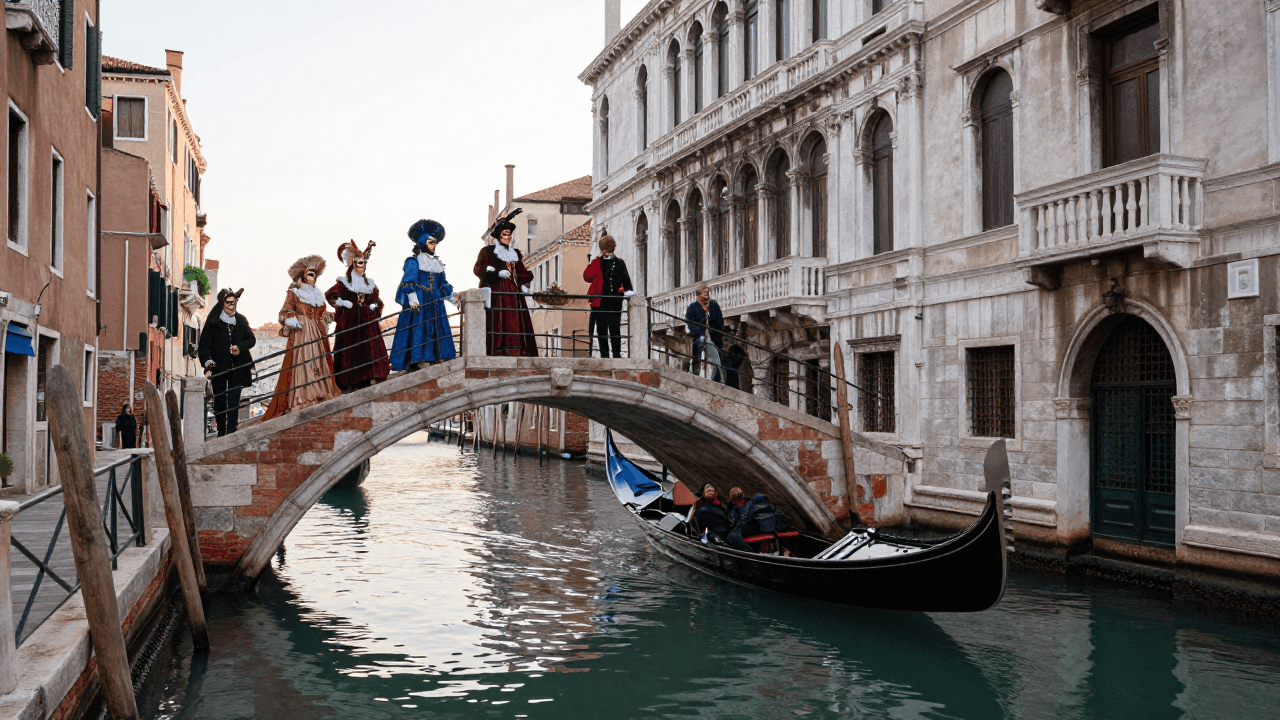
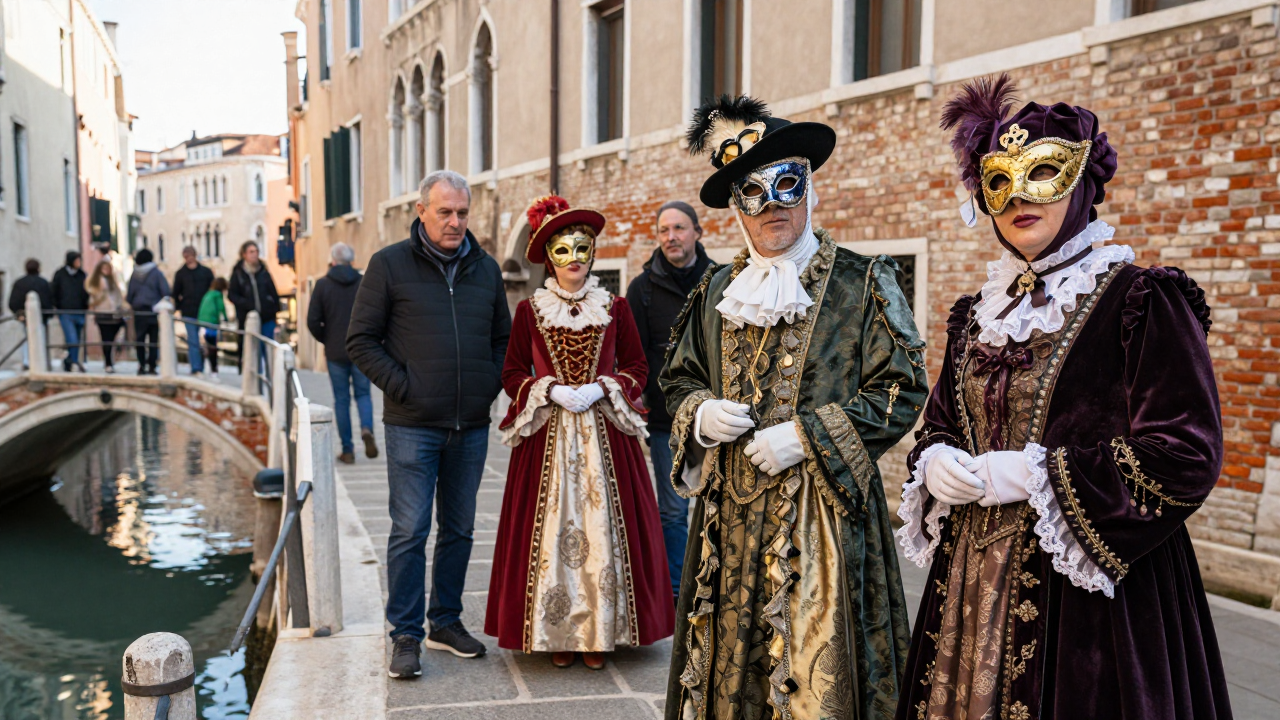
Cross a stone bridge in Venice in February and you may meet a figure in a silk gown, a black tricorn hat and a blank white mask, and you will have no idea who is underneath or which century they stepped out of. That is the point. The Carnival of Venice (Carnevale di Venezia) turns a city with no cars and hundreds of bridges into a stage for weeks at a time, and the mask is not an accessory but a game of identity. Here on takvim.in we wanted to lay out what this festival actually is, where it comes from and how to experience it well.
Key takeaways
- Venice Carnival always ends on the day before Ash Wednesday, so its dates move with Easter. The official dates are 31 January to 17 February 2026 and 23 January to 9 February 2027.
- The earliest known law about masks in the carnival period dates to 1268, and in 1296 the Venetian Senate made the day before Lent a public holiday.
- Napoleon's takeover of Venice in 1797 ended public carnival and masks in the street; the festival was revived only in 1979.
- Despite what many guides imply, the carnival is not confined to St Mark's Square: the water parade opens in Cannaregio and events spread across the city.
- Each mask has its own story, from the bauta to the plague doctor, and part of the fun is choosing one yourself or joining a mask workshop.
What is the Carnival of Venice?
It is Venice's version of the carnival season that precedes Lent, the roughly 40-day period before Easter in the Christian calendar when feasting is set aside. Ash Wednesday is the first day of Lent. Carnival exists as the last party before that: eat, drink, dance and put on a disguise before the fasting starts.
Older promotional texts say the carnival lasts "about 40 days". That confuses it with the length of Lent. Today's official programme runs about two and a half weeks. The 2026 edition opened on 31 January and closed on 17 February, the day before Ash Wednesday: 18 days. The announced 2027 window, 23 January to 9 February, is also 18 days. The historical carnival was far longer, as we will see below.
Three things set the Venetian version apart: the masks and period costumes, the parades on water, and the city itself. Staging a mass festival in a place where everything moves on foot or by boat gives it a different feel from carnivals built around wide avenues and stadium-style parades such as Rio's.
Where does the Carnival of Venice come from?
Nobody can name a single founding day. Sources cluster around a few anchor points.
The legend: 1162. According to tradition, Venice celebrated its victory over the Patriarch of Aquileia in 1162 with public festivities in St Mark's Square. The memory of that victory was kept alive on Fat Thursday (Giovedì Grasso, Zioba Grasso in Venetian). Treat this as tradition rather than a documented founding.
The document: 1268. The earliest known legal text about masks in this context dates to 1268. It banned masked men from throwing eggs at women during carnival and barred masked people from certain games. So masked revelry was common enough by then to need regulating.
The holiday: 1296. The Senate of the Republic declared the day before Lent a public holiday.
The golden age: 17th and 18th centuries. As Venice's political power faded, its carnival grew longer, more decadent and more famous. Travellers from across Europe came for gambling houses, theatres and masked balls. The mask temporarily flattened differences between nobles and commoners, women and men.
The ban: 1797. When the Republic fell, generally tied to Napoleon's conquest of Venice, public carnival events and wearing masks outdoors were banned. Private palace parties and a ball at La Fenice theatre were the exceptions. That break of roughly two centuries is why the modern festival is best understood as a revival.
The revival: 1979. Groups of citizens and artists brought carnival back. The modern event is a re-creation on old foundations, and it has given new work to the city's mask makers.
One claim shows up again and again in older texts: that the masks were born from a 13th-century plague. That is not something we can verify. The beaked "plague doctor" mask comes from a 17th-century epidemic costume and was adopted into carnival later. Do not confuse the two stories.
Why do Venetian masks matter so much?
In Venice, the mask worked as an equaliser through anonymity. A masked person could move around regardless of title, job, and often gender. That made masks both fun and a headache for the authorities. In the 18th century masks were banned in gambling houses during carnival because they helped debtors slip away.
Mask making was also a regulated trade. In 1436 the guild of decorators formally organised the craft and gave the profession of "mascareri" its own statutes. Wearing them was time-limited too. Historically, masks were permitted from 26 December to midnight on Shrove Tuesday, around Ascension, and from 5 October to Christmas.
These are the main types you will see today.
| Mask | Look | Good to know |
|---|---|---|
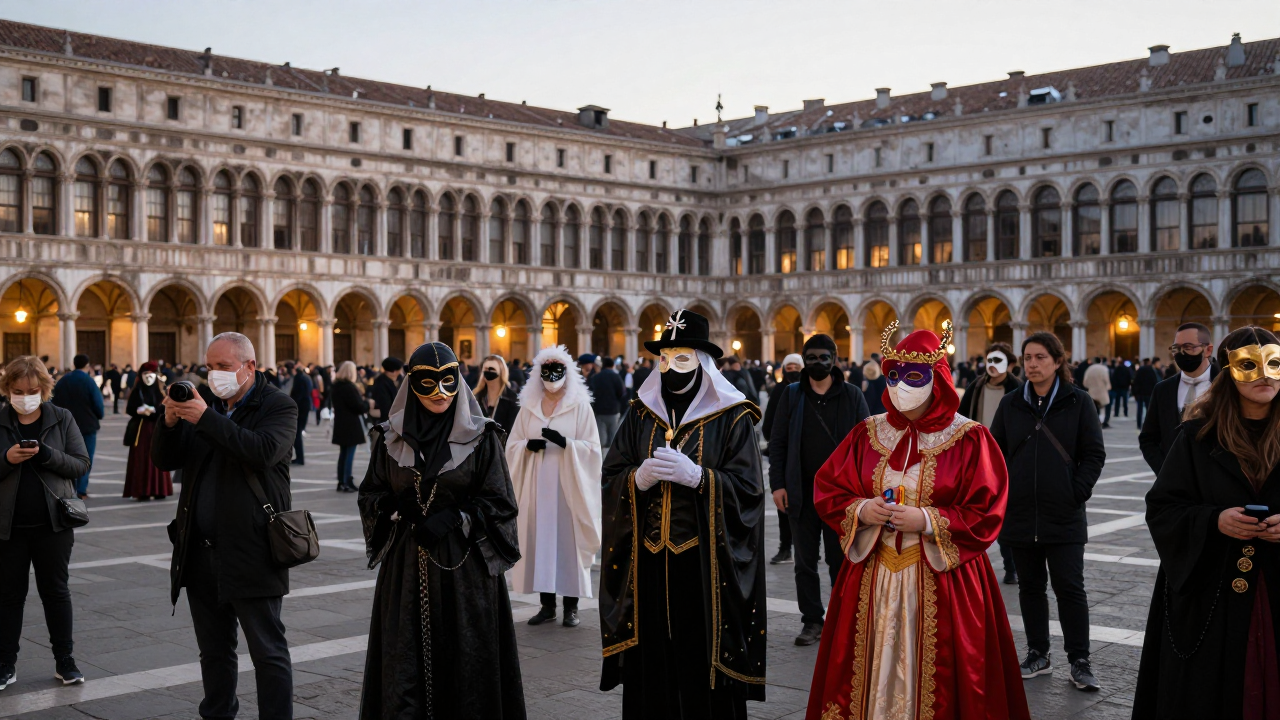
| Bauta | Pronounced nose and chin, open at the mouth | Lets the wearer eat and drink; traditionally paired with a black tricorn hat and cloak |
| Volto / Larva | White full-face mask | Cannot be worn while eating; the everyday citizen mask |
| Moretta | Small oval black velvet | Held in place by a button bitten between the teeth, so the wearer could not speak |
| Colombina | Covers only the eyes and upper cheeks | Often decorated with gold and crystals |
| Medico della Peste | Long beak, glass eyepieces | From a 17th-century plague doctor outfit; adopted as a carnival icon later |
Characters from commedia dell'arte, the improvised masked theatre that emerged in 16th-century Italy, such as Pantalone, Arlecchino and Zanni, also appear everywhere.
What actually happens during the Carnival of Venice?
The programme gets a new theme every year, but the backbone stays put.
The opening and the water parade. The carnival opens with a boat parade on the canal, starting in the Cannaregio district. Cannaregio is also where much of the non-touristy, neighbourhood carnival takes place. The official 2026 programme began with the lighting of decorations, street performances and the selection of the Marie.
Festa delle Marie. A procession of twelve young women re-enacting an old Venetian tale, and the choosing of one Marie; a classic part of the programme. The 2019 programme placed it on the second Saturday, 23 February.
Volo dell'Angelo (Flight of the Angel). A performer glides on a steel cable from the St Mark's bell tower down to the square. The tradition is traced to a Turkish acrobat who walked a rope to the tower in the 16th century, with sources citing 1558. It was called the Volo del Turco and usually took place on Fat Thursday.
Costume contests and balls. On the final weekends the best masks and costumes are judged, and palaces and theatres host masked balls. Balls are generally ticketed and need booking ahead.
Street and stage performances. Squares fill with music, dance and street theatre. The 2019 programme included parades, a float procession and a grand finale.
What do people eat at carnival?
Carnival food is fried. Frittelle are sugared fried dough balls, often with raisins. Galani (chiacchiere or crostoli elsewhere) are thin, crisp strips dusted with icing sugar. Castagnole are small fried balls. All of it follows the old logic of rich, sweet food before Lent, and you will find them in bakeries and pastry shops for a short season.
How does Venice compare with other big carnivals?
| Venice | Rio | New Orleans (Mardi Gras) | |
|---|---|---|---|
| Character | Masks, period costume, staging | Samba schools, giant parades | Krewe parades, beads |
| Setting | Narrow streets, canals, squares | Sambadrome and street blocos | City avenues |
| Defining feature | Concealed identity, historical dress | Music and dance | Community tradition |
Here the audience is also the show: visitors who arrive in costume become part of the living scenery.
How can you experience it well?
Pick your timing. The busiest days are the final two weekends and the closing days. Weekdays and mornings are calmer. Older guides recommend the last two weeks, which is right for the spectacle and also when the city is fullest.
Do not stay locked in St Mark's Square. Cannaregio, Castello and Dorsoduro have quieter, neighbourhood-scale celebrations. Find a spot along the canal to watch the water parades.
Costume and mask. There are shops that rent costumes and workshops where you can make a mask. To tell genuine craft from mass-produced souvenirs, ask whether it is handmade and what it is made of (papier-mâché, leather, paint).
Book early. Rooms and balls fill up months ahead. Check the official site (carnevale.venezia.it) for dates and programme, because details are announced afresh each year.
Be ready to walk. Venice is a pedestrian city of bridges and narrow lanes, so wear comfortable shoes even if your costume is elaborate.
FAQ
When is the Carnival of Venice?
It follows Easter, usually falling between late January and early March, and always ends on Shrove Tuesday, the day before Ash Wednesday. The official dates are 31 January to 17 February 2026 and 23 January to 9 February 2027. Check the official site each year.
Do you have to wear a mask in Venice during carnival?
No. Many visitors do not. A mask or costume does deepen the experience, and mask shops are on nearly every corner.
How long does the Carnival of Venice last?
The official programme runs around two to three weeks; the announced 2026 and 2027 windows are 18 days. The historical carnival could stretch from 26 December to the eve of Ash Wednesday.
Is the carnival connected to the plague?
There is no established link. Its roots are tied to traditions such as the 1162 legend and the 1268 document. The beaked plague doctor mask is from the 17th century and became a popular carnival symbol later.
Conclusion
The Carnival of Venice is less a festival than a short walk through the history of a city: from the rules of 1268, through the silence after 1797, to the revival of 1979. To discover carnivals, festivals and cultural events elsewhere and see what is happening near you, take a look at takvim.in.