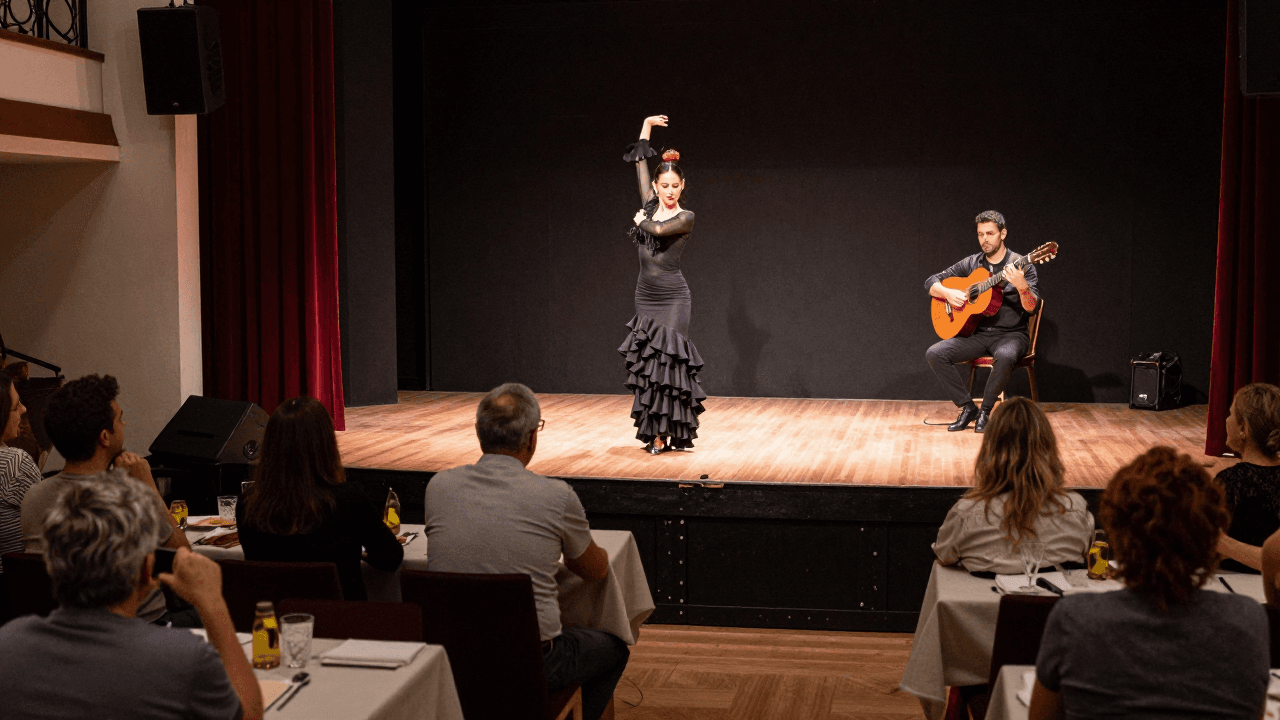
Picture a theatre hall in a Kadıköy cultural centre in December. A fifteen-minute film runs on the screen and nobody in the room moves. When it ends, the director walks on stage and talks with the audience. This is not one of the world's big-name festivals. It is the International Uşak Short Film Festival, named after a city in inland Aegean Turkey, and its trophy is named after a piece of jewellery from a museum case. If you follow what happens around Istanbul on takvim.in, this is one of the quiet but ambitious names worth writing into your cinema calendar.
Key takeaways
- The festival began in 2014 as a university event run by the Uşak University Communication Community and has since grown into a national and international competition.
- Its awards are the Winged Seahorse Awards, named after a roughly 2,500-year-old gold brooch that belongs to Uşak's Karun (Croesus) Treasure.
- It is held every December. The 7th edition (2020) was entirely online and screened 131 films; the 8th (2021) ran both in person and online.
- Three main competitions run side by side: national short film, national student films and international short film, with about two dozen award categories.
- The Barış Manço Cultural Centre in Kadıköy, Istanbul, has hosted screenings, talks and award ceremonies in recent years.
- The 12th edition is planned for December 2026. Dates can shift, so check the official site before you go.
What is the Uşak Short Film Festival?
The festival's own materials call it the first and only film festival of the city of Uşak. It started in 2014 under the name Uşak Winged Seahorse Film Festival and later became the International Uşak Short Film Festival. Both names still live side by side: the event is the Uşak Short Film Festival, and the prizes are the Winged Seahorse Awards.
A short film is a category of its own. Under Academy rules, a short is a film of 40 minutes or less including credits; the festival's national competition accepts films up to 35 minutes. A short is not a shrunken feature. It can be a young director's first attempt, a documentary maker's tightly focused portrait, or a daring piece of animation. Festivals are practically the only place where such films find an audience.
The organising structure has changed over time. It began as a project of the Uşak University Communication Community. Later the Apart Art Association also took part, and the head of that association, Onur Keşaplı, is named as organiser of the 11th edition in 2024. The Turkish Ministry of Culture and Tourism is among the supporters.
Why is the award called the Winged Seahorse?
The name is the most memorable thing about the festival. In Turkey, the objects looted in the mid-1960s and in 1968 from burial mounds around Güre village in Uşak province are known as the Karun Treasure. Karun is the Turkish name for Croesus, the king of Lydia, and the pieces are dated to the 6th century BCE, roughly 560-546 BCE. The best-known item is the Winged Seahorse Brooch, a gem-set gold ornament weighing 14.3 grams.
The story of the treasure reads like a thriller. The smuggled pieces had been sold to the Metropolitan Museum of Art in New York, and Turkey recovered them in 1993 after a long legal fight. The brooch itself was stolen from the Uşak Archaeology Museum in 2005, turned up in Germany, and came back to Turkey in 2013. Today the Karun Treasure is on display in the Uşak Museum.
It was a smart move for a student group to name its prize after the city's most famous object. The seahorse stands for local pride and for something lost and found again, which is a fair description of short film itself: easy to overlook, valuable once someone bothers to dig it out.

How does the festival work: three competitions, layered juries
The structure is simple but serious. Three main competitions run through the festival's history:
- National Short Film Competition: films by directors in Turkey. In the 7th edition this section had 12 award categories, including best film, direction, screenplay and technical prizes.
- National Student Films Competition: a separate contest for fiction and documentary work by film and communication students.
- International Short Film Competition: films from around the world. In the 7th edition it had 9 award categories covering direction, cinematography, editing and performance.
Selection is not a single step either. According to the festival's 2020 announcement, submissions pass through a preliminary committee, an intermediate committee and a main selection committee, with roughly 100 films advancing from the first round. The festival is also known for paying royalties to films in its official selection: its own website describes it as the first and only short film festival in Turkey that does this for the whole official selection. Read that as the festival's own claim. Not charging a submission fee is a further practical help to young directors.
How did the editions compare from 2020 to 2024?
The available data show very different formats across editions: online during the pandemic, back in the hall afterwards, then a local competition added.
| Edition | Year | Highlights |
|---|---|---|
| 7th | 2020 | Online because of the pandemic; 131 films over 10 days, 44 of them premieres; 23 award categories across three competitions; closing ceremony at the Barış Manço Cultural Centre in Kadıköy |
| 8th | 2021 | In person and online; 4-12 December; 119 films in the programme; closing and awards ceremony in Kadıköy; Winged Seahorse Awards in 25 categories across three competitions |
| 9th | 2022 | Finalist screenings and director talks at the Barış Manço Cultural Centre; a selection from an Italian Short Film Competition; a special competition for films connected to Uşak, marking the 100th anniversary of the city's liberation |
| 11th | 2024 | Two days in person in Kadıköy on 14-15 December; ten days of online screenings on the Sahneport platform |
Some numbers, such as award-category counts, appear in slightly different forms in announcements and news reports. The figures above come from the reports of each edition and the festival's own announcements; the next edition may change them.
How did the pandemic reshape the festival in 2020 and 2021?
The 7th edition took place on 12-20 December 2020, in the middle of the pandemic. The hall was closed; the selection opened free of charge to everyone at usakfilmfest.com. The 131-film selection ran for ten days and 44 of the films were premieres. It included finalists from Cannes, Berlin, Venice, Toronto and Sundance, along with productions that had been in the Oscar race. Workshops, master classes, talks and forums also moved online. The closing ceremony was held at the Kadıköy Municipality Barış Manço Cultural Centre, and afterwards some film screenings were extended.
In 2021 the festival used a hybrid model: the opening took place in Uşak, the closing and awards ceremony in Kadıköy. Entry rules included photo ID, an HES code check and mandatory masks. Those details are history now, but they show how flexible the festival is. The same selection reached online viewers during the pandemic, too.
Why Kadıköy, when the festival is named after Uşak?
One of the more unusual things about this festival is that, although it carries the name of Uşak, a large share of the events are held in Istanbul's Kadıköy district. The Barış Manço Cultural Centre, run by Kadıköy Municipality, has hosted screenings, director talks and award ceremonies in its theatre hall. There is a practical reason: for film crews, jury members and cinephiles, Istanbul is easy to reach. In 2022 the opening ceremony was held at the Uşak Municipality Atatürk Cultural Centre while screenings continued in Kadıköy. So the festival lives between two cities, keeping its Uşak identity while drawing on Istanbul's audience.
How do you attend or follow the festival?
Formats change from year to year, so treat this as a general guide:
- Check the official site. The programme, selection and finalists are published at usakfilmfest.com, and in some years the screenings are also online.
- Reserve December. The festival is held every December, and the 12th edition is planned for December 2026. If the dates move, the official accounts will announce it.
- Read the hall schedule selectively. Short films are usually shown in programmes: several films back to back, then a director Q&A. Staying for the whole block beats drifting in and out.
- Arrive early. For screenings at the Barış Manço Cultural Centre, guests were asked to arrive at least 15 minutes before the start, silence phones and not film or photograph during the screening.
- Admission was free, but plan ahead. The event pages announced free entry; capacity and registration rules can vary by year.
Why does this festival matter?
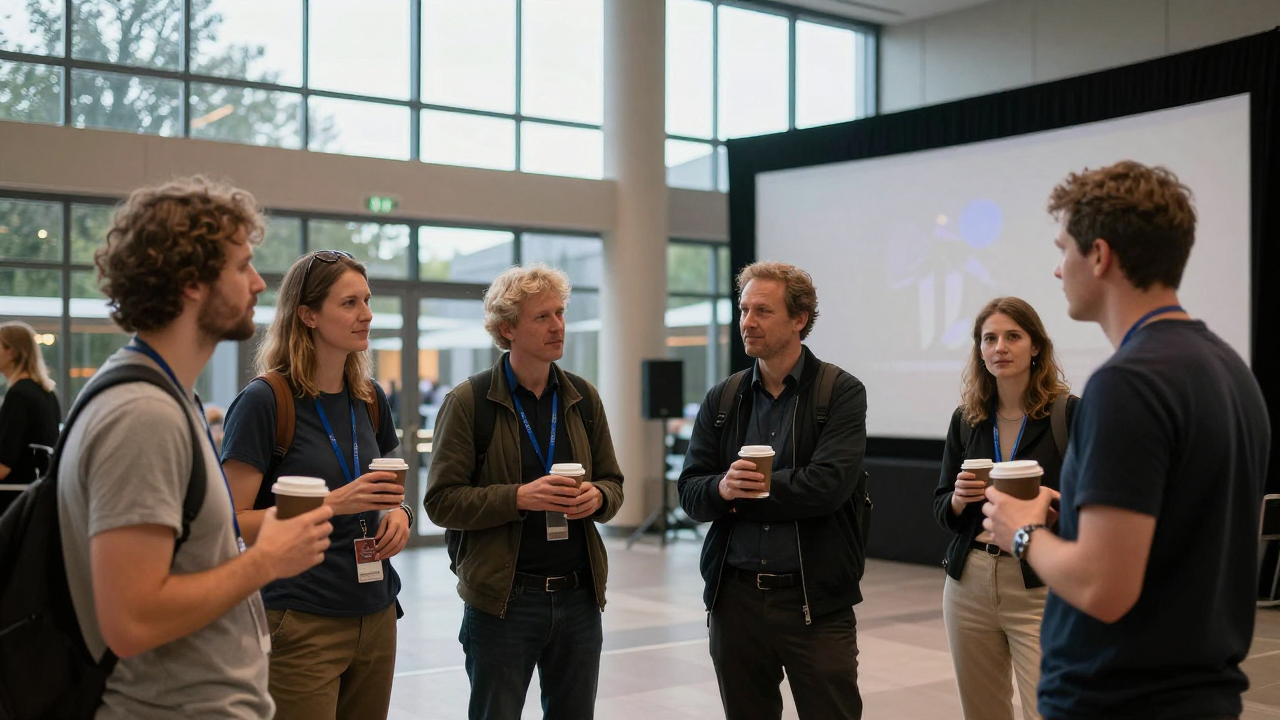
Short film festivals in Turkey run largely on the labour of student groups, associations and municipalities. The Uşak festival is a young but fast-growing example of that ecosystem. An event started by a university group in 2014 became, within a few years, an international competition with award categories numbering close to two dozen. Three things helped: no submission fee, the royalty promise and the option to watch online. The result is that a viewer in Istanbul and one in another city can see the same selection.
A short film festival also shows the audience a side of cinema beyond big releases. On the same day you might see a Kazakh director's film, a student documentary and an Italian short selection. For anyone curious about cinema, it is a small world tour in one hall.
FAQ
When is the Uşak Short Film Festival held?
It is held every December, with dates varying by edition. In 2020 it ran 12-20 December, in 2021 4-12 December, and in 2024 the Kadıköy programme took place on 14-15 December. The 12th edition is planned for December 2026; check the official site for exact dates.
What does the Winged Seahorse Award refer to?
The prize is named after the Winged Seahorse Brooch from Uşak's Karun Treasure: a gold ornament about 2,500 years old and weighing 14.3 grams, and the treasure's best-known piece.
Who organises the festival?
It began in 2014 as an event of the Uşak University Communication Community. For the 11th edition in 2024, the Apart Art Association and its chairman Onur Keşaplı are named as organisers. The Ministry of Culture and Tourism is among the supporters.
Can I watch the films online?
In some editions, yes. In 2020 the whole selection was free at usakfilmfest.com, and in 2024 screenings were available for ten days on the Sahneport platform. That may not apply every year, so check the official site.
Conclusion
The Uşak Short Film Festival takes its name from a museum case and connects two cities through the short days of December. It is small but solid: since 2014 it has grown while paying royalties to its official selection and offering free viewing. To see this year's programme and find other cinema, art and cultural events in Istanbul, take a look at takvim.in.