Nine in the morning, a side street in Ipanema, and a few hundred people are trailing a truck carrying drummers and a brass section. Someone is wearing angel wings, someone else is in a nappy, and nobody has shown a ticket to anyone. The sequined spectacle you see on television is only one half of Rio's Carnival; the other half happens on the street, for free, before lunch. Here is how takvim.in would explain it to a friend planning the trip: where it comes from, how it works, and what changed in 2025.
Key takeaways
- Rio Carnival happens in the days before Ash Wednesday, so its dates move every year with Easter.
- There are really two carnivals: the ticketed samba school parade at the Sambadrome, and the free street parties run by neighbourhood blocos across the city.
- Since 2025 the Special Group (Grupo Especial) parades over three nights, Sunday, Monday and Tuesday, with four schools each night and twelve schools in total. Before that it was two nights, Sunday and Monday.
- The Sambadrome opened in 1984 and holds roughly 72,500 spectators.
- For the 2026 street carnival the city planned 458 bloco parades and expected more than 6 million participants.
- Book flights and lodging early; prices climb during Carnival week.
What is Rio Carnival, and when does it happen?
Carnival is the festive stretch before Lent, the Christian fasting season. Lent begins on Ash Wednesday, roughly 46 days before Easter, and because Easter moves, so does Carnival. Ash Wednesday fell on 6 March in 2019, on 18 February in 2026 and falls on 10 February in 2027. The official festivities run from the Friday before Ash Wednesday through the Wednesday itself, followed by a Champions' Parade on the Saturday after.
In practice the city warms up much earlier. The 2026 street carnival programme began in mid-January and ran until 22 February.
Where does Rio Carnival come from?
The root is the entrudo, a boisterous Portuguese pre-Lent tradition of pelting neighbours with water, flour and eggs in the street. Most accounts date the first Carnival festivities in Brazil to the early 1700s, with 1723 often cited.
In the nineteenth century Rio's elite turned up their noses at the entrudo and imported European-style masked balls instead. The first documented masked ball in Rio took place on 22 January 1840 at the Hotel Italia. Ordinary people, meanwhile, kept the street alive with their own groups, called blocos: neighbourhood crowds that follow one band along a set route.
Samba schools are a much younger invention. Deixa Falar, generally regarded as the first, was founded in the Estácio district on 12 August 1928 by Ismael Silva and fellow samba musicians. In the 1929 Carnival it led a small parade around Estácio and Praça Onze, the ancestor of today's parades. Deixa Falar folded in 1930, but the idea lived on through schools such as Mangueira and became the backbone of the festival.
What actually happens at a samba school parade?
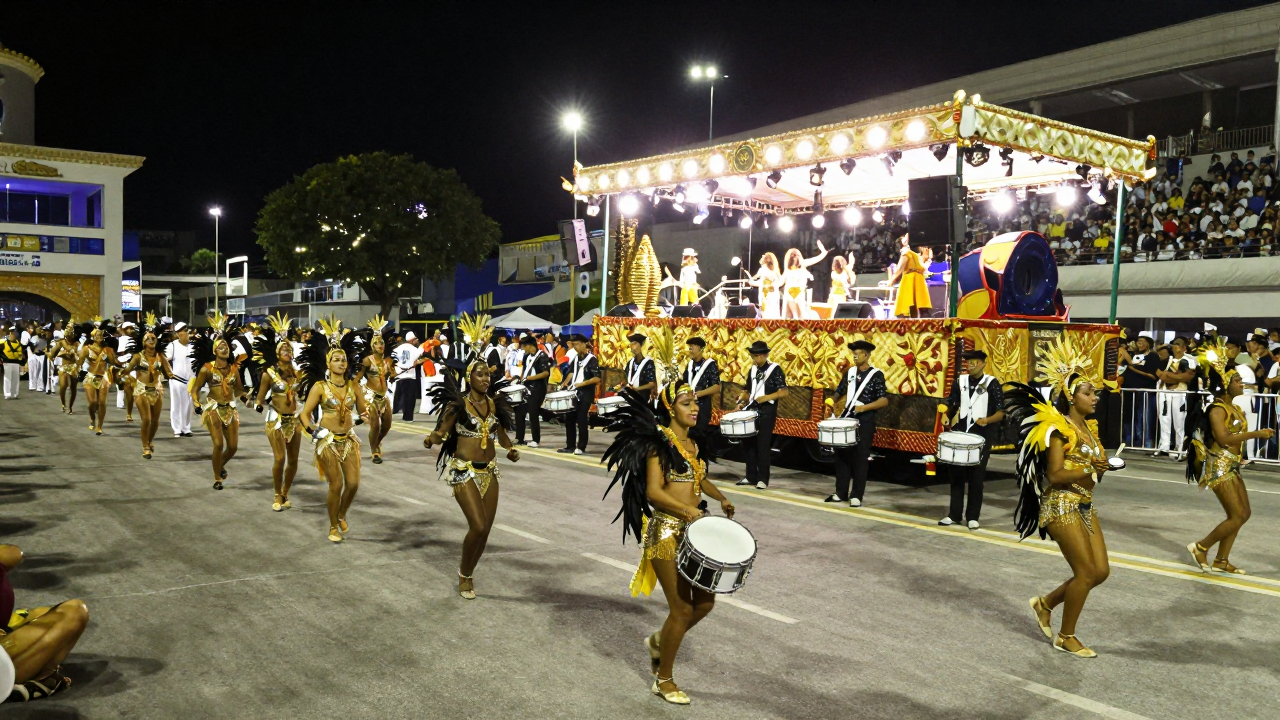
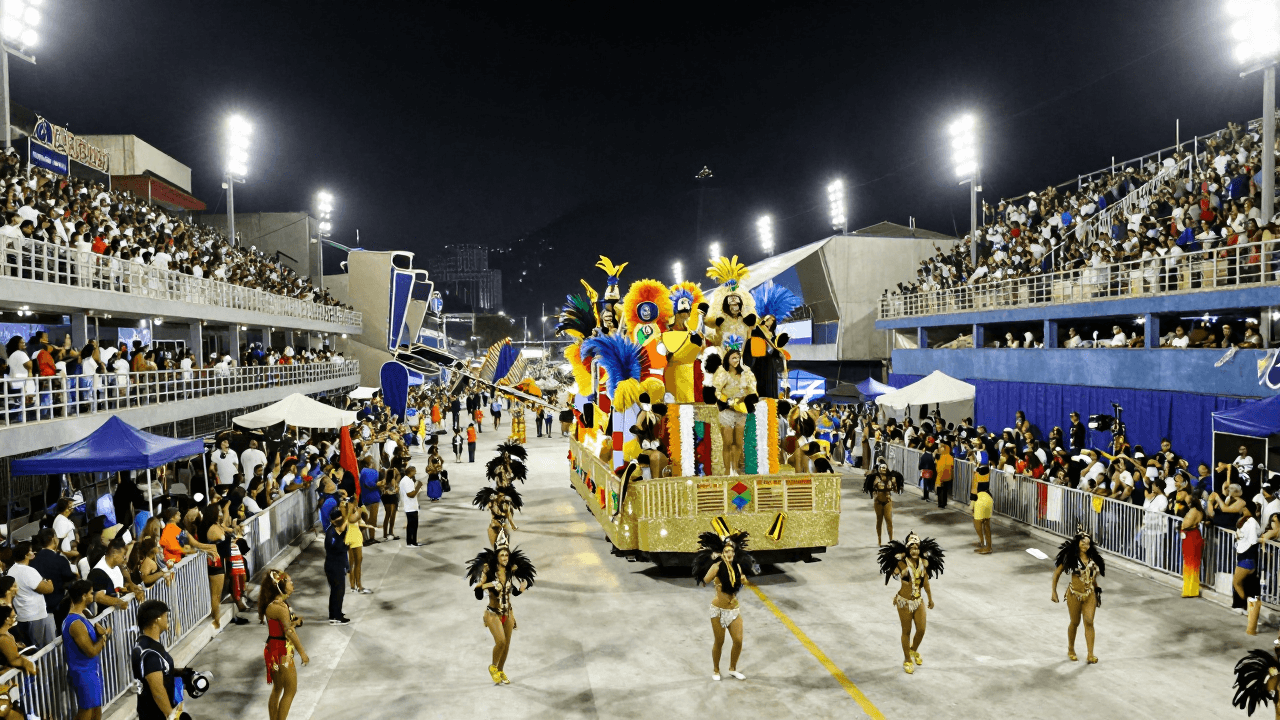
A samba school (escola de samba) is a community organisation that works all year on its Carnival presentation. Each picks a theme for the year and tells it through a purpose-written song called the samba-enredo, costumes and enormous allegorical floats. A single school's parade lasts roughly 75 minutes and involves thousands of people: drummers, dancers, singers and float crews.
A jury scores the show on several criteria, among them the bateria (the percussion section), the samba-enredo, harmony, evolution (how smoothly the group moves), costumes, floats and the opening ensemble. It is a test of whether a school can carry its own style through the whole avenue.
The parades take place at the Sambadrome, on Rua Marquês de Sapucaí. Designed by Oscar Niemeyer, it was built in a rush after work began in 1983 and opened in 1984: a stretch of street of about 700 metres flanked by grandstands. Capacity is around 72,500 spectators.
Carnival is prepared over a year, not a week
Everything you see on the avenue starts months earlier. Schools choose themes long before Carnival, build costumes and floats in workshops, and rehearse the samba-enredo in their home neighbourhoods again and again. That is why the Carnival season in Rio stretches far beyond the official days, with open rehearsals and pre-Carnival street parties warming the city up.
Themes often tell a historical episode, honour a person, celebrate a region's culture or take on a social question. The parade is therefore not just a show but a neighbourhood's way of telling a story, and the judges score exactly that.
Blocos have a similar culture. Some have decades of history and loyal followers; others are newborn groups started around a single idea in a single neighbourhood.
How does the Special Group work since 2025?
The Special Group is the top division of Rio's samba schools. For many years its parade ran over two nights, Sunday and Monday. From 2025 it runs over three nights, Sunday, Monday and Tuesday, with four schools each night and twelve in total.
The 2026 order looked like this:
| Night | Date | Schools |
|---|---|---|
| Sunday | 15 February | Niterói, Imperatriz, Portela, Mangueira |
| Monday | 16 February | Mocidade, Beija-Flor, Viradouro, Tijuca |
| Tuesday | 17 February | Tuiuti, Vila Isabel, Grande Rio, Salgueiro |
Parades start around 10 p.m. and run late into the night. Results are announced on Ash Wednesday, and the Champions' Parade on 21 February 2026 featured the top six schools. The champion of the division below, the Série Ouro, moves up to the Special Group the following year, so there is promotion drama as well as a title race.
Why do people say the real carnival is on the street?
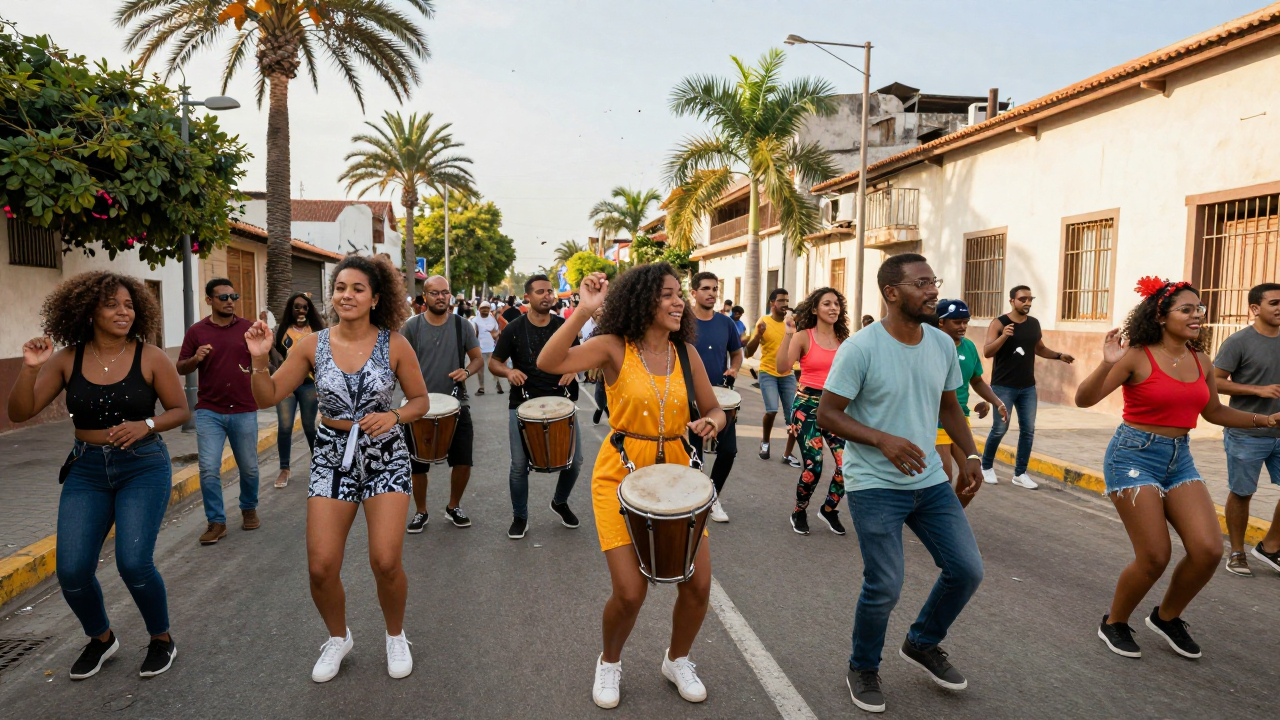
Ask many people who know Rio and they will tell you the spirit of Carnival lives in the street, not on television. For 2026 the city hall planned 458 street bloco parades and forecast more than 6 million participants. Eleven of them were mega-blocos on the Preta Gil circuit. On a single day dozens of blocos can be marching in different neighbourhoods, some starting at nine in the morning.
Most are free to join. Each has its own theme and repertoire: classic samba, funk, Brazilian pop. Costumes are optional but common, and the beaches of Copacabana and Ipanema are right there when you need a break from the crowd.
The logistics are enormous. The 2026 operational plan included roughly 4,000 cameras, seven medical posts and 13,714 cleaning workers. What feels like spontaneous chaos is in fact carefully managed.
How do the two carnivals compare?
| Sambadrome parade | Street blocos | |
|---|---|---|
| Where | Rua Marquês de Sapucaí | Neighbourhoods across the city |
| Entry | Ticketed | Mostly free |
| Time | Evening into the small hours | Morning to night |
| Scale | 12 schools, 3 nights | 458 parades planned in 2026 |
| Mood | Production and competition | Participation and improvisation |
How can you experience it?
Decide what you want first. For the Sambadrome, buy tickets early from official or trustworthy sellers. Prices vary widely by sector and night, so we do not quote any here. Besides grandstands there are frisas (open-air boxes) and camarotes (luxury boxes).
For the street carnival, check the official bloco programme published by the city (and keep an eye on takvim.in for dates), and keep belongings minimal: water, sunscreen and a phone with a charge. For lodging, Copacabana and Ipanema are practical because of the beaches and metro. Hotel prices rise during Carnival week, so booking early or renting an apartment for a short stay can make sense.
There is no direct flight from Turkey to Rio, so you will normally connect through a European hub. Visa rules can change, so check current requirements before you travel.
FAQ
When is Rio Carnival held?
Every year on different dates, because it depends on Easter. Ash Wednesday is 18 February in 2026 and 10 February in 2027. The Sambadrome parades take place in the nights just before it.
How many nights does the Special Group parade last?
Since 2025, three: Sunday, Monday and Tuesday, with four schools per night and twelve overall. Previously it ran over two nights.
Are the street parties free?
Most blocos are free and open to anyone. Fees usually apply to Sambadrome seating and to private events and boxes.
How many people fit in the Sambadrome?
It opened in 1984 and holds about 72,500 spectators.
Conclusion
Rio Carnival is a year-long competition on one side and a city-wide party on the other. Knowing the history and the format makes either far more rewarding. To find carnivals, festivals and events near you, browse takvim.in and plan your next celebration.