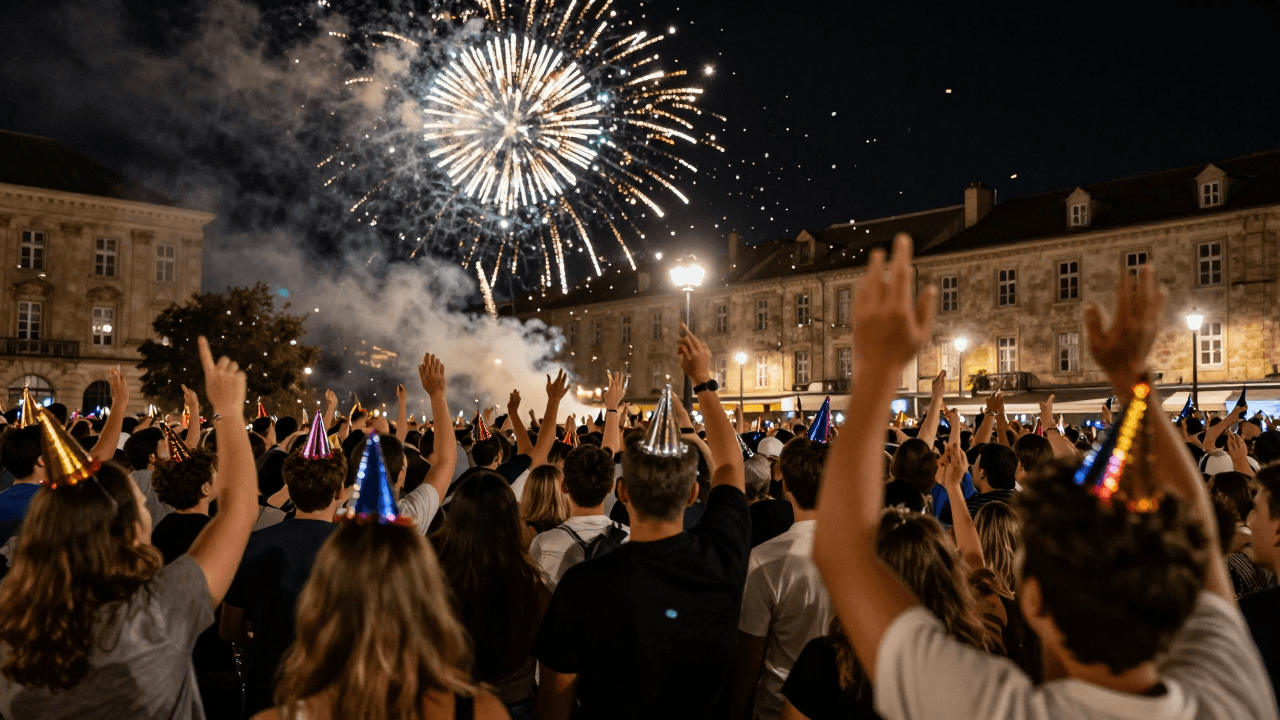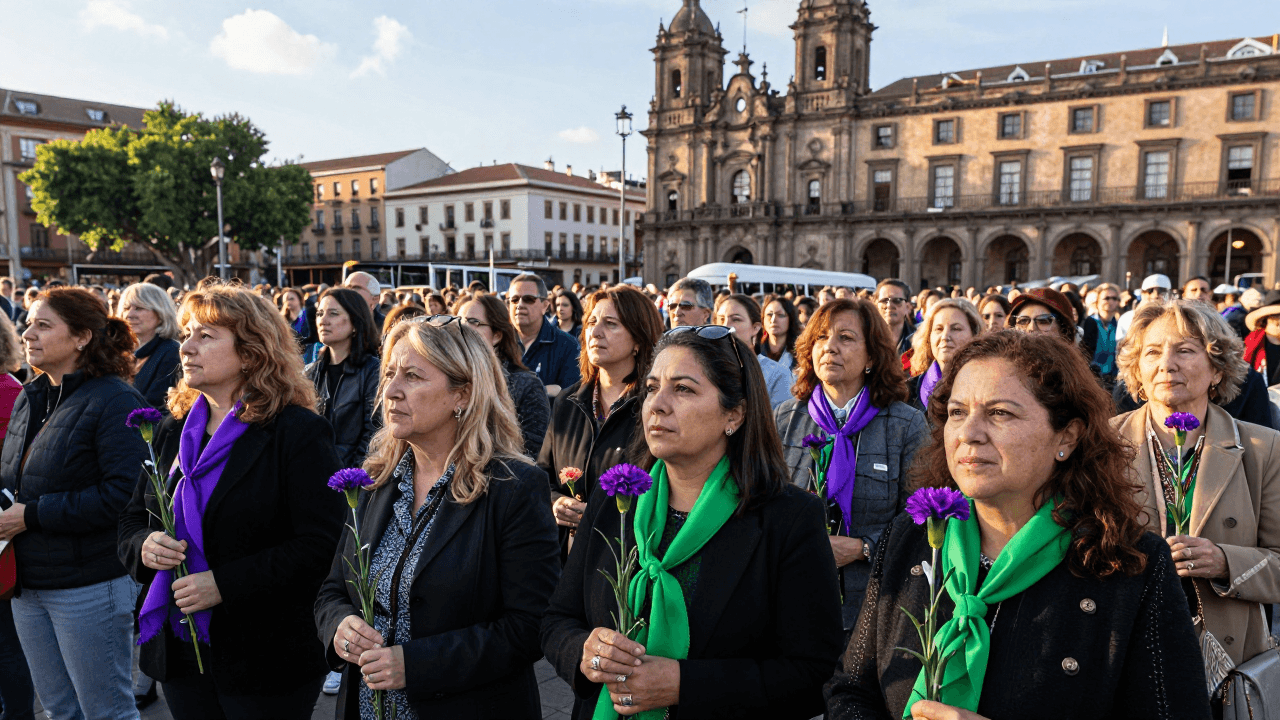
On the morning of 8 March, three very different things can happen in the same city: a municipal stand handing out red carnations, a cheerful greeting card on an office desk, and, by evening, crowds walking down the street with banners. If one date on the calendar can mean so many things, it is fair to ask where it came from. The answer is more complicated, and more interesting, than most people think. In this guide, takvim.in walks through the history of International Women's Day, the role of the United Nations, how Turkey has observed it, and how it is lived today, using facts that can be checked.
Key takeaways
- 8 March does not trace back to a single event. It grew out of the early 1900s socialist women's movement, labour strikes and the fight for the vote.
- The first National Woman's Day was held in the United States in 1909; the first International Women's Day followed in 1911 in four European countries, on 19 March.
- On 8 March 1917 (23 February in the Russian calendar of the time), women textile workers in Petrograd began protests that fed into the February Revolution; the date was fixed as 8 March in Moscow in 1921.
- The United Nations began marking the day in 1975, and in 1977 its General Assembly invited member states to observe a day for women's rights and international peace.
- In Turkey the day was first marked in 1921, and women won the right to vote and stand in national elections on 5 December 1934.
- The UN picks a theme every year; the 2026 theme is "Rights. Justice. Action. For ALL Women and Girls".
What is International Women's Day?
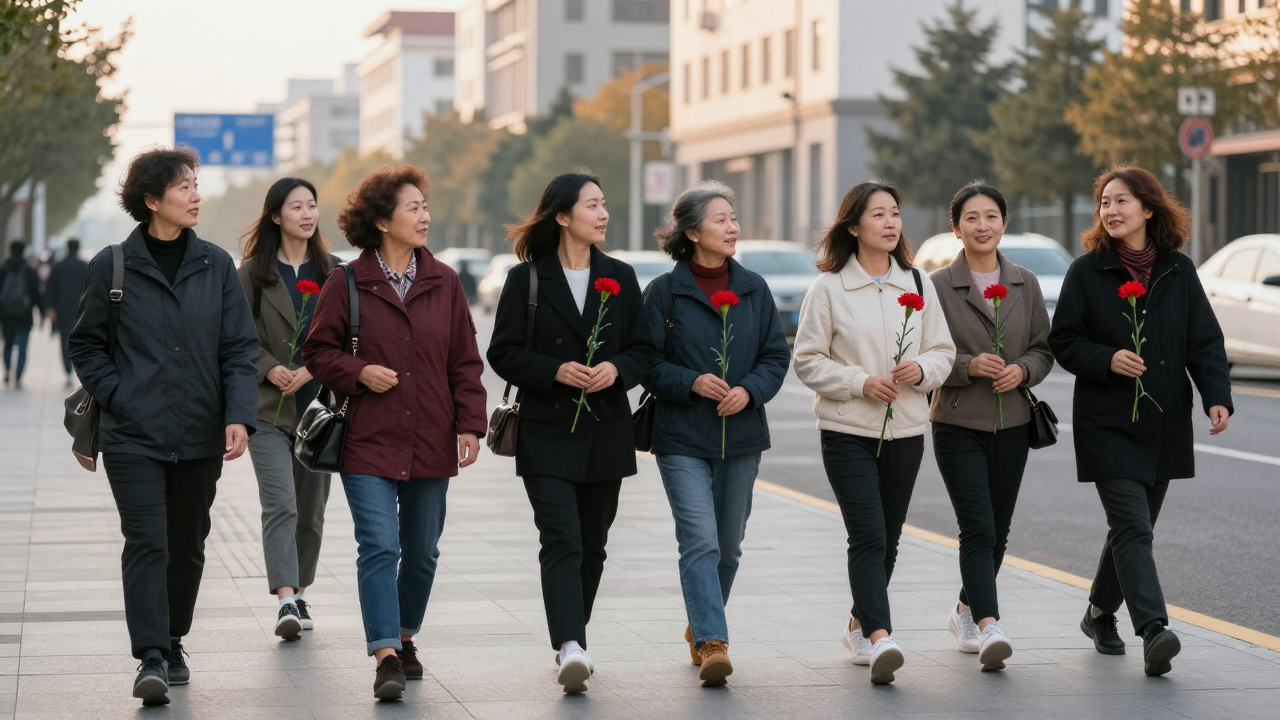
International Women's Day is observed every year on 8 March. It celebrates women's social, economic and political achievements and draws attention to areas where inequality persists. In some countries it is a public holiday; in others it is an awareness day with no time off. In Turkey it is not a public holiday: municipalities, institutions, trade unions and civil society groups run their own programmes.
Even the name is a matter of emphasis. In Turkish you hear both "Dünya Kadınlar Günü" (World Women's Day) and "Dünya Emekçi Kadınlar Günü" (World Working Women's Day). The second stresses the day's roots in the labour movement. The UN and most international bodies use "International Women's Day". All three point to the same date; the difference is which part of the story you want to put first.
Where does 8 March come from?
The American strand of the story starts in 1908-1909. On 28 February 1909 the Socialist Party of America held a "Woman's Day" in New York, an initiative associated with the activist Theresa Malkiel. It followed a garment workers' strike and demonstrations in the city the year before. In the following years the last Sunday of February became a day when American women rallied for the vote and better working conditions.
The international dimension arrived in 1910. At the International Socialist Women's Conference in Copenhagen, roughly 100 delegates from 17 countries were present. The German socialist Clara Zetkin and her colleagues proposed that a Women's Day be held every year in every country. The proposal was accepted, but no specific date was set at the conference. That detail is worth stressing, because a popular version of the story says 8 March was chosen in Copenhagen. It was not.
The first international celebration took place on 19 March 1911, in Austria-Hungary, Denmark, Germany and Switzerland, with more than a million people taking part. The demands included the right to vote, the right to hold public office and an end to discrimination at work. Austria-Hungary alone is reported to have seen some 300 demonstrations.
A myth to watch out for: the 1857 New York strike
A widely repeated story says 8 March commemorates women workers who died in a textile factory fire in New York in 1857. Historians describe this account as a myth that cannot be verified. The real roots of the day lie in the organised women's movement of 1909-1911 described above, and that is what this article sticks to.
Why 8 March and not 19 March?
The answer is in Russia. In 1913 Russian women marked International Women's Day for the first time; Russia then used the Julian calendar, so the day fell in February. In 1917, on 23 February by the Julian calendar, which is 8 March in the Gregorian calendar we use today, women textile workers in Petrograd (now Saint Petersburg) went on strike demanding bread and an end to the war. The protests grew within days and became the February Revolution, which ended with the Tsar's abdication.
The memory of that day weighed heavily when a conference of communist women met in Moscow in 1921 and fixed 8 March as the official date. Sources differ slightly on how that conference is numbered, but they agree that the date was settled in Moscow in 1921. For decades afterwards, 8 March was observed mainly in socialist and communist countries and in women's organisations on that side of politics.
When did the United Nations get involved?
The UN took the day out of one political camp and made it a global occasion. It declared 1975 International Women's Year and began celebrating International Women's Day on 8 March that year. In December 1977 the General Assembly adopted a resolution proclaiming a "United Nations Day for Women's Rights and International Peace", to be observed by member states on a day of their choosing, in line with their own historical and national traditions. The resolution did not impose a date, but 8 March became by far the most common choice.
From 1996 the UN has picked an official theme for each year. The first was "Celebrating the Past, Planning for the Future". Looking at recent themes shows how the agenda has shifted.
UN themes over the years
| Year | UN theme |
|---|---|
| 1996 | Celebrating the Past, Planning for the Future |
| 2022 | Gender equality today for a sustainable tomorrow |
| 2023 | DigitALL: Innovation and technology for gender equality |
| 2024 | Invest in women: Accelerate progress |
| 2025 | For ALL Women and Girls: Rights. Equality. Empowerment. |
| 2026 | Rights. Justice. Action. For ALL Women and Girls |
The 2026 theme is about the law. According to figures on the UN's own page, women worldwide hold only 64 per cent of the legal rights men hold, and at the current pace it would take 286 years to close the gaps in legal protection. Those are the UN's own estimates and should be read as a projection, not a fact about the future.
How did 8 March begin in Turkey?
The first observance in Turkey goes back to 1921. According to Turkish sources it was organised by two communist women, Rahime Selimova and Cemile Nuşirvanova. For many years the day was marked in narrow circles and often under pressure. The UN's 1975 Women's Year raised its visibility in Turkey, while the 1980 military coup interrupted celebrations for about four years.
The other milestones of women's rights in Turkey are separate from this day but are best read alongside it. Women in Turkey gained the right to vote in municipal elections on 3 April 1930, in village headman and elders' council elections on 26 October 1933, and finally the right to vote and stand for parliament on 5 December 1934. In the February 1935 election, 18 women entered parliament. For comparison, women in France gained the vote in 1944, in Italy in 1945, and in Switzerland at the federal level in 1971, so Turkey was ahead of many European countries. Turkey also marks 5 December separately as a women's rights day, while 8 March is more closely associated with labour and equality demands.
How is 8 March lived in Turkey today?
One of the most visible expressions of the day is the Feminist Night March, which began in 2003. The first one, from Taksim towards Mis Street in Istanbul, was a peace call against the war in Iraq, with groups such as Mor Çatı and the Women's Solidarity Foundation (KADAV) involved in the call. From 2005 it took the name Feminist Night March and became a yearly march against patriarchy and violence against women. In 2019, at the 17th march, police closed İstiklal Avenue and intervened against those gathering; the Turkish Bar Association criticised the intervention. It is a concrete reminder that in Turkey the day is more than a day for flowers.
The day is also lived in much quieter forms: concerts, exhibitions, talks, film screenings and workshops. Programmes change every year, so the best approach is to check what is on in your own city. That is why takvim.in brings women-focused arts and culture events together around the week of 8 March.
How do the arts mark 8 March?
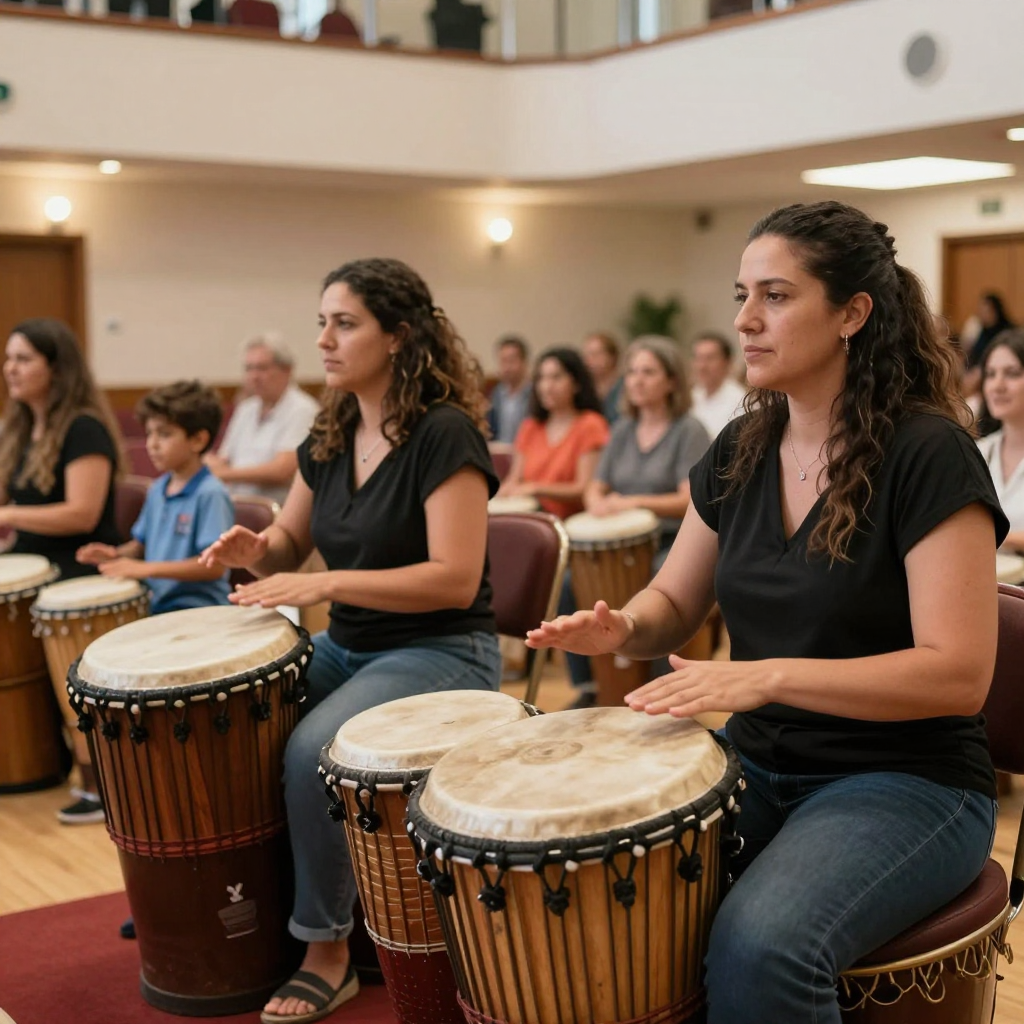
Older listings show what the cultural side of the day can look like. In 2020, the Kozyatağı Cultural Centre in Kadıköy, Istanbul, hosted a rhythm show for World Working Women's Day. On stage was Söz'ün Ritmi Kadın Ritim Grubu (roughly, "Rhythm of the Word" women's percussion group), founded in 2015 by Gönül Ak. The group is made up of 12 non-professional women and 4 children who volunteer to raise awareness of women's and children's rights; the children perform on stage alongside their mothers. The guest artist was Raquy Danziger.
In 2019, from 5 to 31 March, a mixed exhibition called "World Women's Day Mixed Exhibition", featuring collectors who studied at METU and Hacettepe universities, was open in Salon 56 at the METU Alumni Association's Vişnelik facilities. These two examples show the day has no single format: in one place a stage and the sound of drums, in another an exhibition that runs for a month.
How does 8 March differ from country to country?
How differently the day plays out is an interesting comparison in itself. In Russia, 8 March is a public holiday and a big day for giving flowers, a tradition that goes back to the Soviet era. In Turkey it is not a public holiday, but it is lived in layers: street marches, institutional programmes and cultural events. In many European countries the emphasis falls on political campaigns and debates about rights. For a current list of countries where it is a public holiday, check the UN and national government sources, since such lists change over time.
How can you experience 8 March?
There is no single right way, but there are a few concrete ones:
- Learn the history: Women's museums, libraries and archives often run exhibitions and talks about it.
- Join marches and talks: Calls from women's organisations are usually announced days ahead. If a march is planned, check the safety and permit situation beforehand.
- Go and watch the arts: Percussion shows, concerts, exhibitions and theatre are the calmest and most inclusive face of the day.
- Support local women's organisations: Volunteering or donating is a longer-lasting celebration than flowers.
- Talk about it where you are: Raising issues such as the fair division of housework, pay gaps and violence at work or at home is closest to the spirit of the day.
FAQ
Is 8 March a public holiday?
Not in Turkey. In some other countries it is. Because countries and rules change over time, check current official sources before you travel.
Who started International Women's Day?
No single person or event. The Socialist Party of America's Woman's Day in 1909, the proposal by Clara Zetkin and colleagues in Copenhagen in 1910, the first international observance in 1911, the Petrograd protests of 1917 and the 1921 decision on the date together made the day we know.
Why was 8 March chosen?
Because women textile workers' protests in Petrograd began on 8 March 1917 (23 February in the Julian calendar) and set off the February Revolution. A communist women's conference in Moscow fixed the date as 8 March in 1921, and the UN began marking it on that date in 1975.
What does the UN's 1977 resolution say?
The General Assembly invited member states to observe a "United Nations Day for Women's Rights and International Peace" on a day of their choosing, in line with their own historical and national traditions. It did not name a specific date.
Conclusion
More than a line in a festival calendar, 8 March is the visible trace of more than a century of struggle, argument and solidarity. However you mark it, marking it knowingly makes the difference. To see which exhibitions, concerts and talks are on in your city this week, take a look at takvim.in.